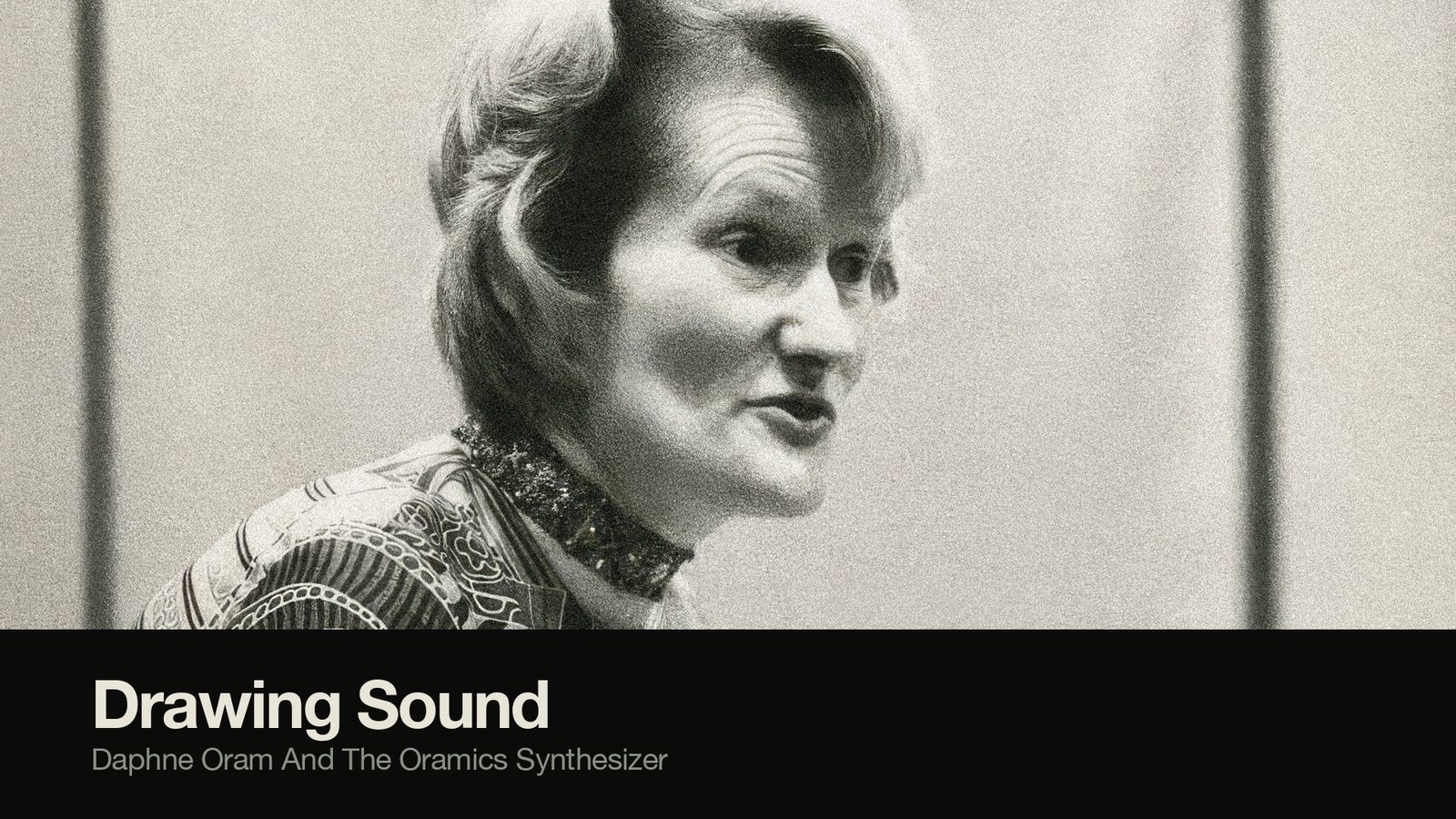
Drawing Sound is a workshop by Stuart Frederich-Smith, debuting at Synth Library Portland. It runs in two halves. The first is an hour on Daphne Oram and the machine she spent most of her working life building, in order to write sound rather than record it. The second is given over to drawing, on paper and on screen, and playing back the results. The deck for the first half is below, along with the speaker notes, which carry the sourcing and the asides that would not fit on a slide. Four of its thirty-four slides are live diagrams rather than pictures: the studio at Tower Folly, how a pitch was written, how the flying spot and photomultiplier worked, and the wave scanner itself.
Open the deck Read the speaker notes
Several slides cue up recordings that are not published here, since the clips are commercial releases and archive material. The deck checks for them when it loads and marks them as missing, and it runs without them.
The history
In 1958 electronic music meant tape. A composer recorded a sound, cut the tape, and spliced it back together in a different order, and the work lived in the editing. Daphne Oram wanted to write sound directly, the way a composer writes notes on a stave, and she spent roughly fifteen years building a machine that would let her do it. The BBC was not the place to do it from: where Paris, Cologne and Milan founded studios so that composers could make art music, the BBC founded a facility to make noises for radio drama, and the word radiophonic was itself a way of avoiding the word music. She left in January 1959 and set up her own studio at Tower Folly, a converted oast house in Kent, where the machine was built between 1962 and 1969.
It ran ten strips of clear 35mm film over photocells. The pitch of each note was written on them as short bars of black tape, while volume, vibrato, glissando and reverberation were drawn by hand as lines, and four hand-painted glass slides mounted in front of cathode ray tubes supplied the waveforms. By any ordinary measure it was a difficult instrument: monophonic, chronically out of tune, good for about forty seconds of music at a time, and effectively immovable. She had set out her case for the method in a notebook in January 1961, and it is the argument the second half of the workshop takes up:
A freehand drawing method might produce very much more artistic results because of the inaccuracies inherent within it.
The full history is a separate series of five guides, written from the same material as the deck and carrying the live diagrams from it:
- The Oramics machine covers Oram’s life, the BBC years, Tower Folly, and what was actually new about the instrument.
- Drawn sound on film before Oram covers Arseny Avraamov, Evgeny Sholpo’s Variophone and Norman McLaren, with the films, and the point at which Oram departs from all of them.
- How the machine read a pitch covers the one digital part of it, which you can write a tune on.
- Flying spots and photomultipliers covers the two components the scanner is built from.
- The wave scanner covers how painted glass becomes a waveform, and why nothing traces the curve.
Then we draw
The second half runs on Daphne, a drawn-sound instrument written for this workshop. Sheets are printed and drawn on by hand, then photographed, and the application reads the drawing back and plays it, though it is also possible to draw directly on screen. Several of the original machine’s constraints are modelled rather than approximated, since they account for much of how it sounded, and each one is a switch that can be turned off. The scanner is the same feedback loop described above, running at audio rate over a two-dimensional opacity field.
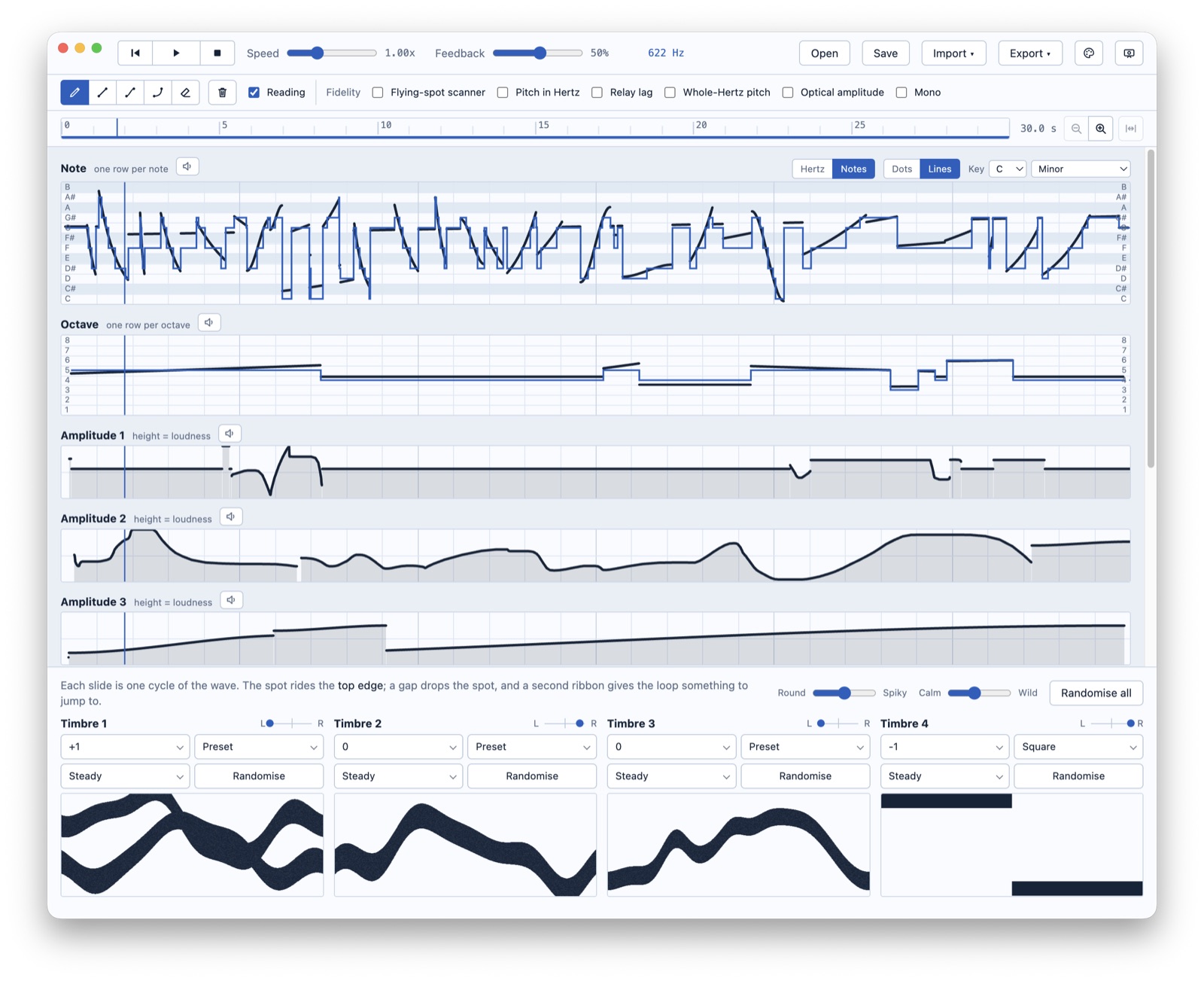
Daphne is free and open source, and every version of it always will be. There are builds for macOS, Windows and Linux, and its own page covers the drawing tools, the printed sheets and what it models from the machine. The sheet people draw on is a printable PDF, thirty seconds of paper at a centimetre to the second.
Workshop 1
October 18th, 2026
Synth Library Portland
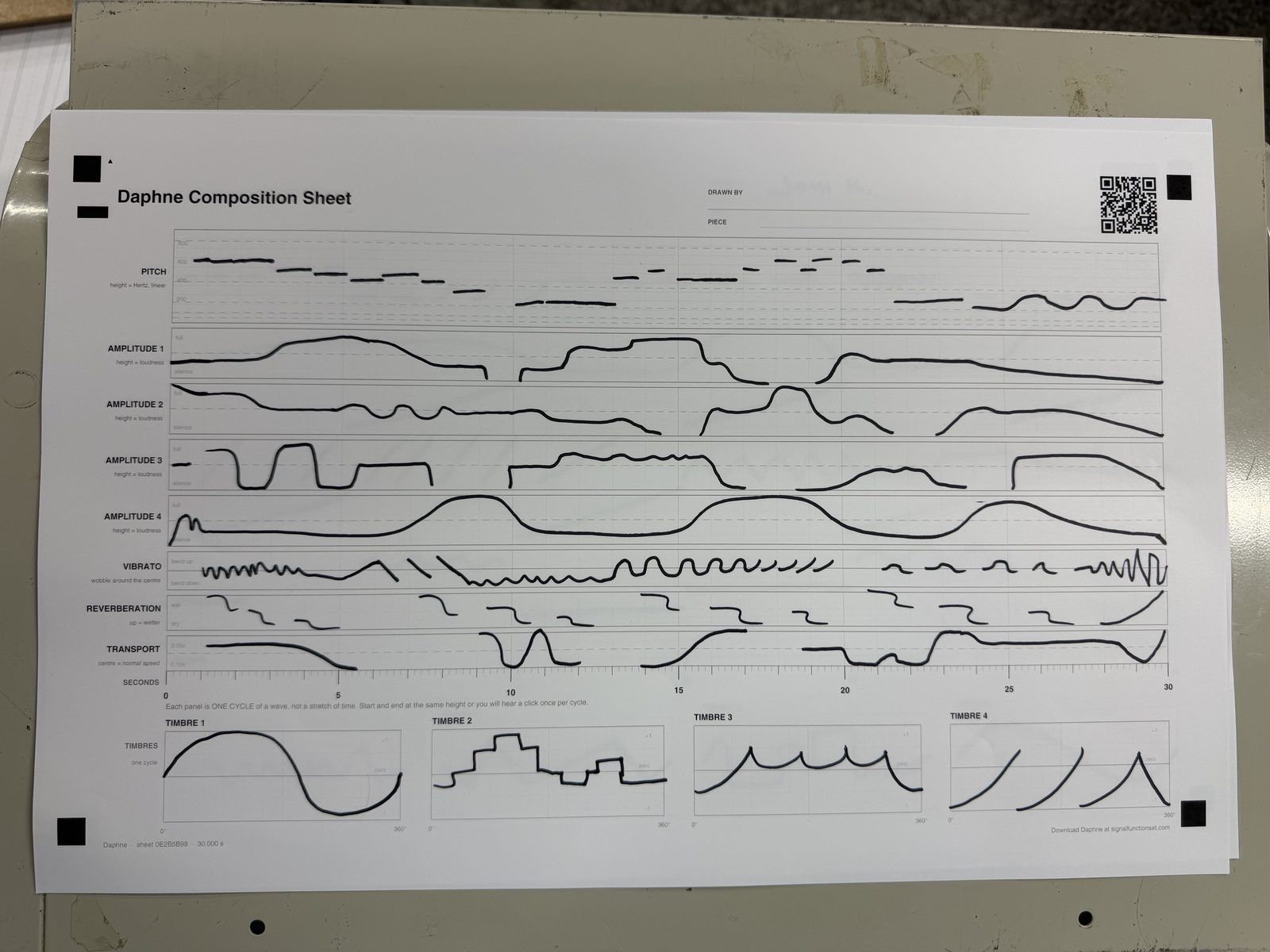
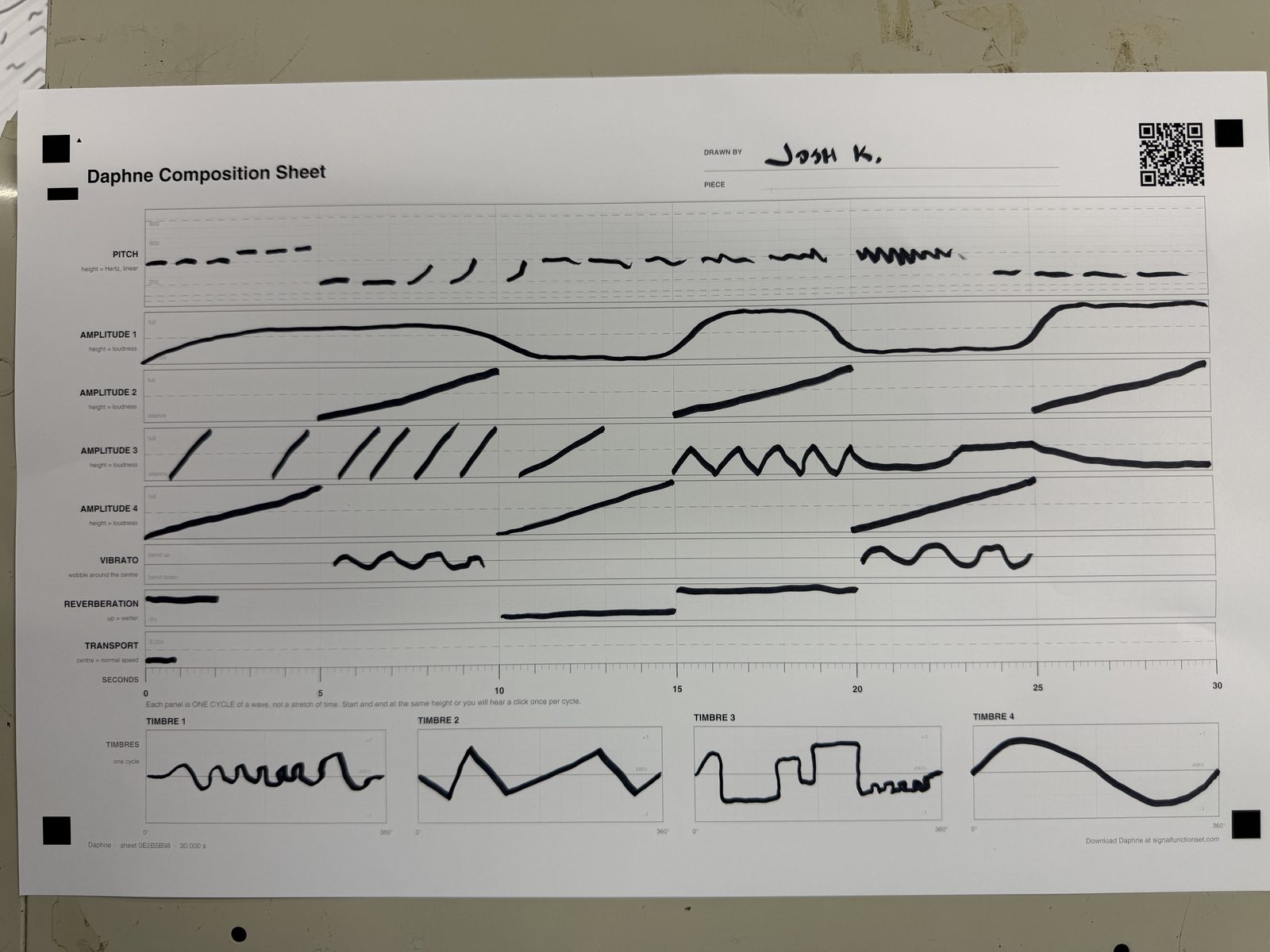
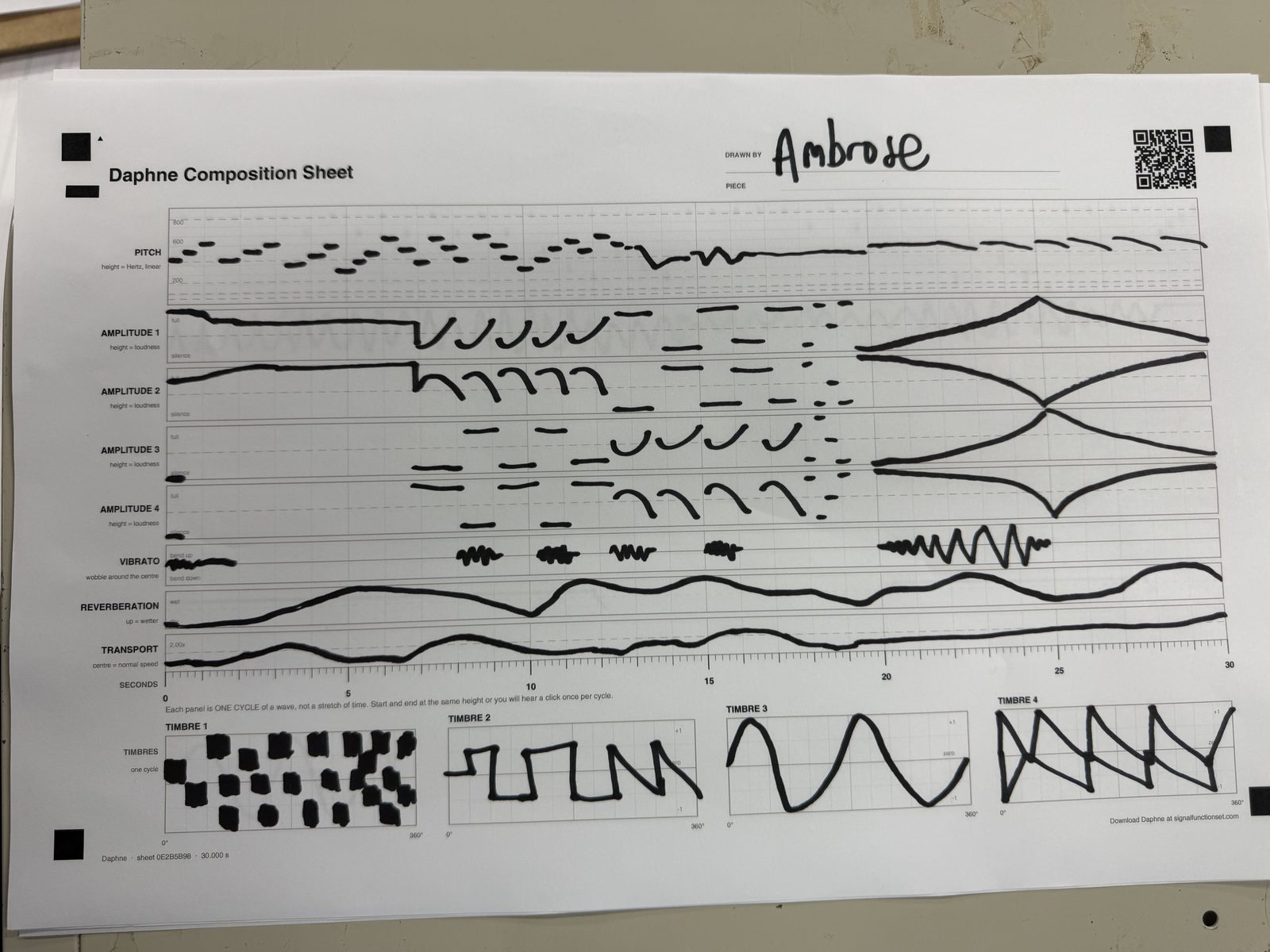
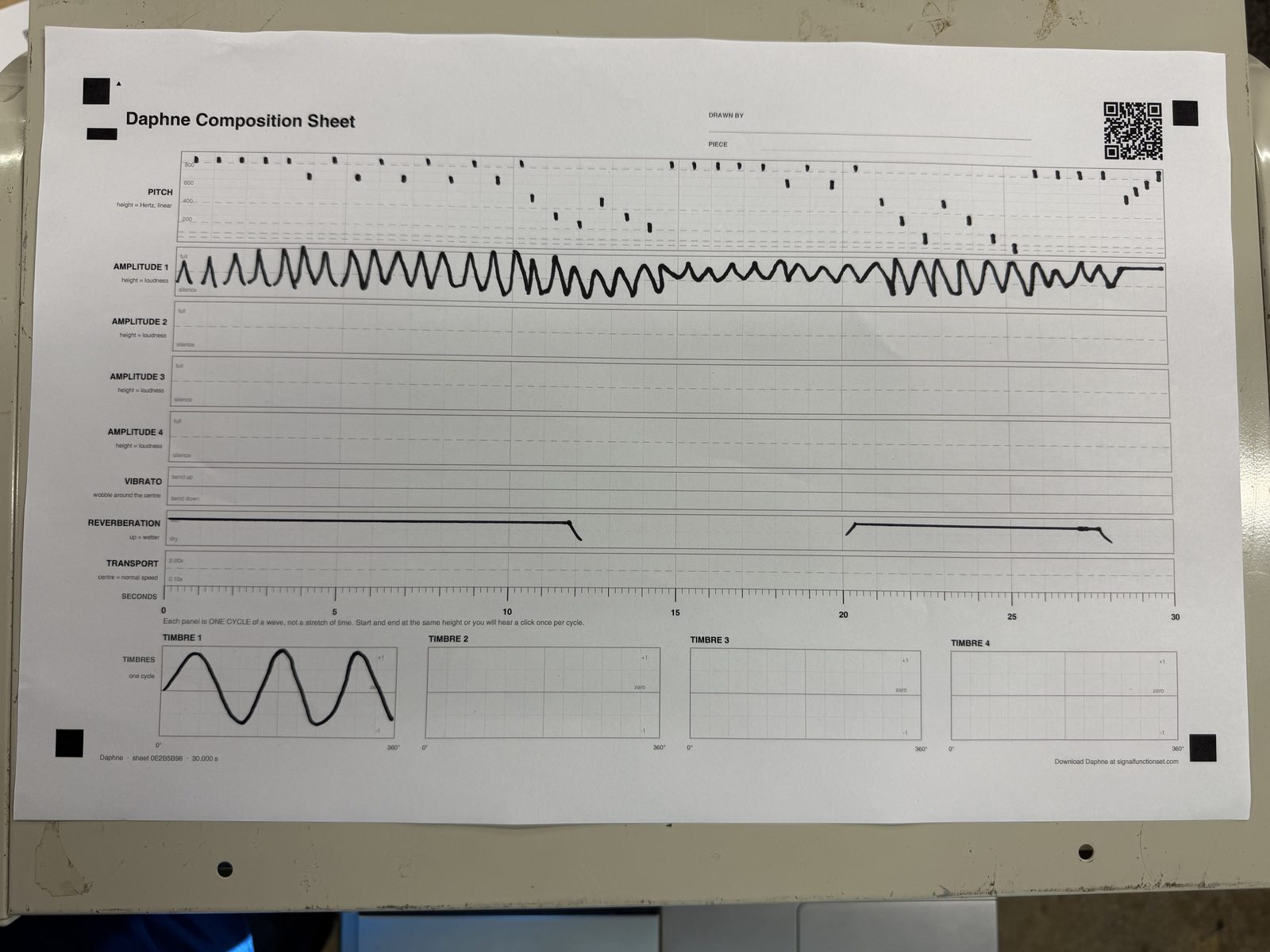
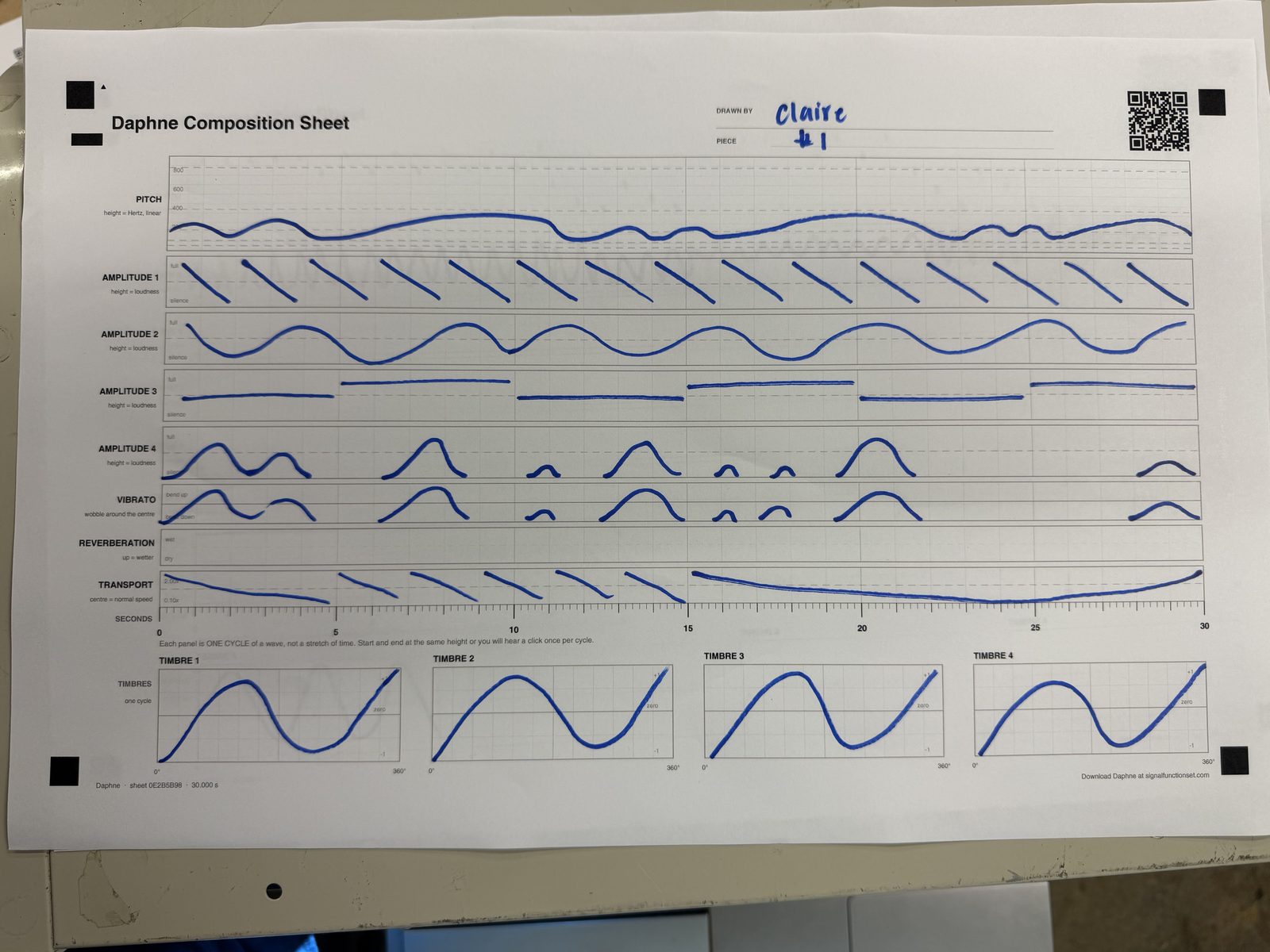
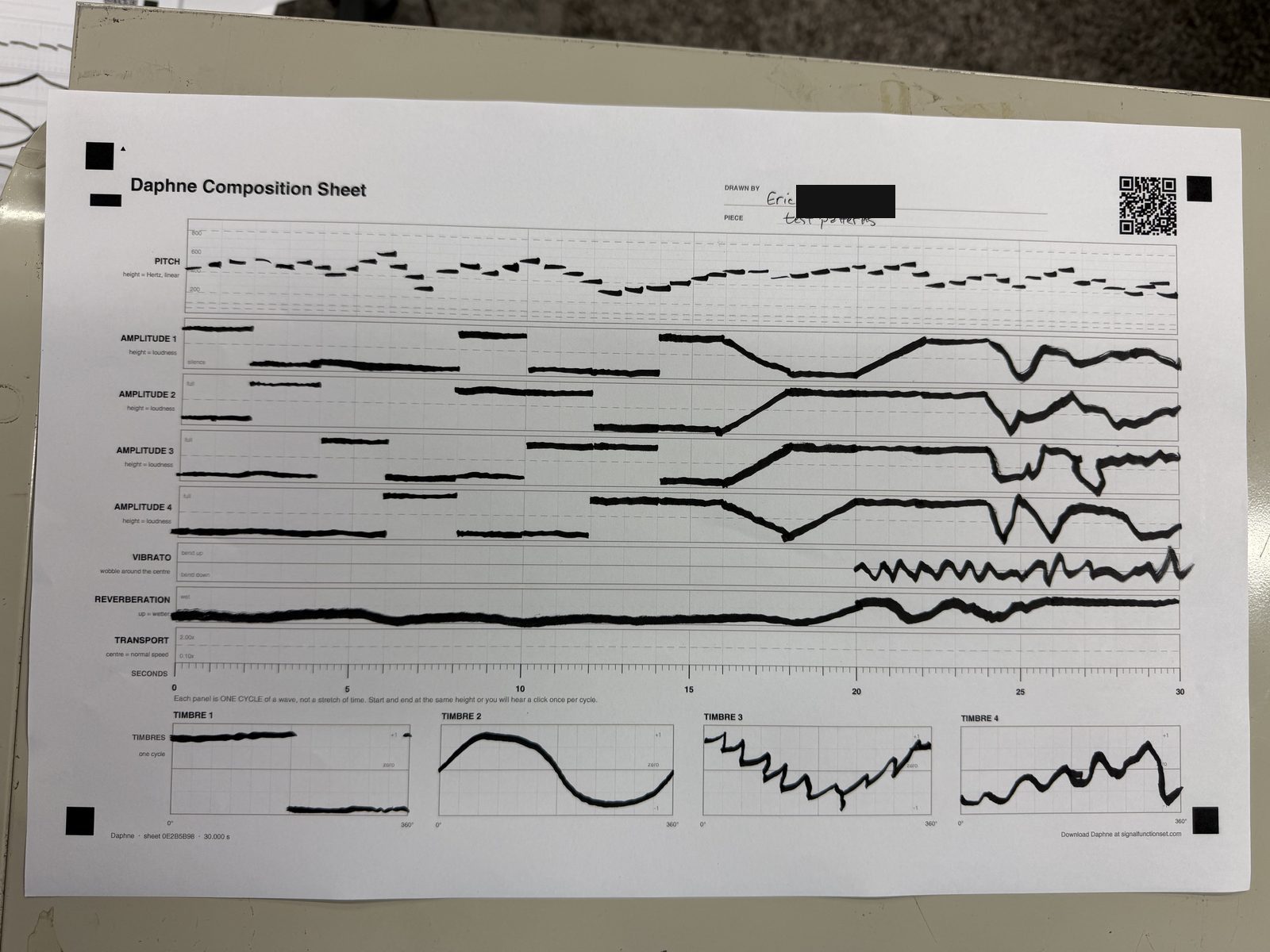
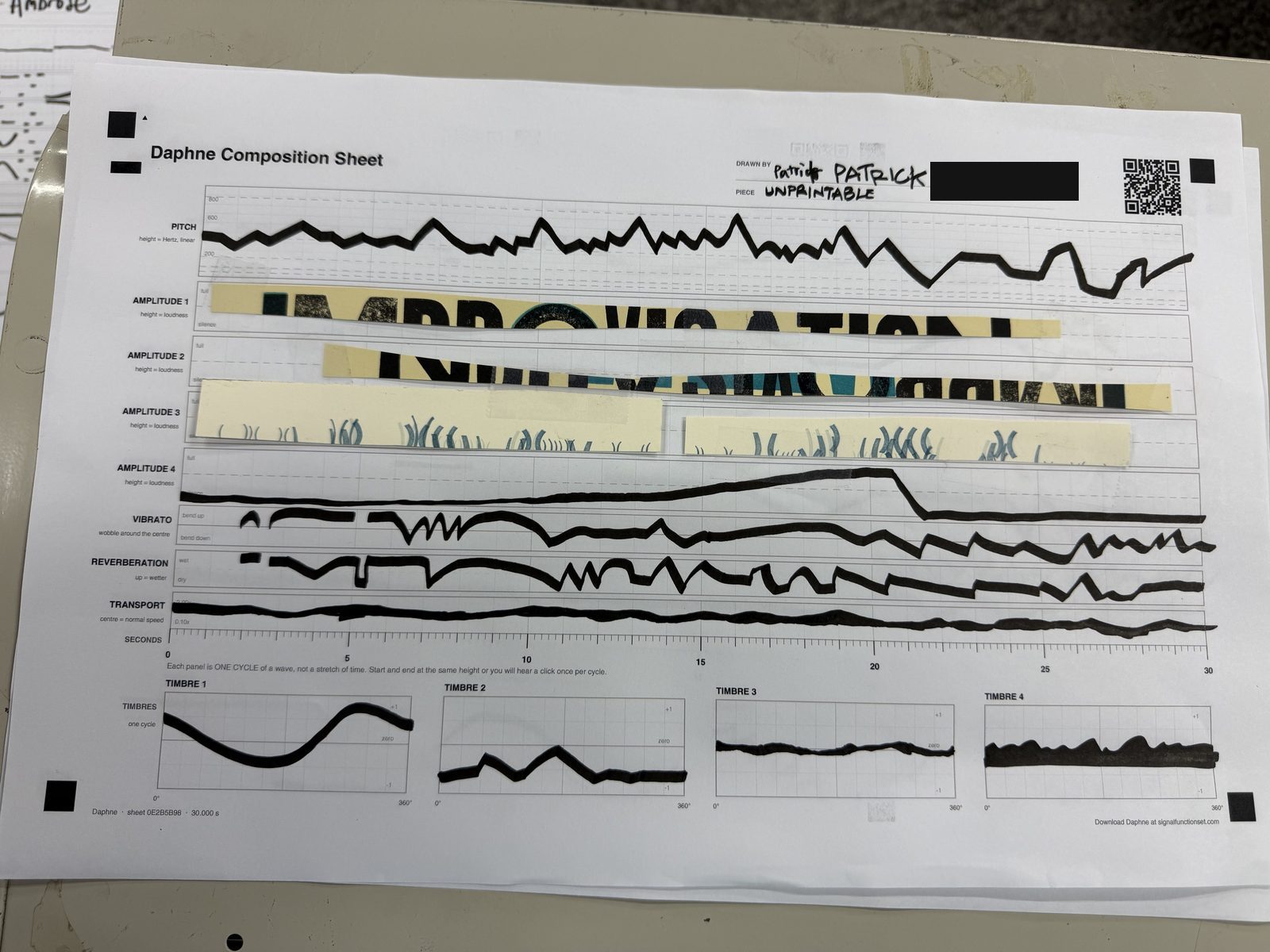
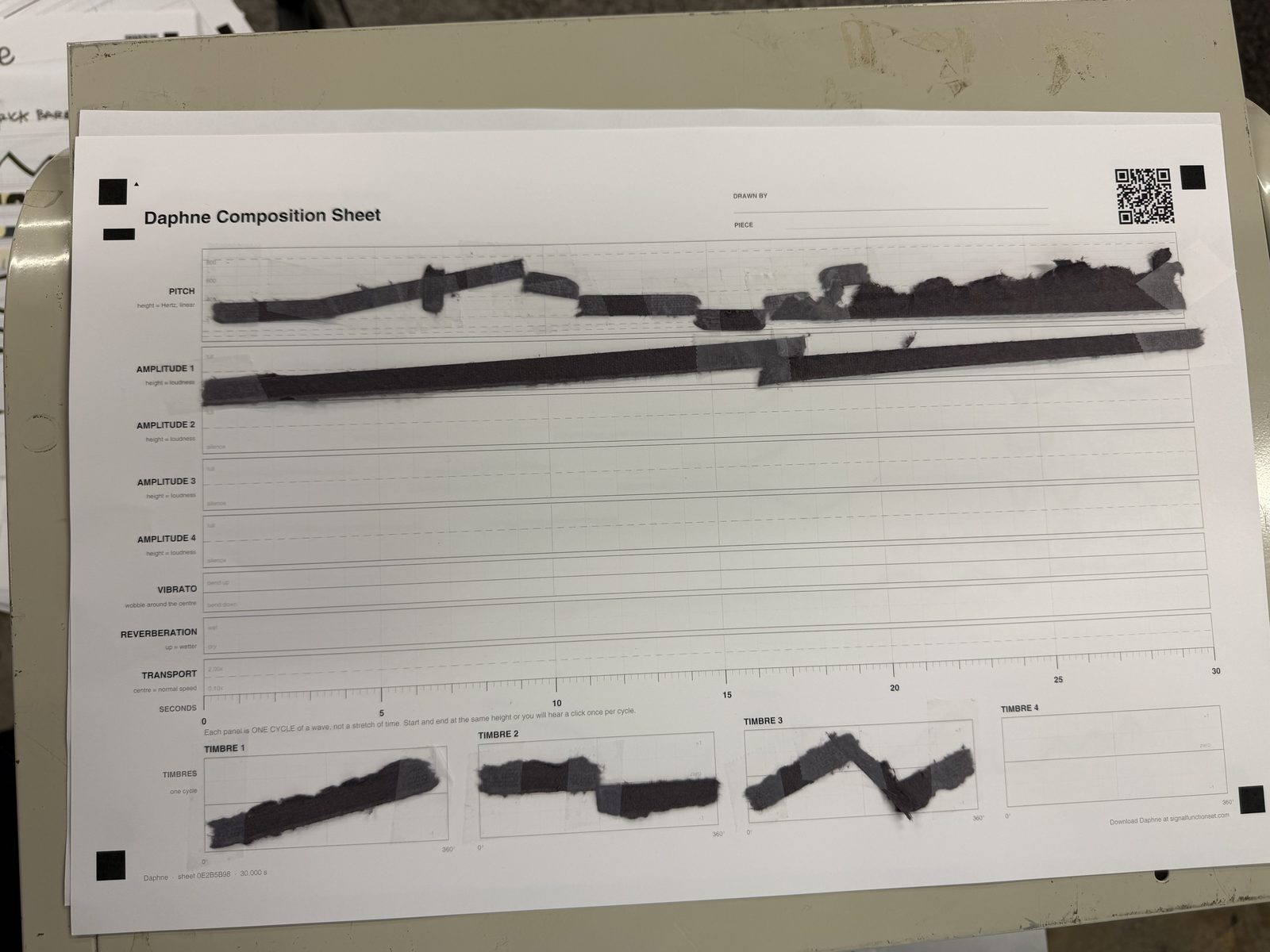
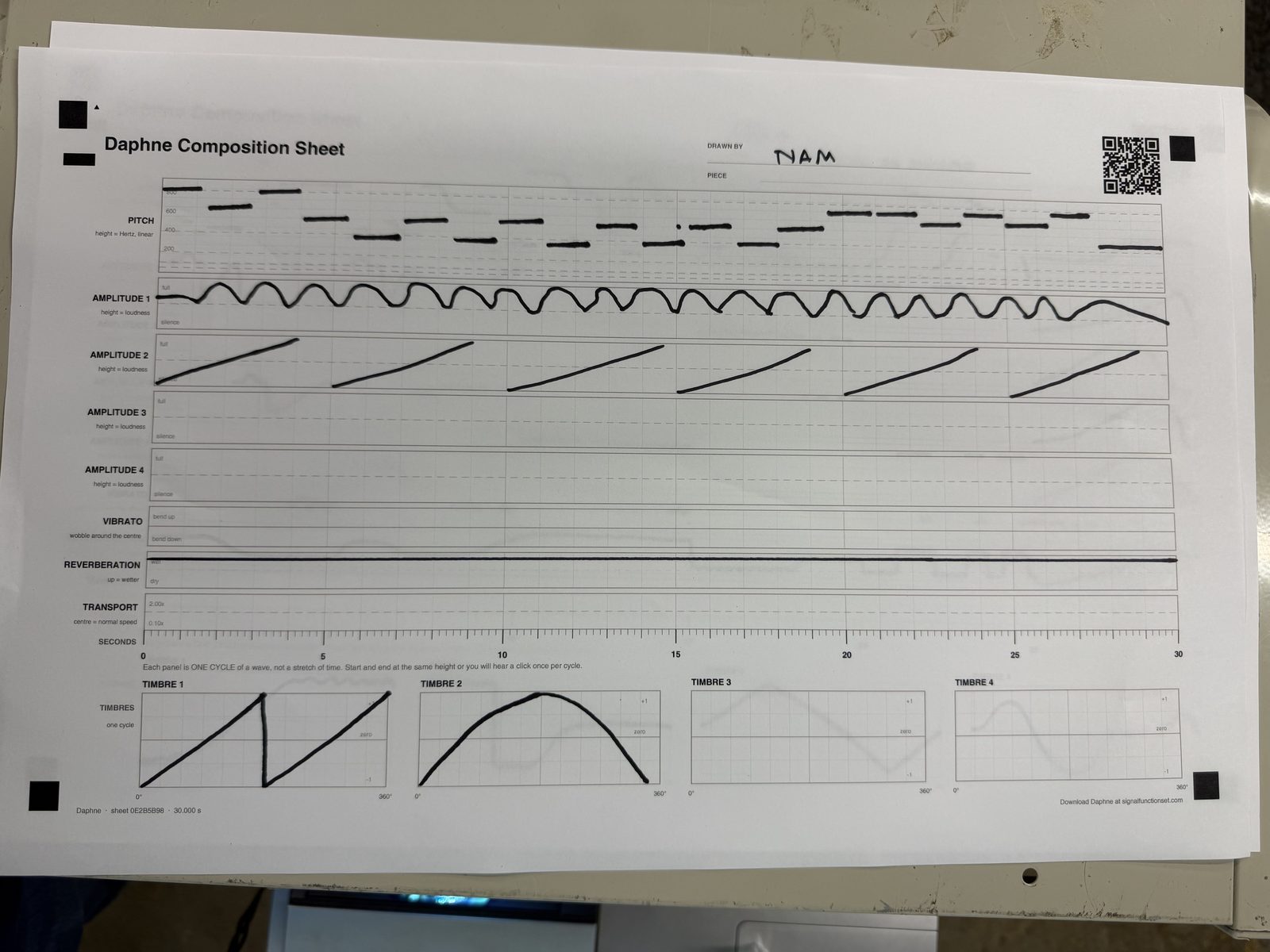
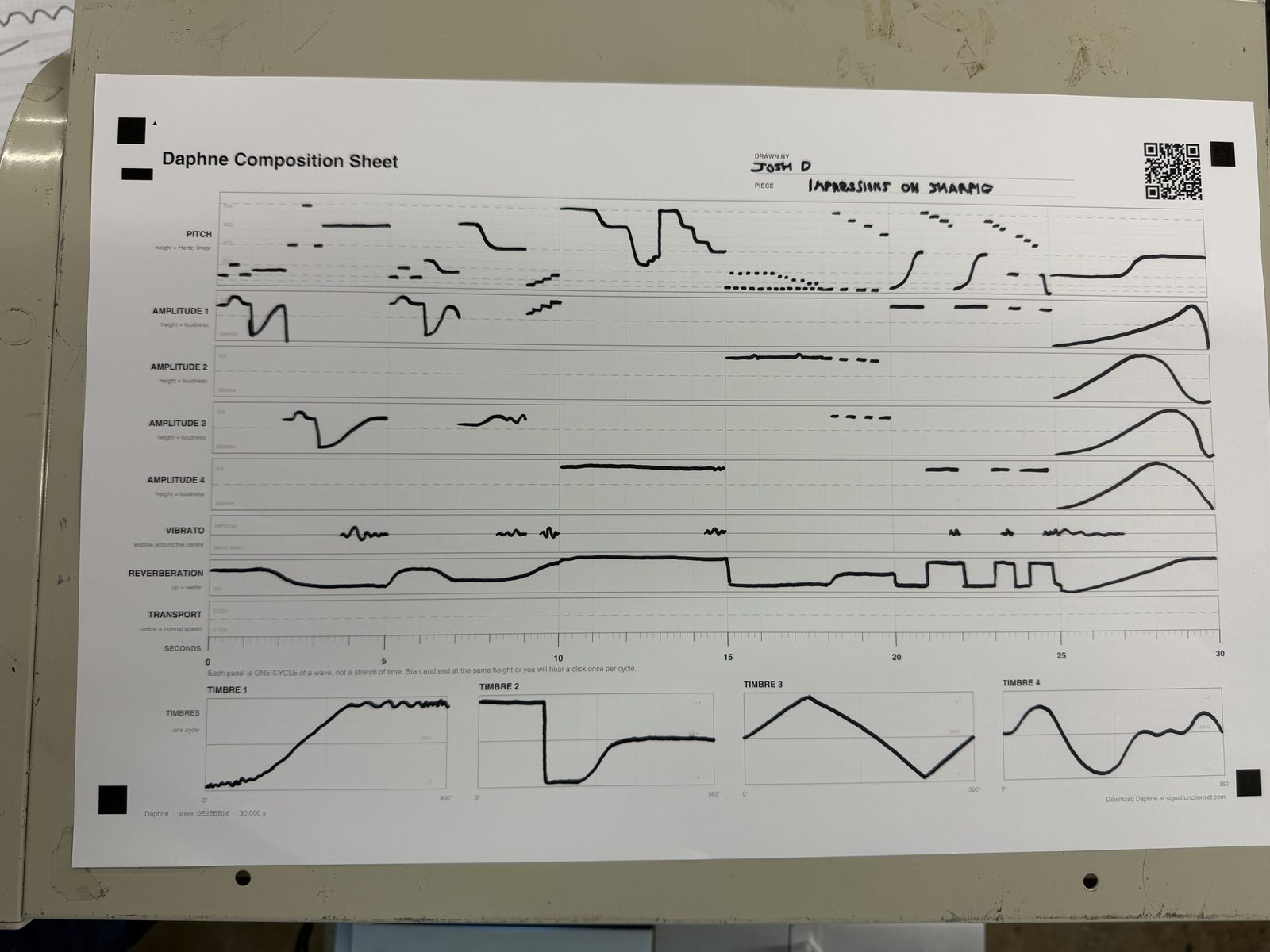
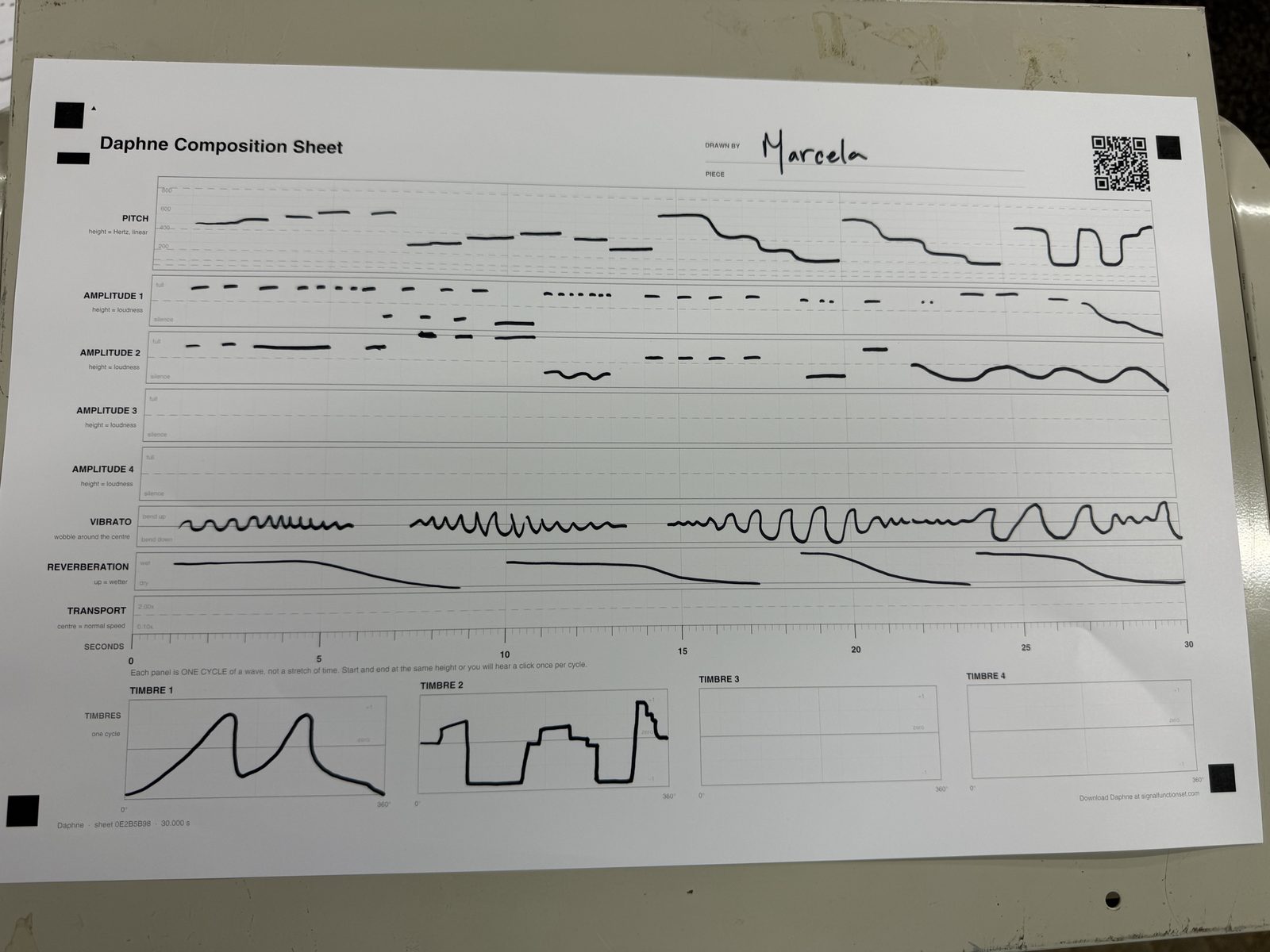
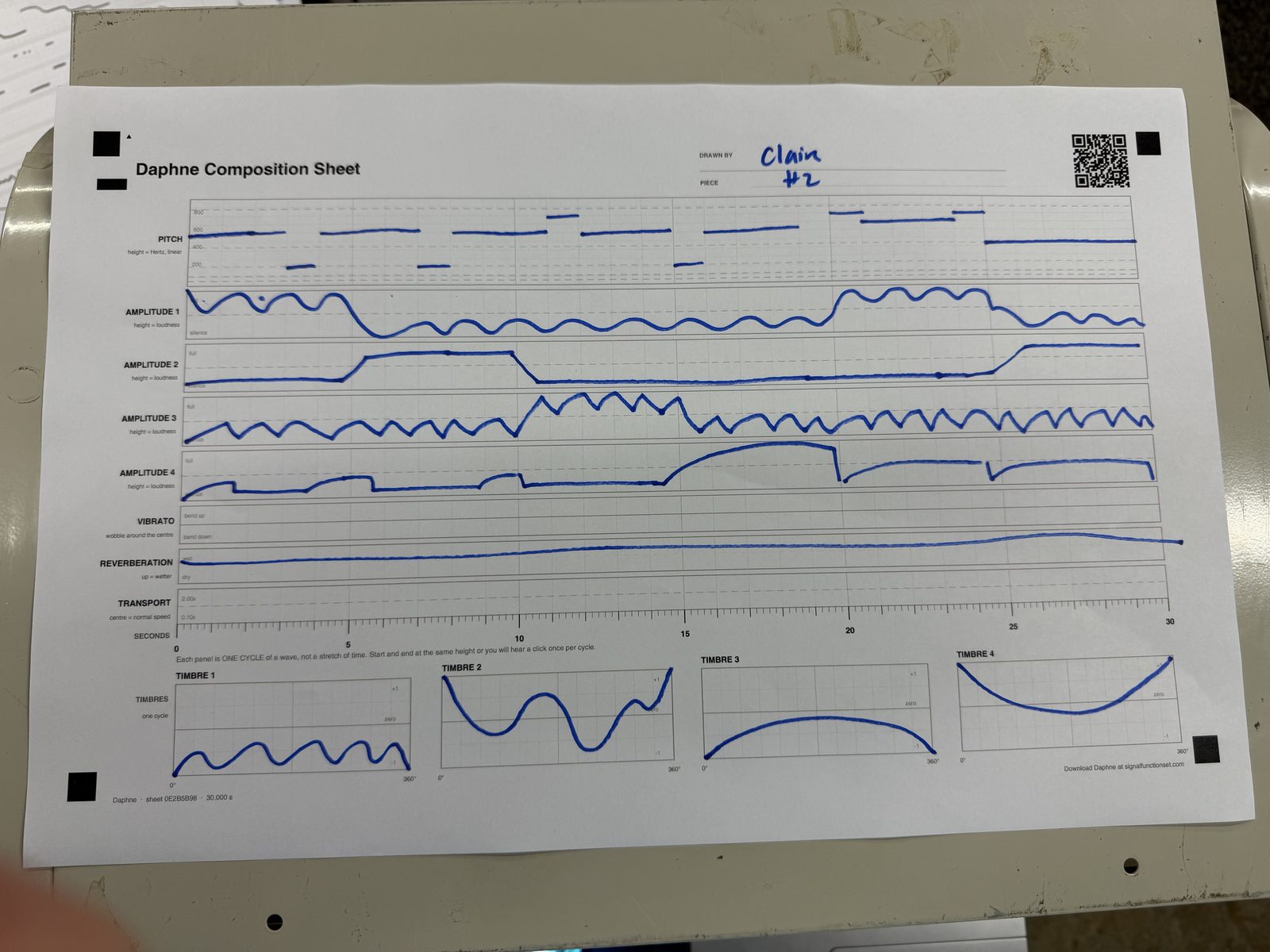
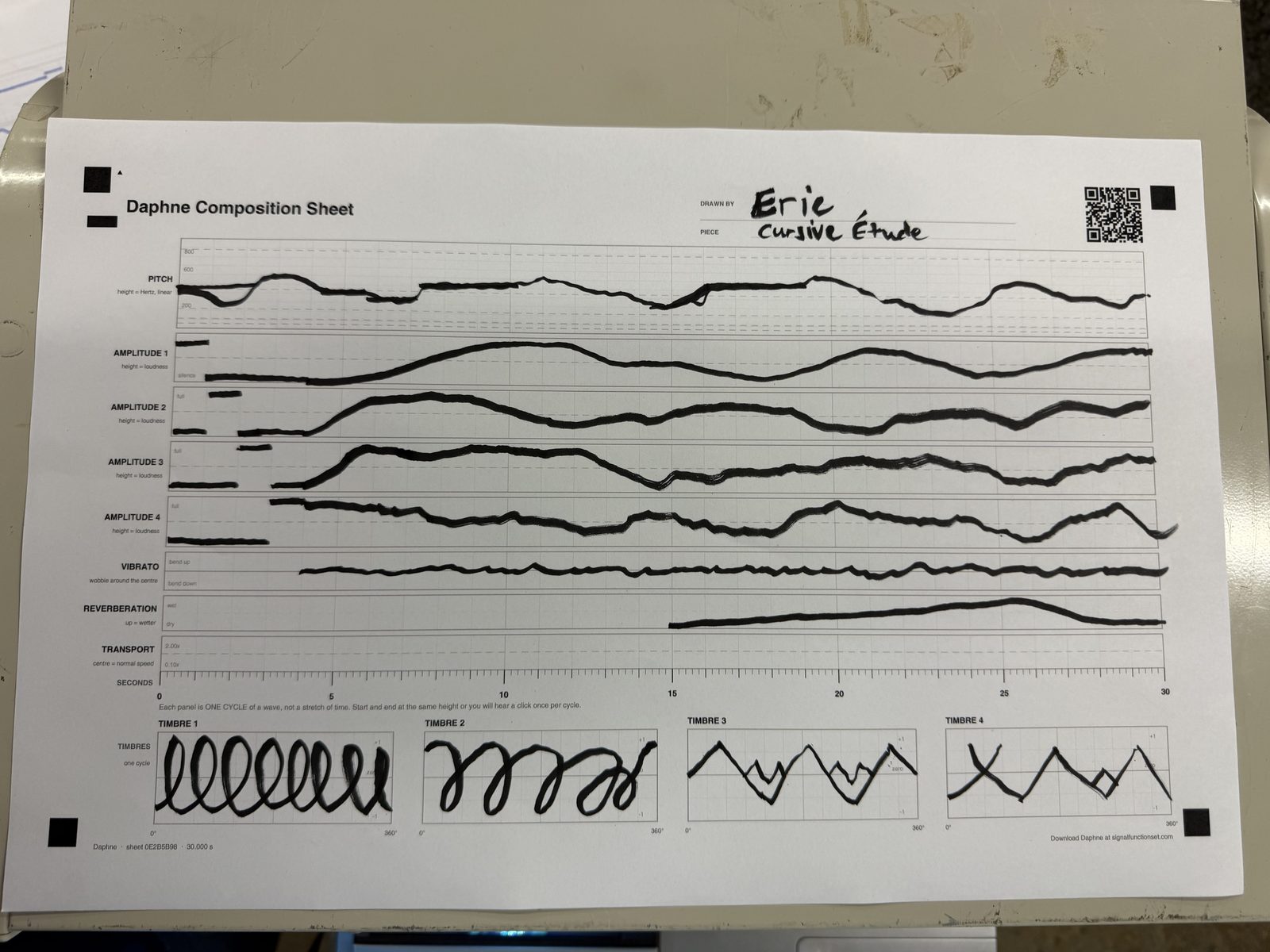
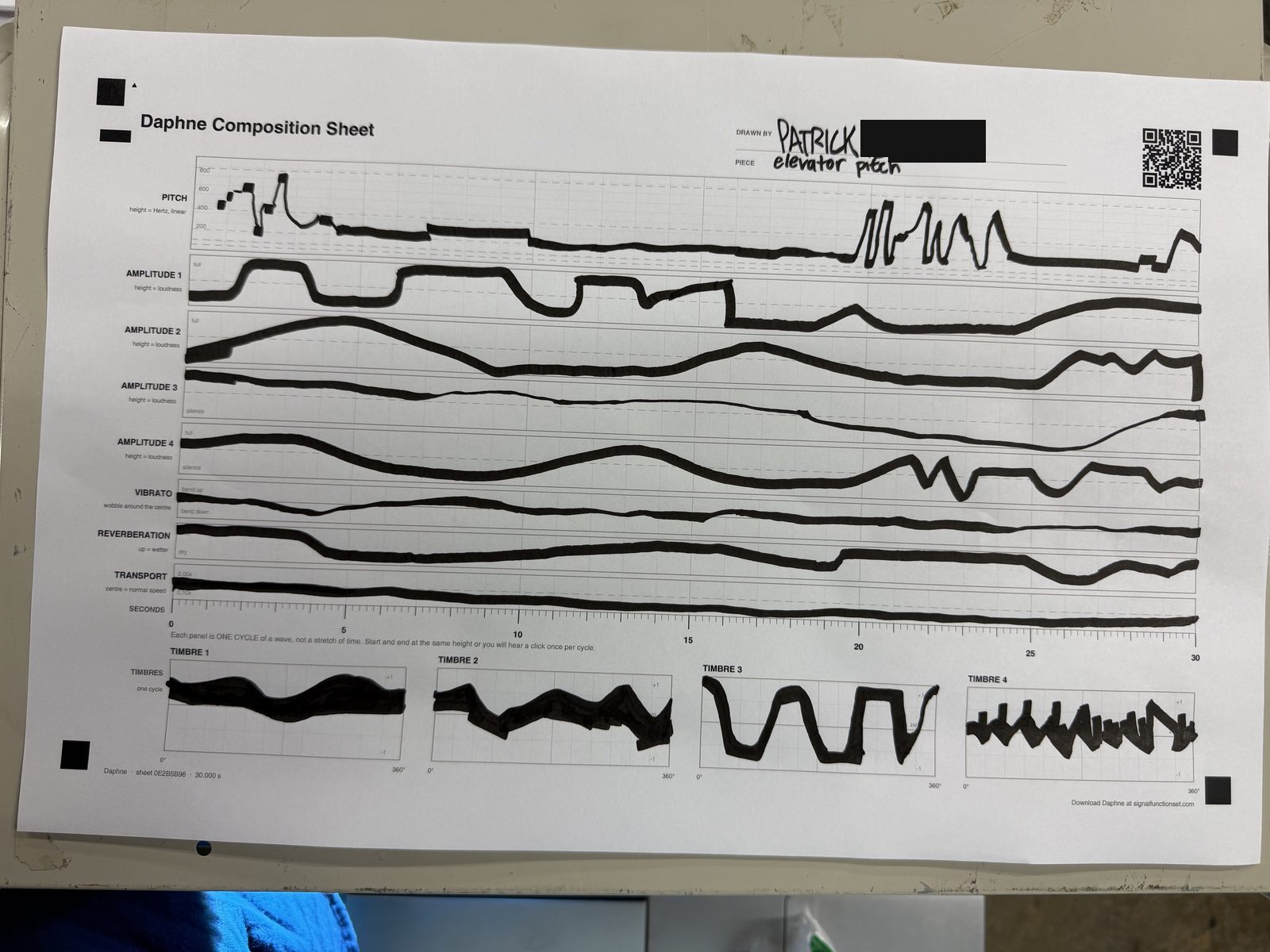
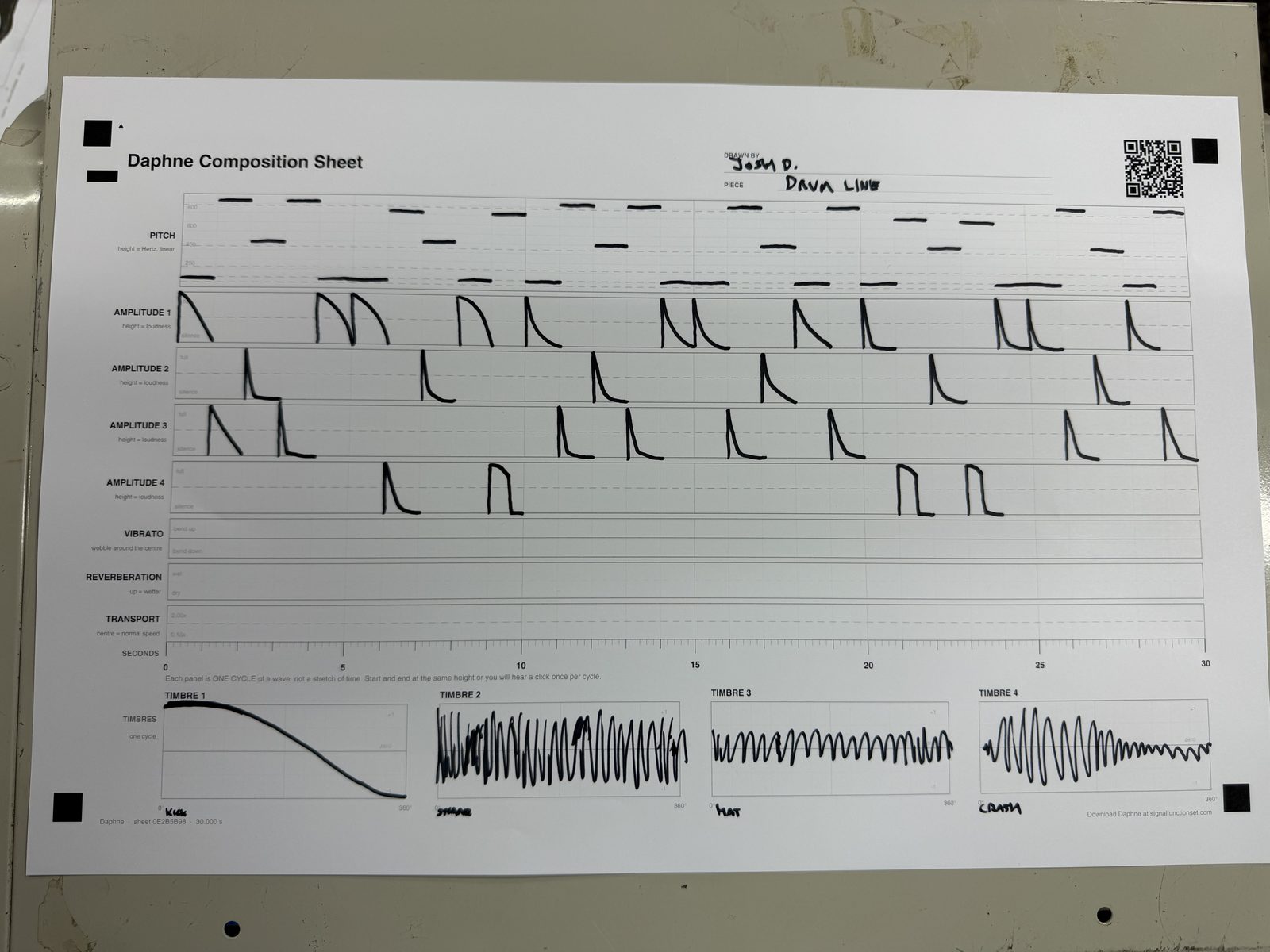
Daphne made its formal debut at a Synth Library Portland workshop. All attendees contributed one or multiple composition sheets which you can see below. We got a lot of different approaches and one or two gave the app some trouble, which I’ll try to patch up for the next release. Feel free to download any of the images here, they should easily import into the app.
Sources
Most of the dates, quotations and technical detail come from Tom Richards, Oramics: Precedents, Technology and Influence, PhD thesis, Goldsmiths, 2018. Graham Wrench, who built much of the electronics including the wave scanner, described the work in an interview in Sound on Sound. The account also draws on Peter Manning in Organised Sound 17(2), 2012, and on Oram’s own logbooks and correspondence in the Daphne Oram Archive at Goldsmiths.