VCV Rack Modules
The complete set of free, open-source SignalFunctionSet modules for VCV Rack. Most also run on the 4ms MetaModule. Filter by tag to find what you need.
38 modules
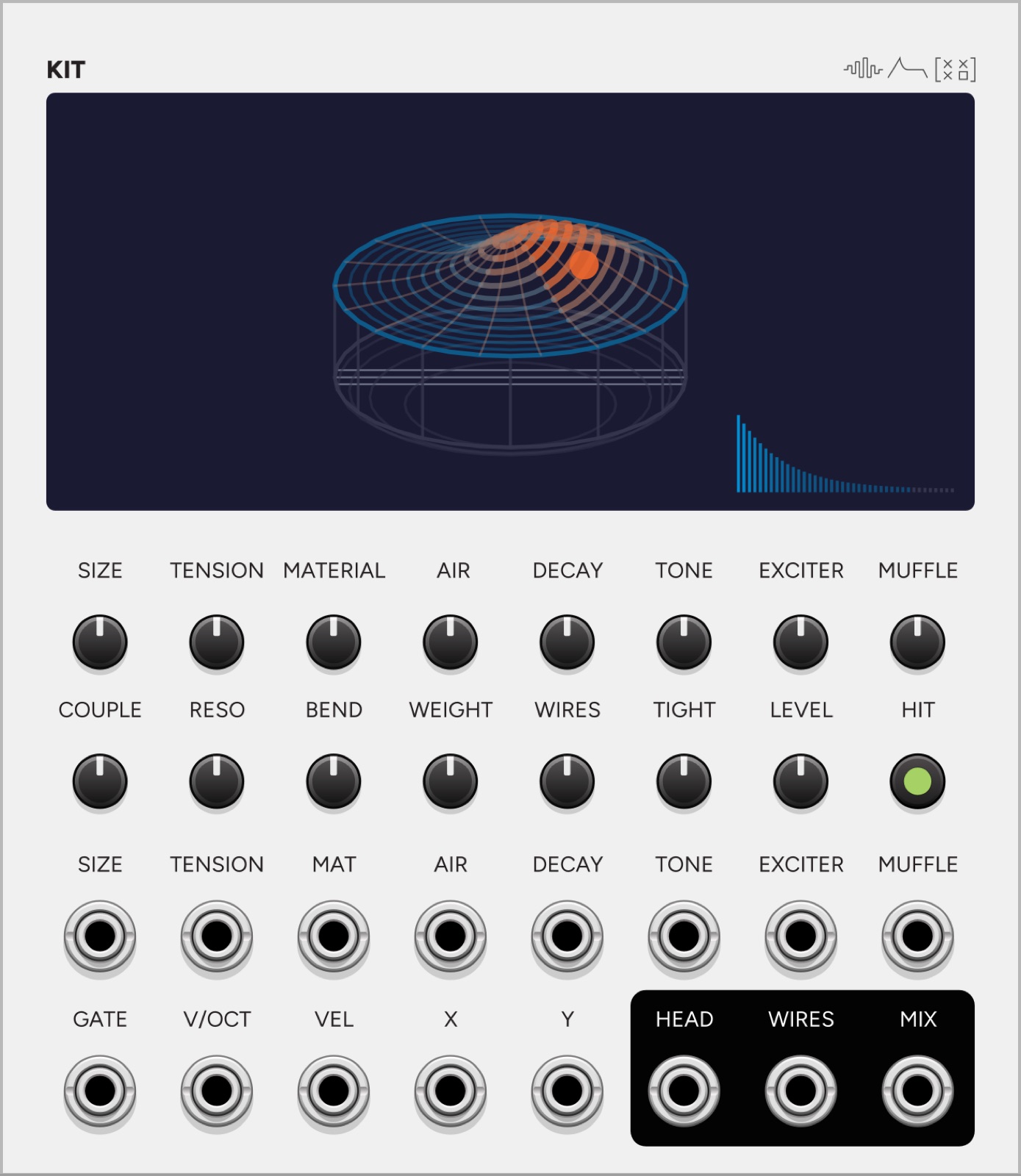
Kit
A physically modelled drum for VCV Rack. A struck membrane solved mode by mode, covering tom, timpani, kick, snare, gong, steel pan, frame drum and tabla.
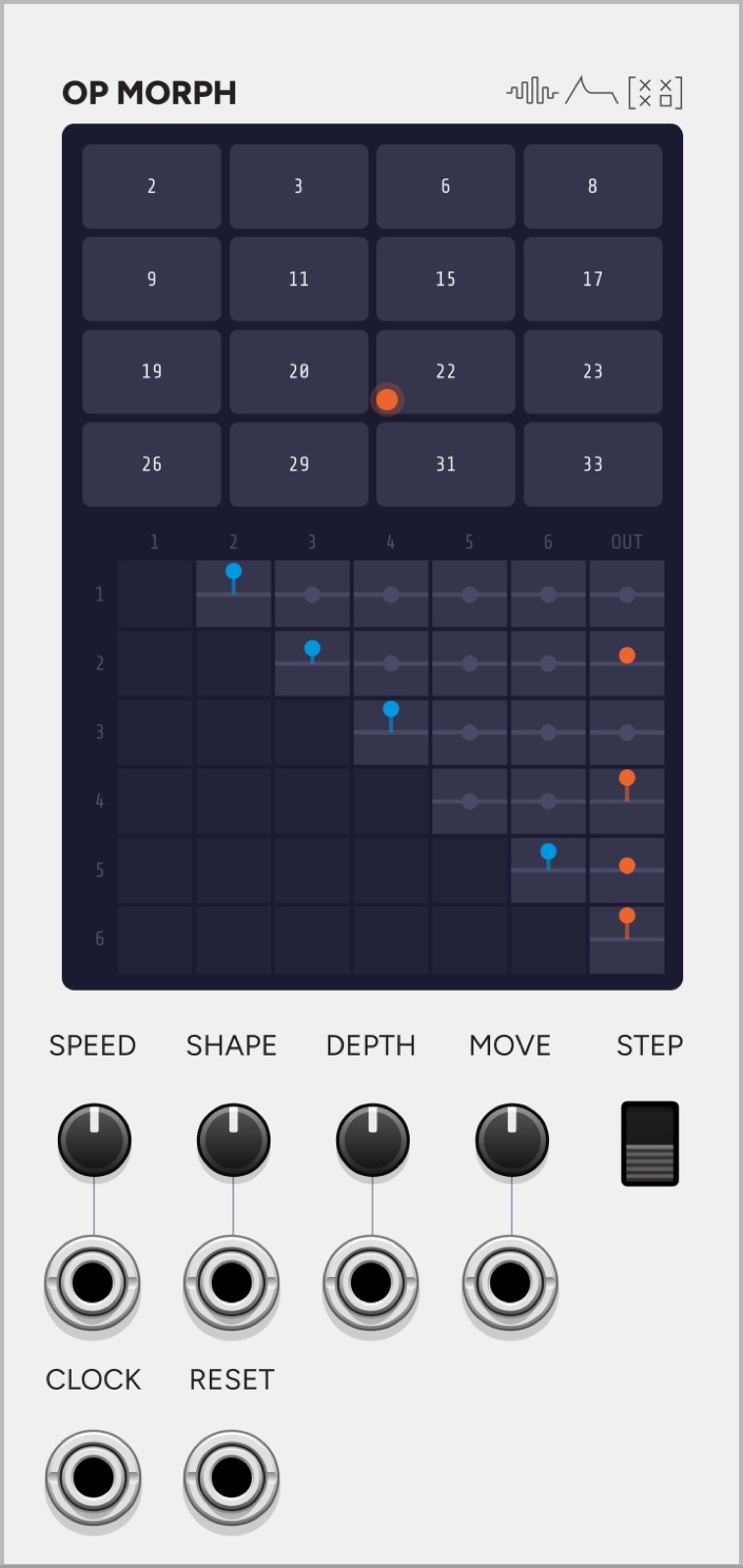
OP MORPH
An expander for Operator in VCV Rack. It puts the DX7 operator routing on screen as a matrix, and gives you a field of sixteen of them to travel across.
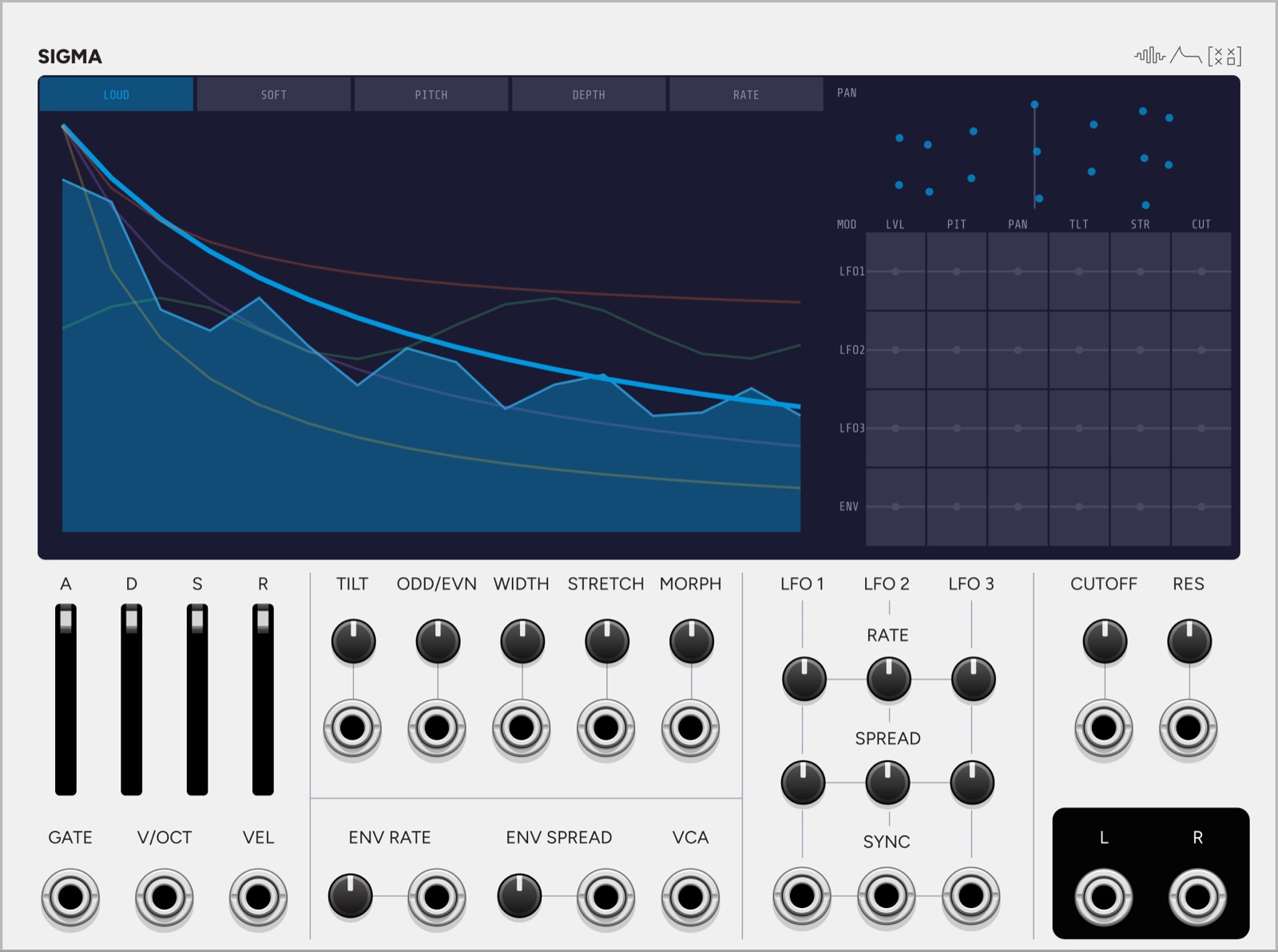
Sigma
An additive synthesizer for VCV Rack after the Crumar GDS. Up to 64 sine partials, with velocity morphing between two complete spectra.
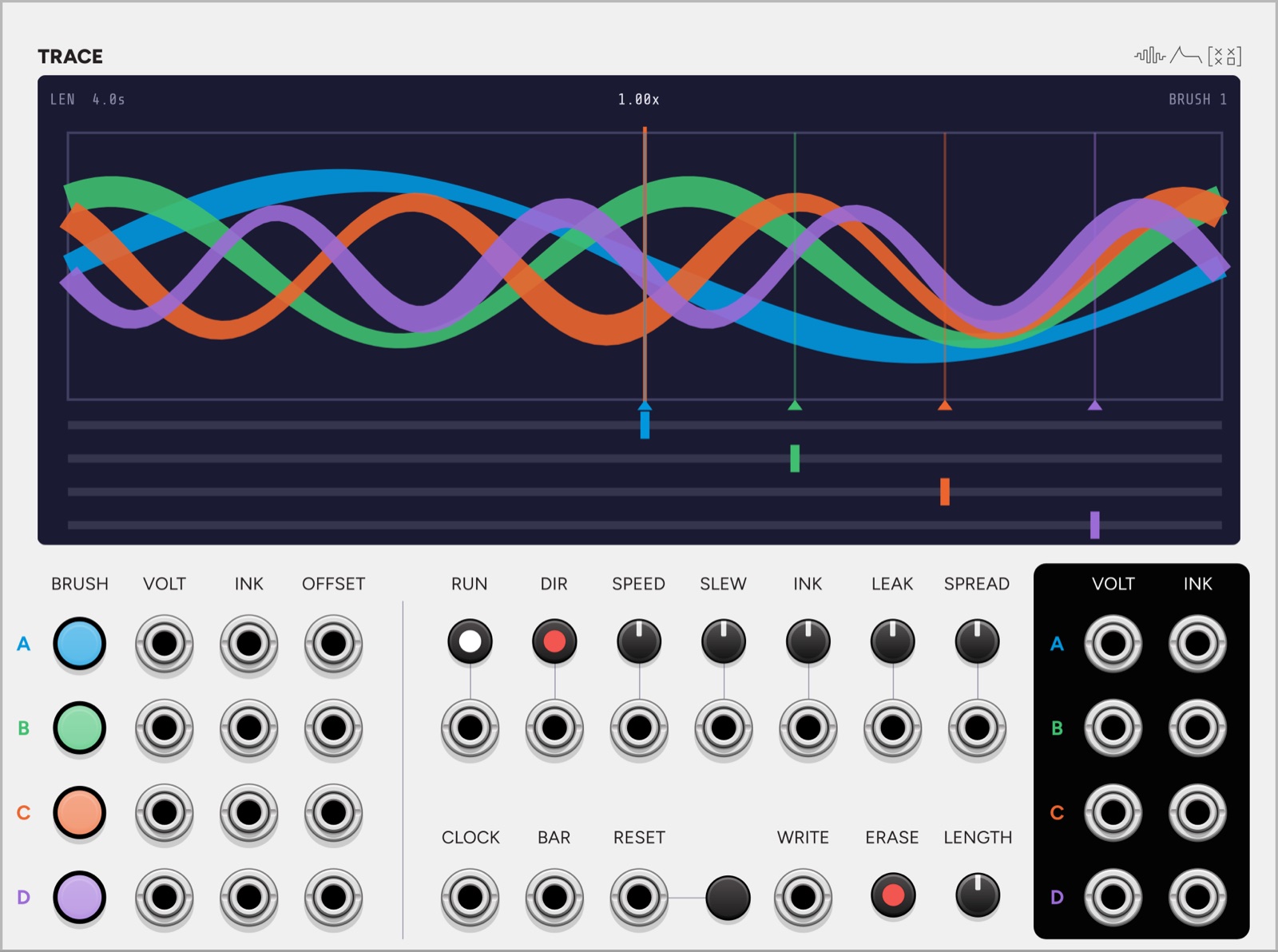
Trace
A drawn-CV sequencer for VCV Rack. Four brushes write onto a moving paper loop, and four read heads play the shapes back.
Wheel
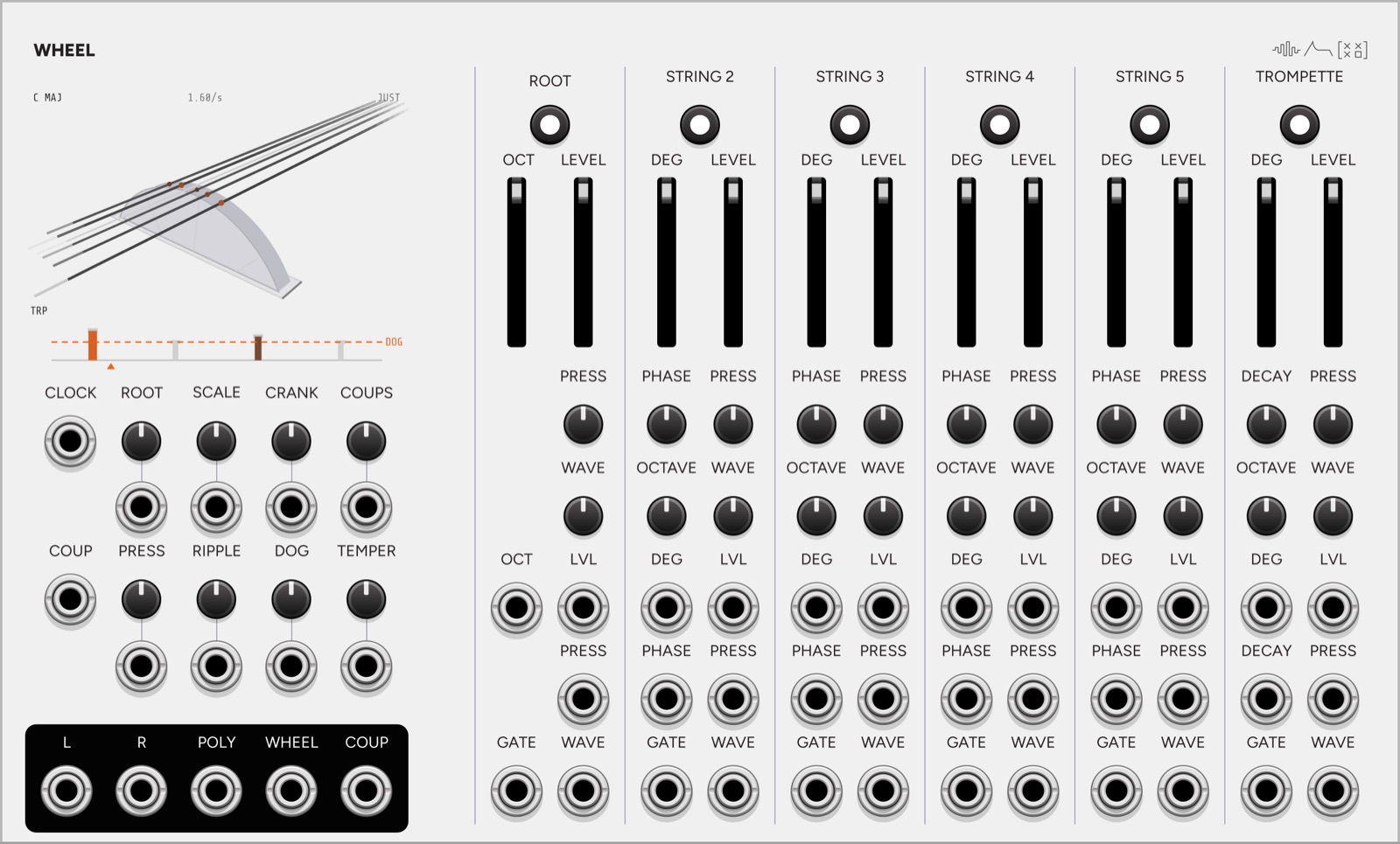
A hurdy-gurdy drone instrument for VCV Rack. One rosined wheel bows six strings at once, and the trompette's buzzing bridge keeps time.
Slice
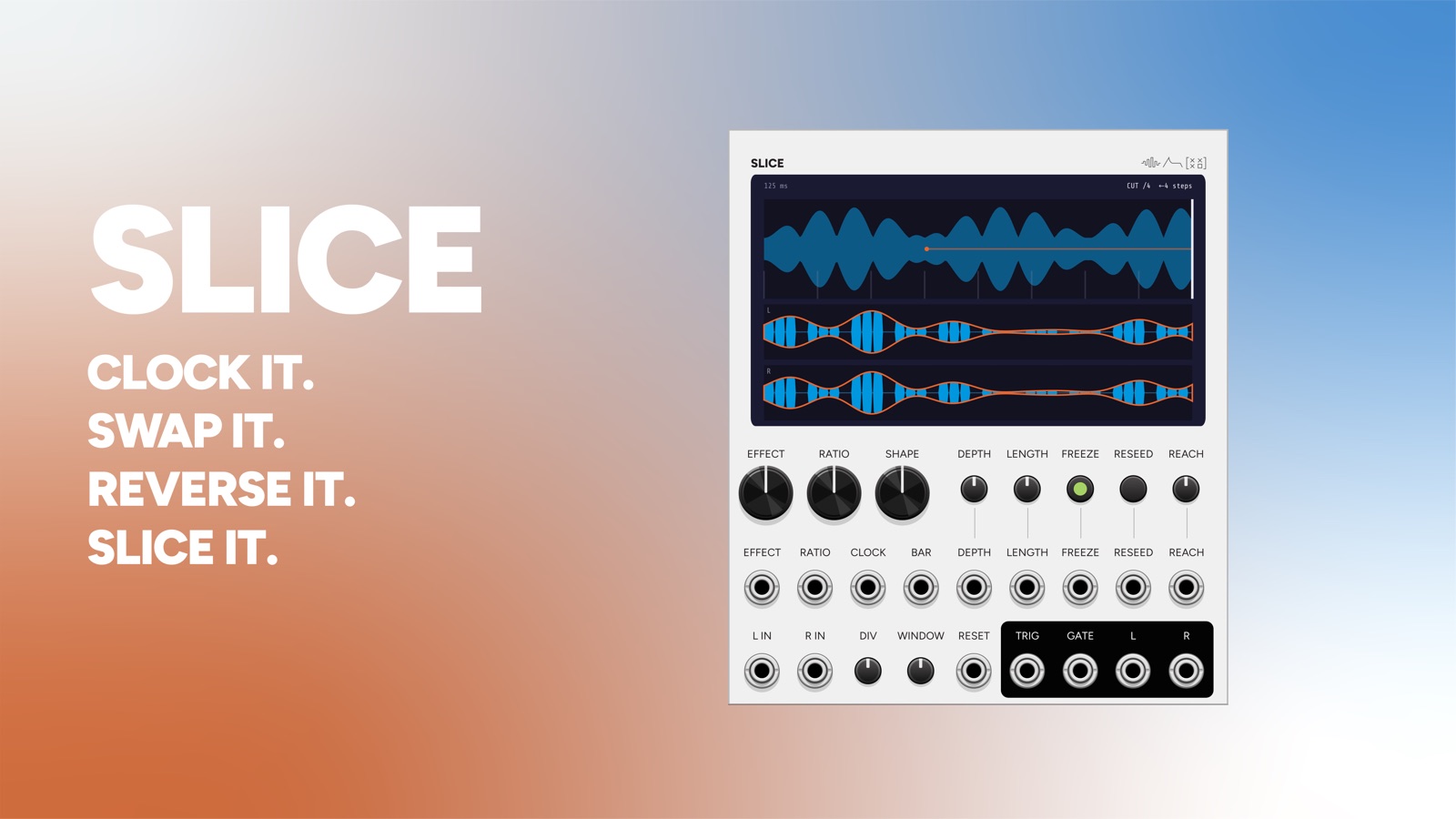
A stereo buffer slicer for VCV Rack. It cuts incoming audio onto a grid and reworks one slice in every N: cut, swap, delay, shuffle, reverse, stutter, or pitch down.
Chime
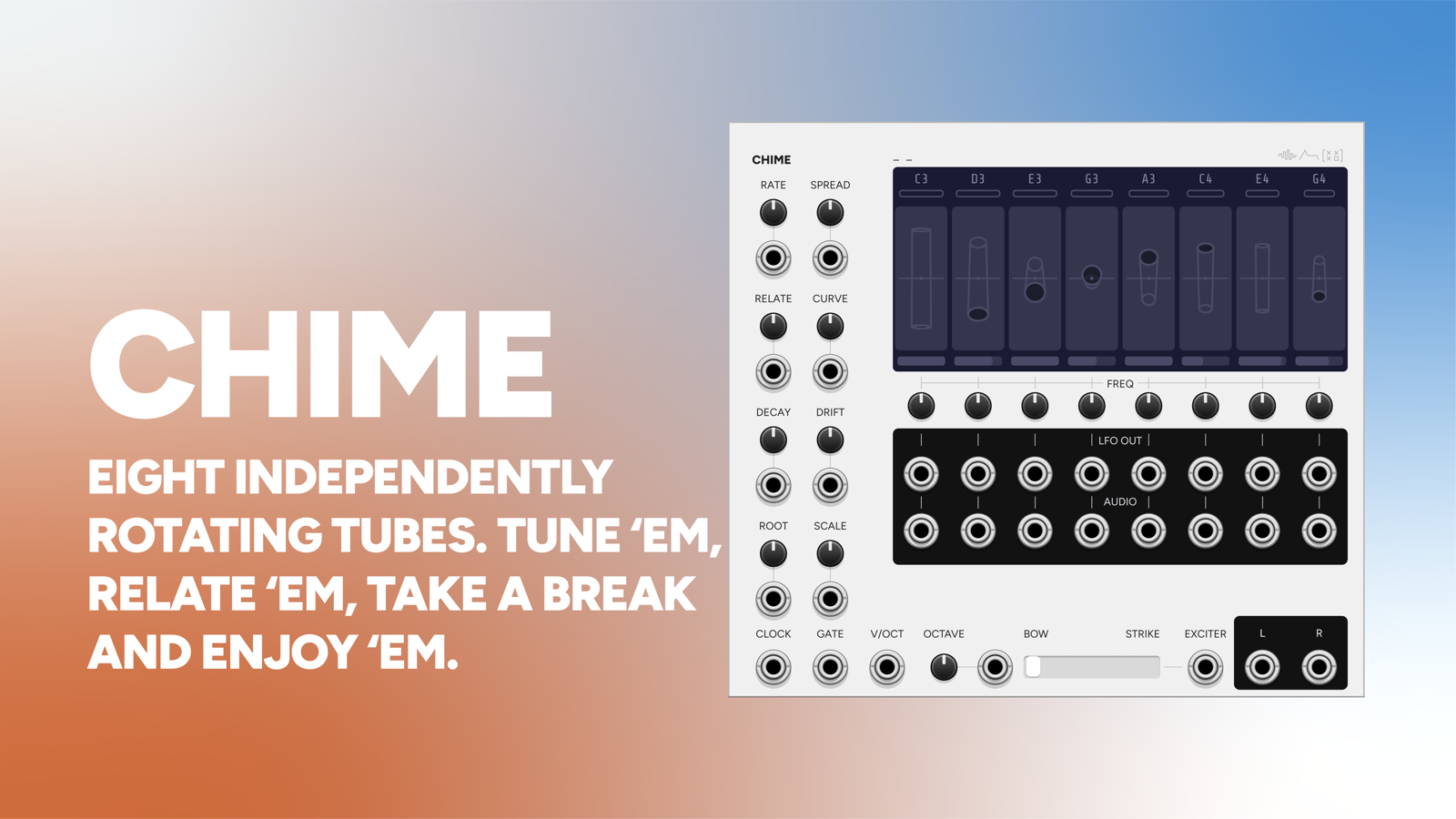
An eight-note resonating drone machine for VCV Rack, after a xylophone whose resonator tubes rotate beneath the bars. Each note blooms as its tube swings through centre.
Crystal
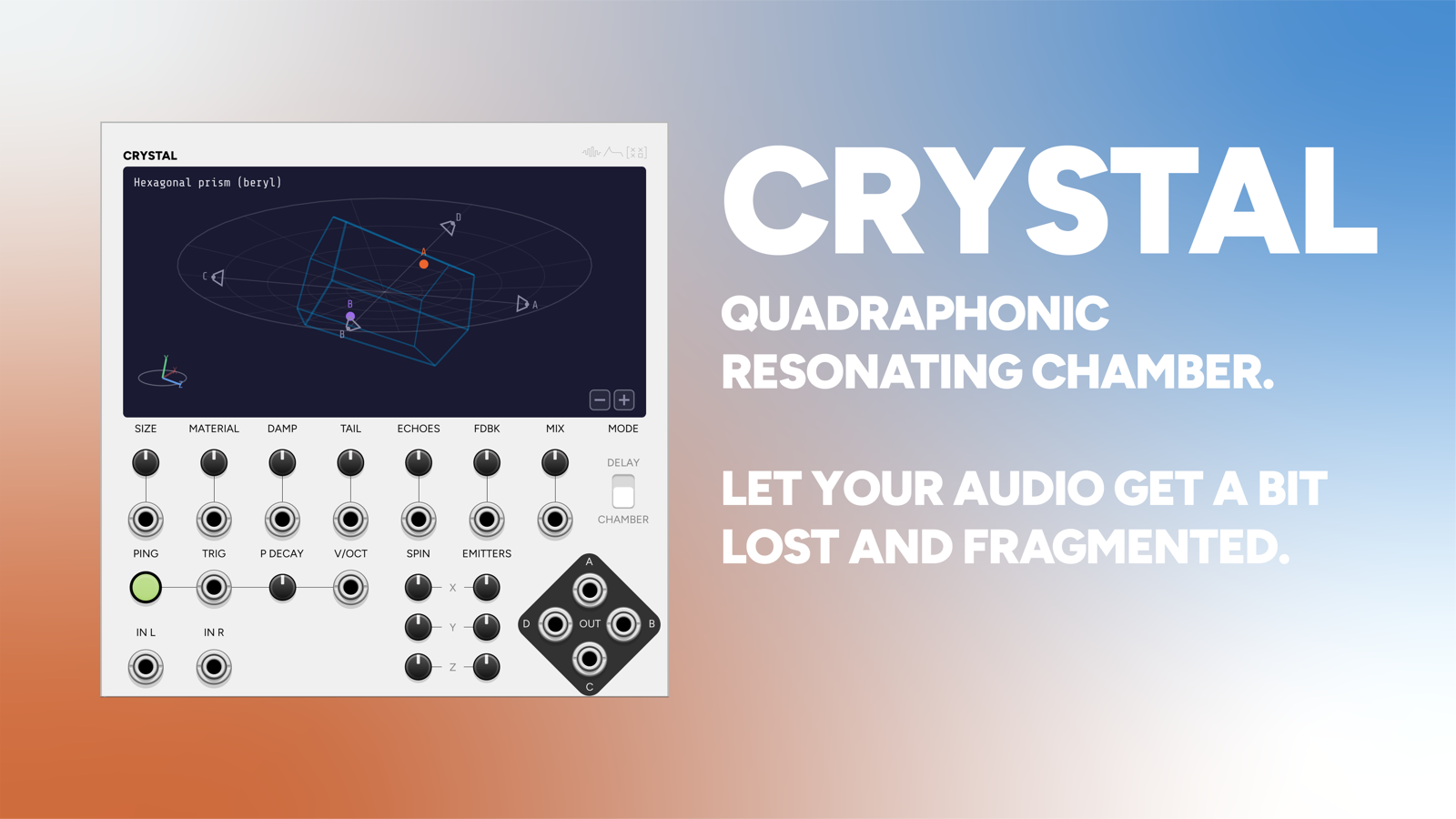
A 3D echo chamber for VCV Rack shaped like a real crystal. Stereo in, quad out, with sixteen crystal habits traced by ray casting and four listeners standing inside the shape.
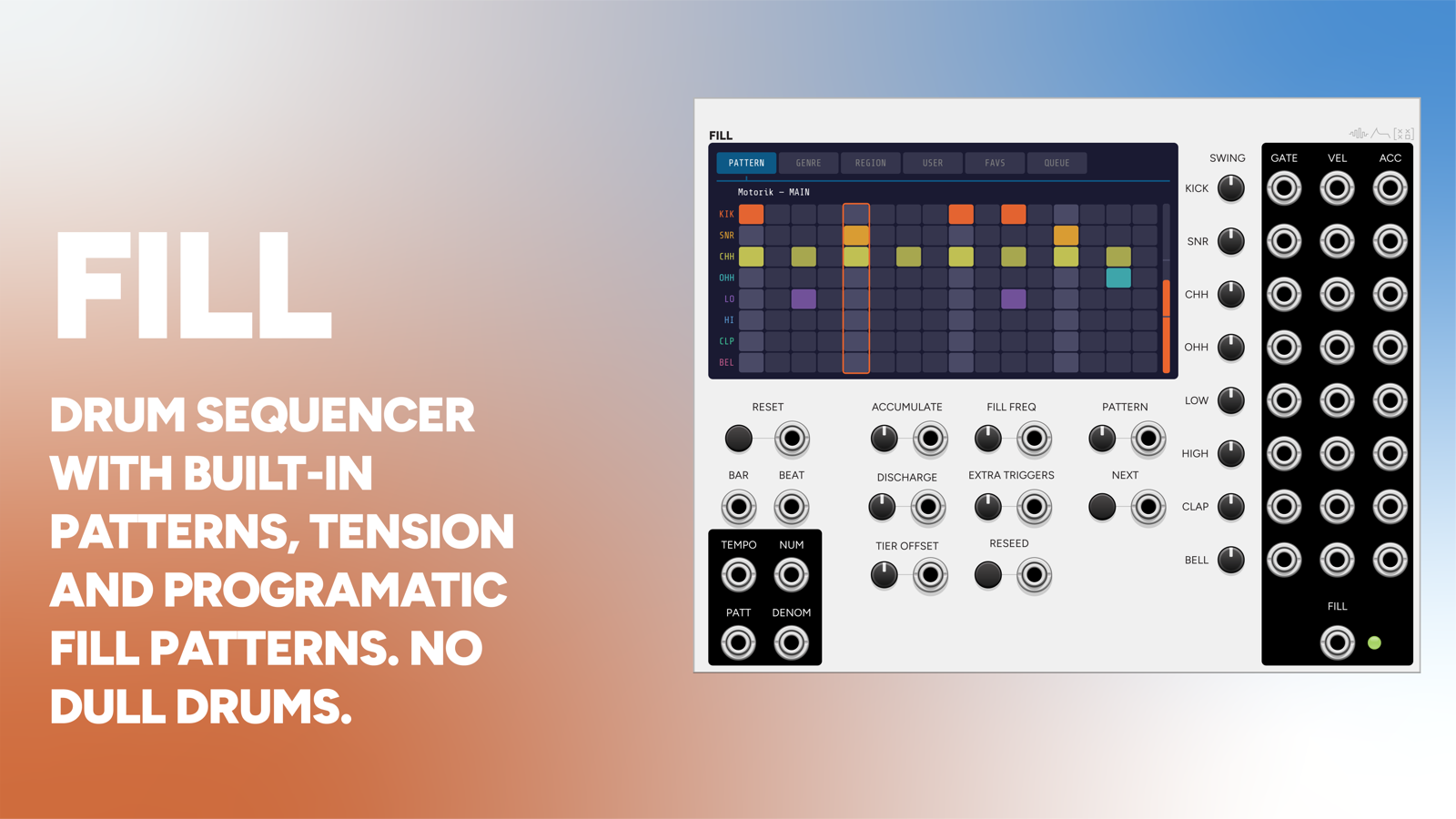
Fill
A self-playing eight-channel drum machine for VCV Rack. 343 built-in pattern sets across three banks, pressure that builds and vents as fills, and a PHRASE control that sets the fill frequency.
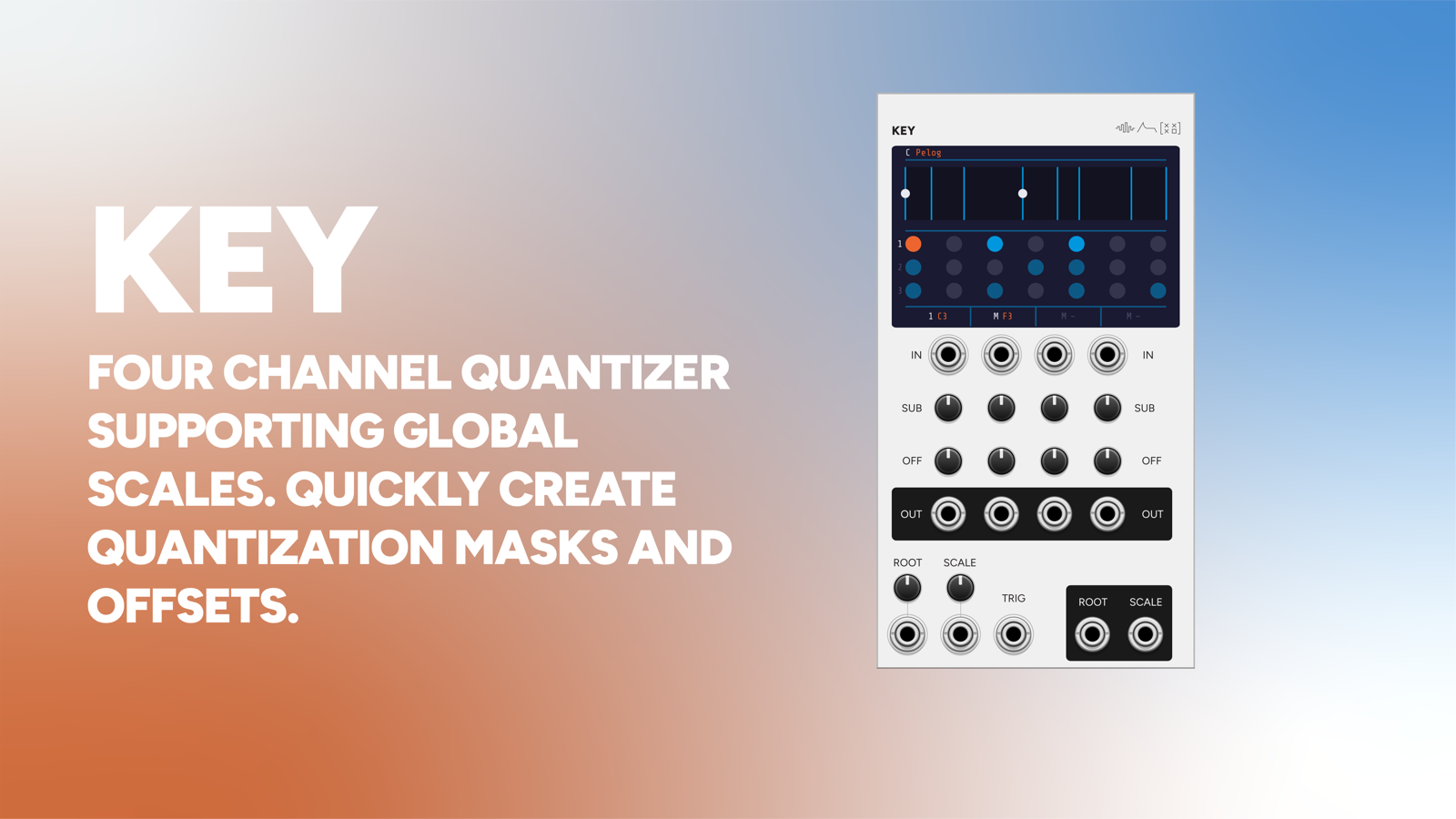
Key
A quantizer for VCV Rack that takes its key from the patch. Read one Root and Scale and every module follows the same key change, with sub-scales, Scala import, and microtonal support.
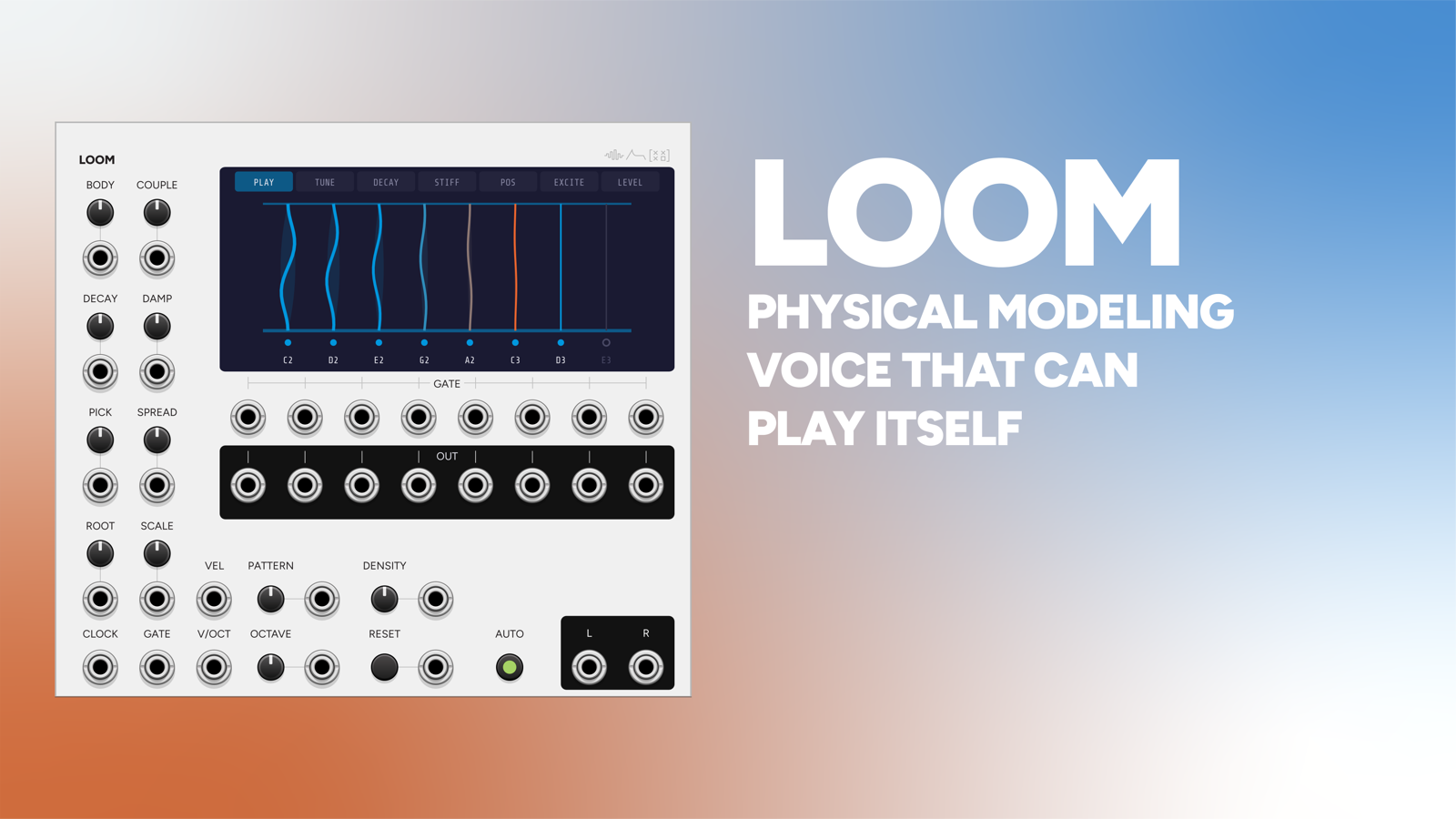
Loom
An eight-string physical-model voice for VCV Rack. The strings share one bridge, so a struck string rings its neighbours, with a continuous hammer, pluck, bow, and wind exciter.
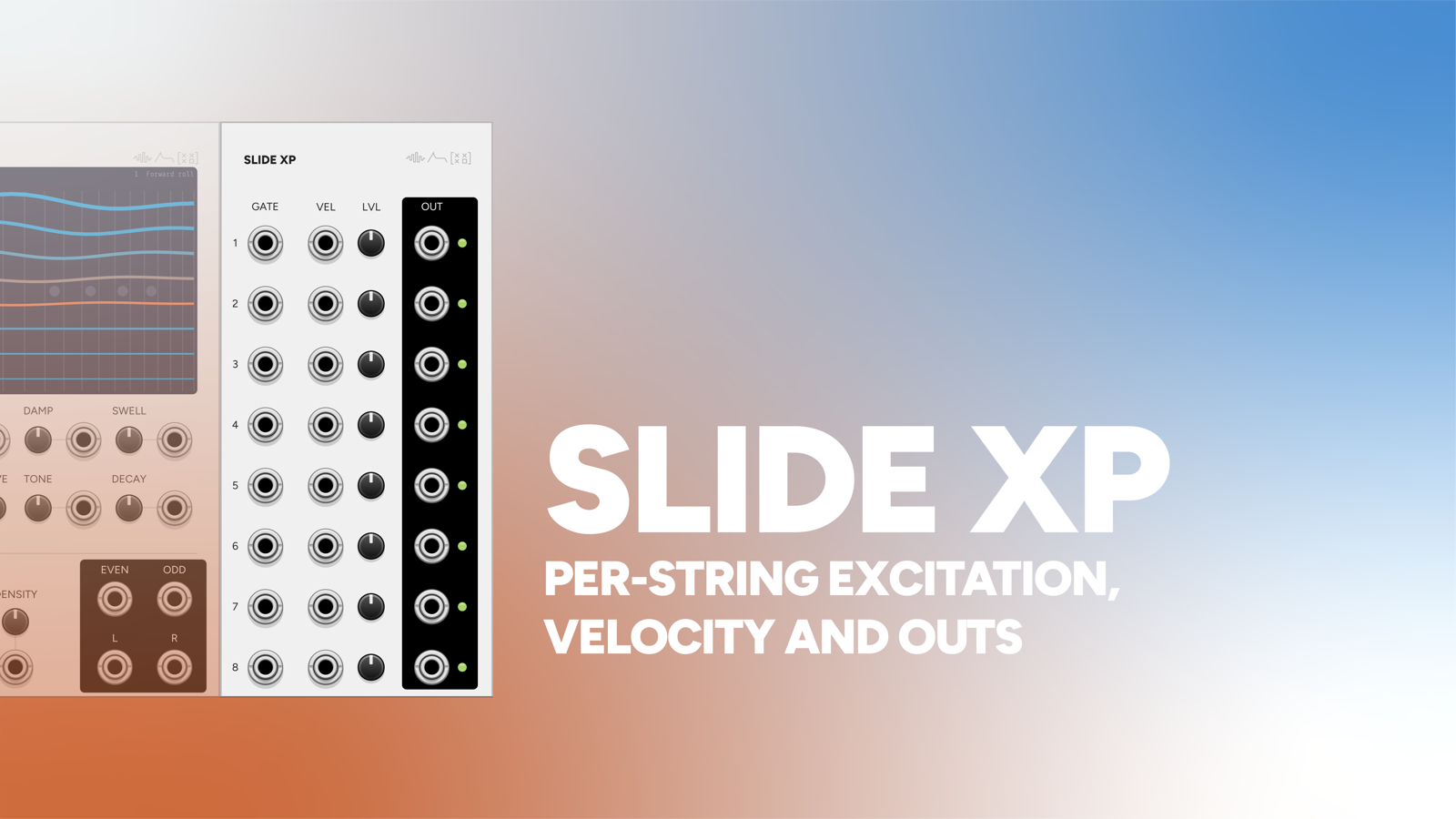
SLIDE XP
An expander for Slide in VCV Rack. It puts the eight strings on eight jacks, each with a gate in, velocity in, and level trimpot, so every string can go to its own destination.
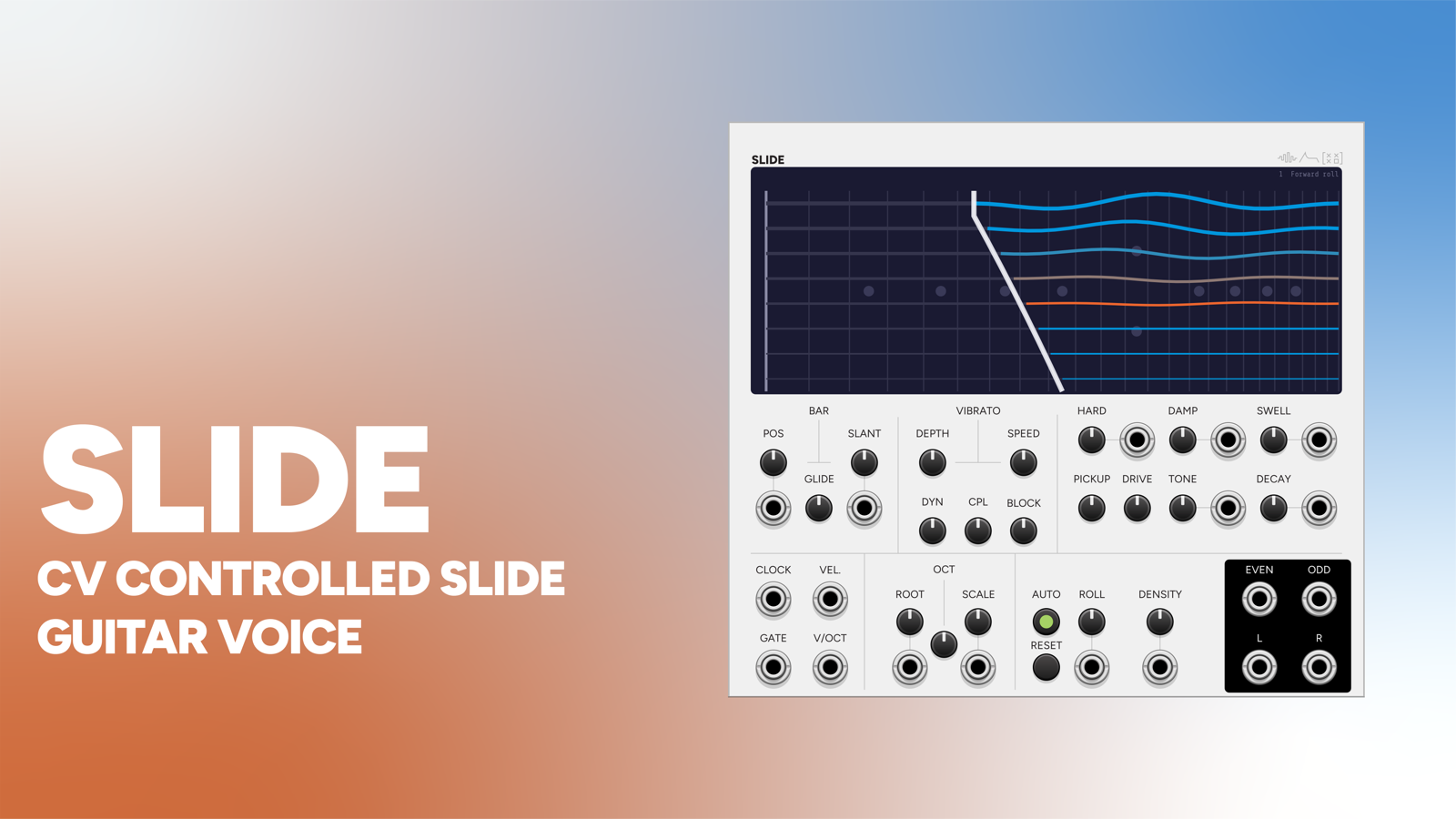
Slide
An electric lap steel for VCV Rack. Eight waveguide strings stopped by a steel bar, with bar slant for chords, rate-based glide, a volume-swell pedal, and ten steel-guitar tunings.
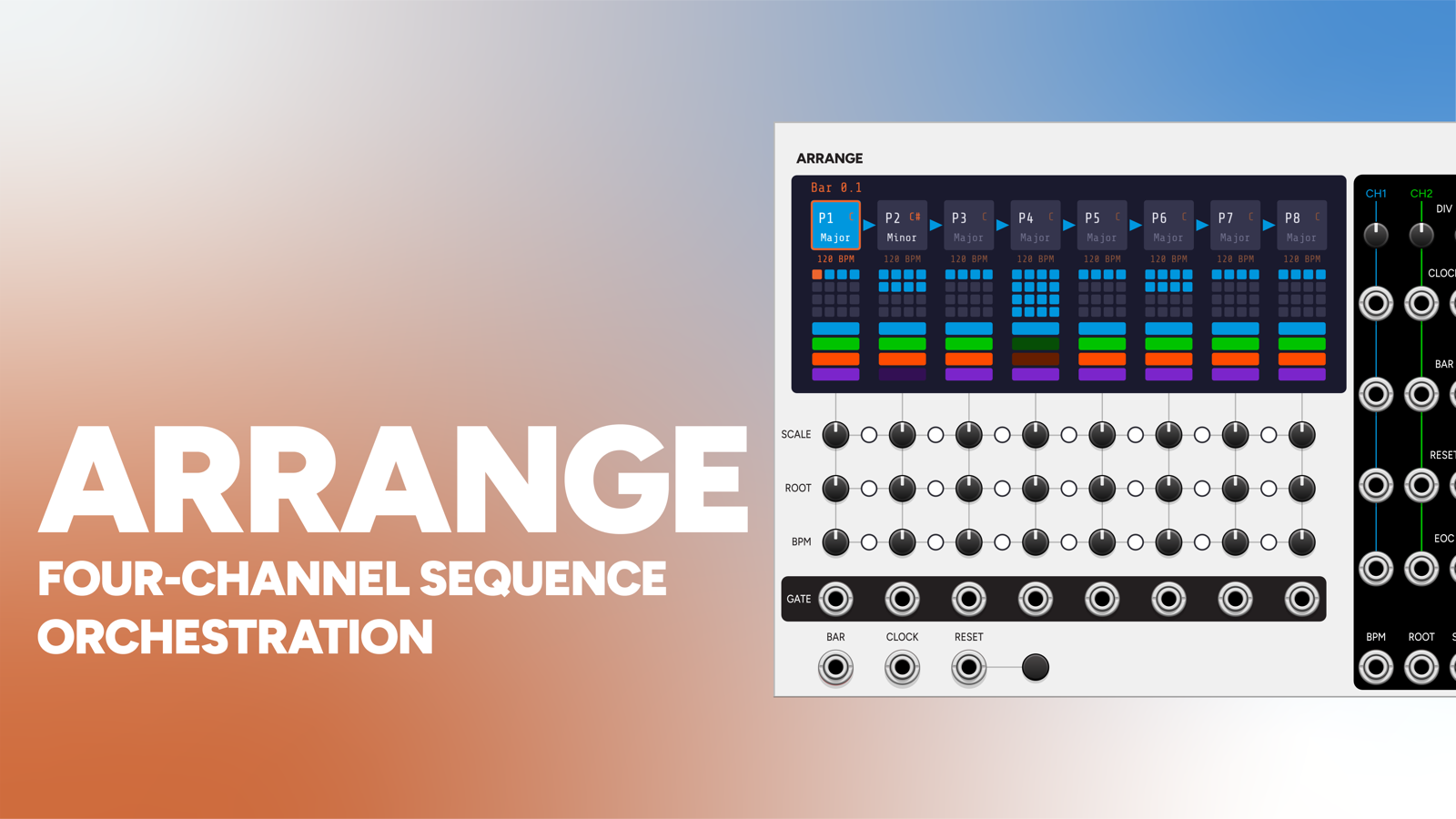
Arrange
A song-form sequencer for VCV Rack. Eight phrases hold your song's sections (bar length, key, tempo) and four per-instrument clock buses drop each instrument in and out as the arrangement moves.
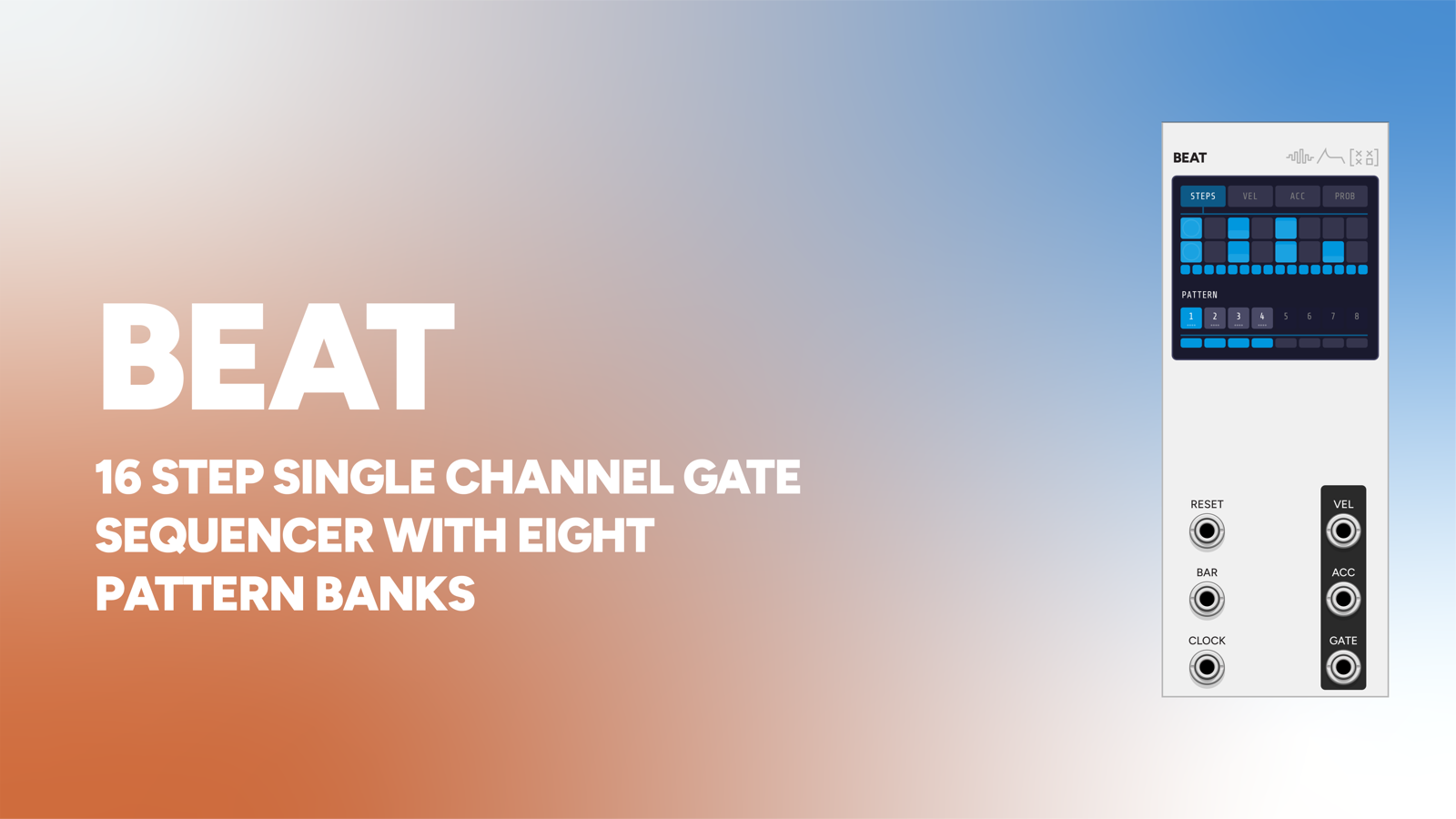
Beat
A single-voice drum sequencer for VCV Rack. One Beat is one drum: eight patterns of sixteen steps, each step with velocity, accent, and probability, all edited on-screen.
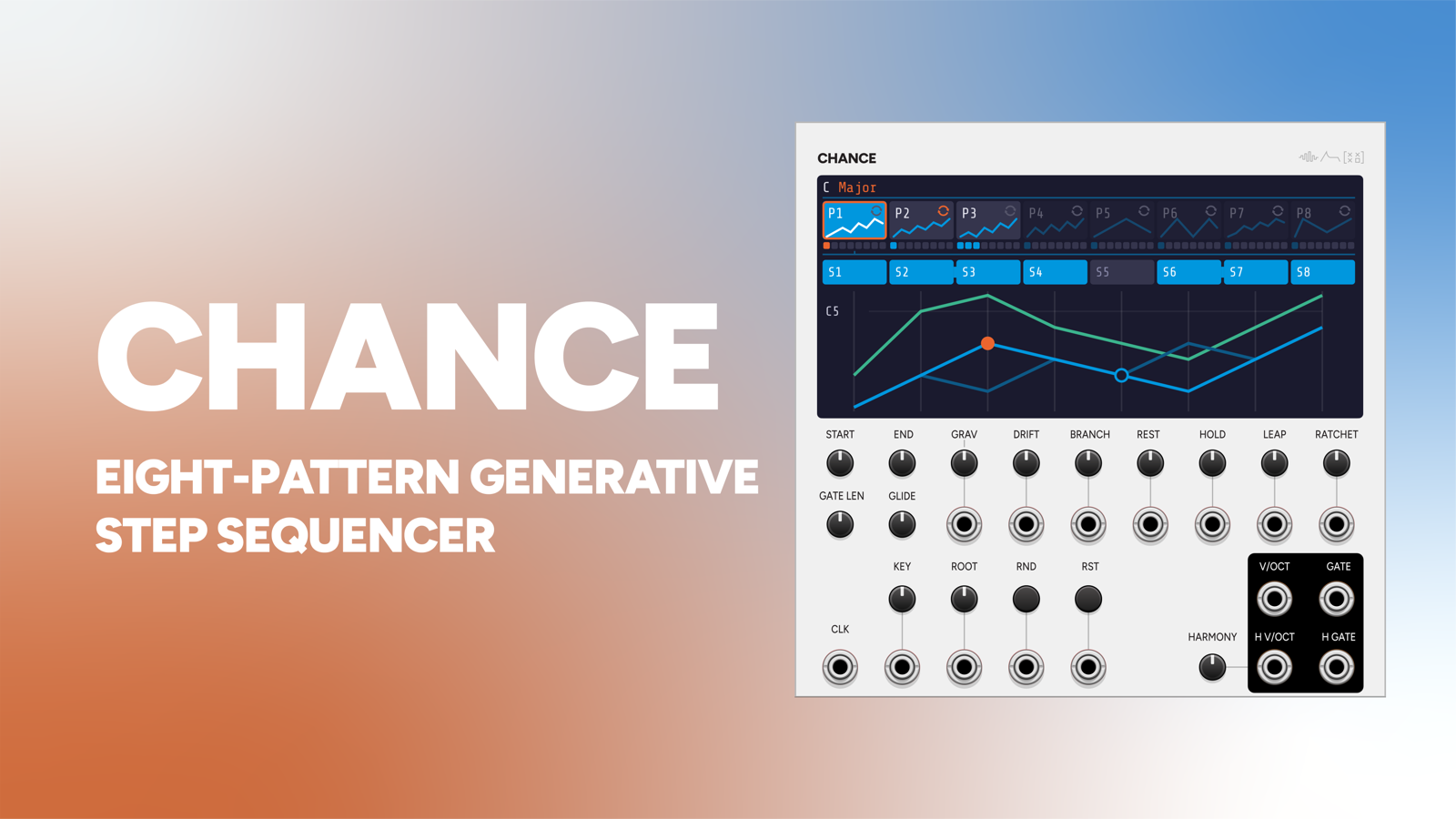
Chance
A generative melodic sequencer for VCV Rack. You don't program notes: you set a key and a few probabilities, and Chance walks a line through the scale. Every decision is seeded, so a pattern is a fixed, repeatable melody rather than noise.
Meter X
An expander for Meter. A 24 PPQN clock, a run gate, and bar-multiple triggers out to 128 bars, each with a pie chart showing how far through its cycle you are: structure that unfolds over minutes, not beats.
Meter
A time-signature-aware master clock for VCV Rack. Six musical subdivisions with per-output swing, swung and grid jacks side by side, CV over the time signature, and external clock sync.
Note
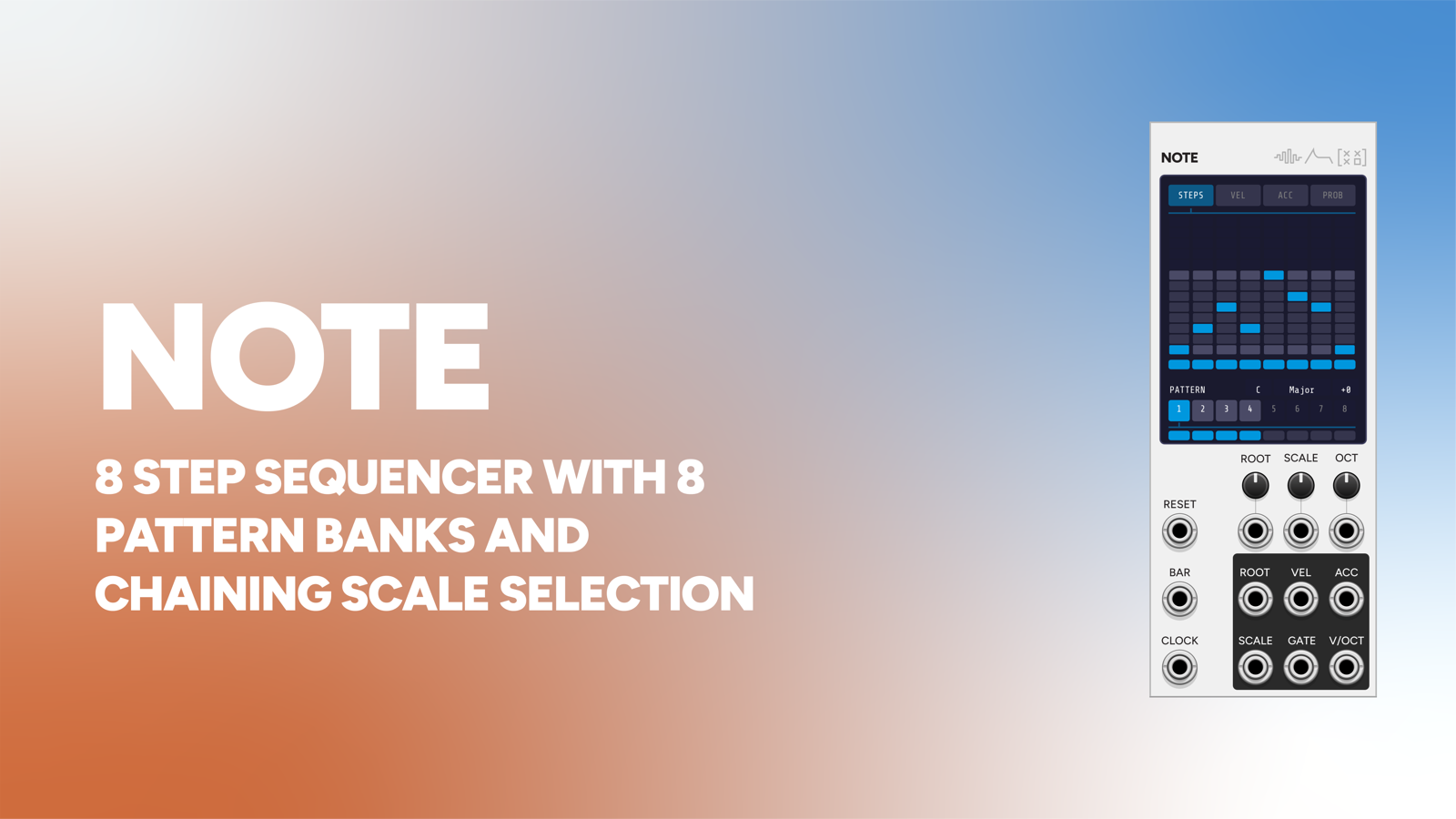
A pitched CV/gate sequencer for VCV Rack. Beat's melodic cousin: eight patterns with per-step velocity, accent, and probability, plus a pitch matrix quantized to 19 scales including just intonation and Gamelan tunings.
Play
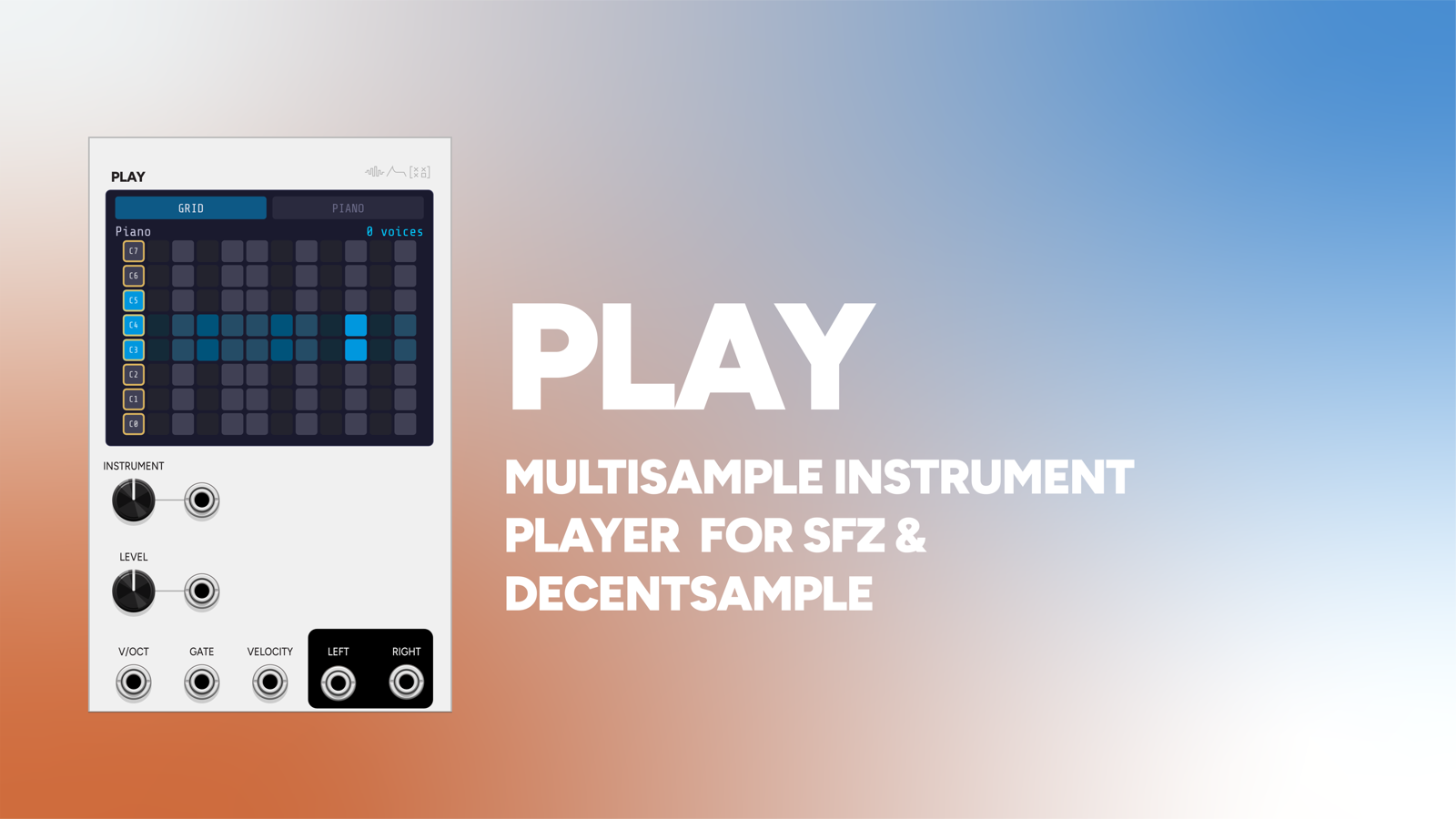
A polyphonic multisample player for VCV Rack. Loads .sfz or DecentSampler .dspreset instruments into a 16-voice engine with velocity layers, round-robins, loops, and per-note tuning.
Record
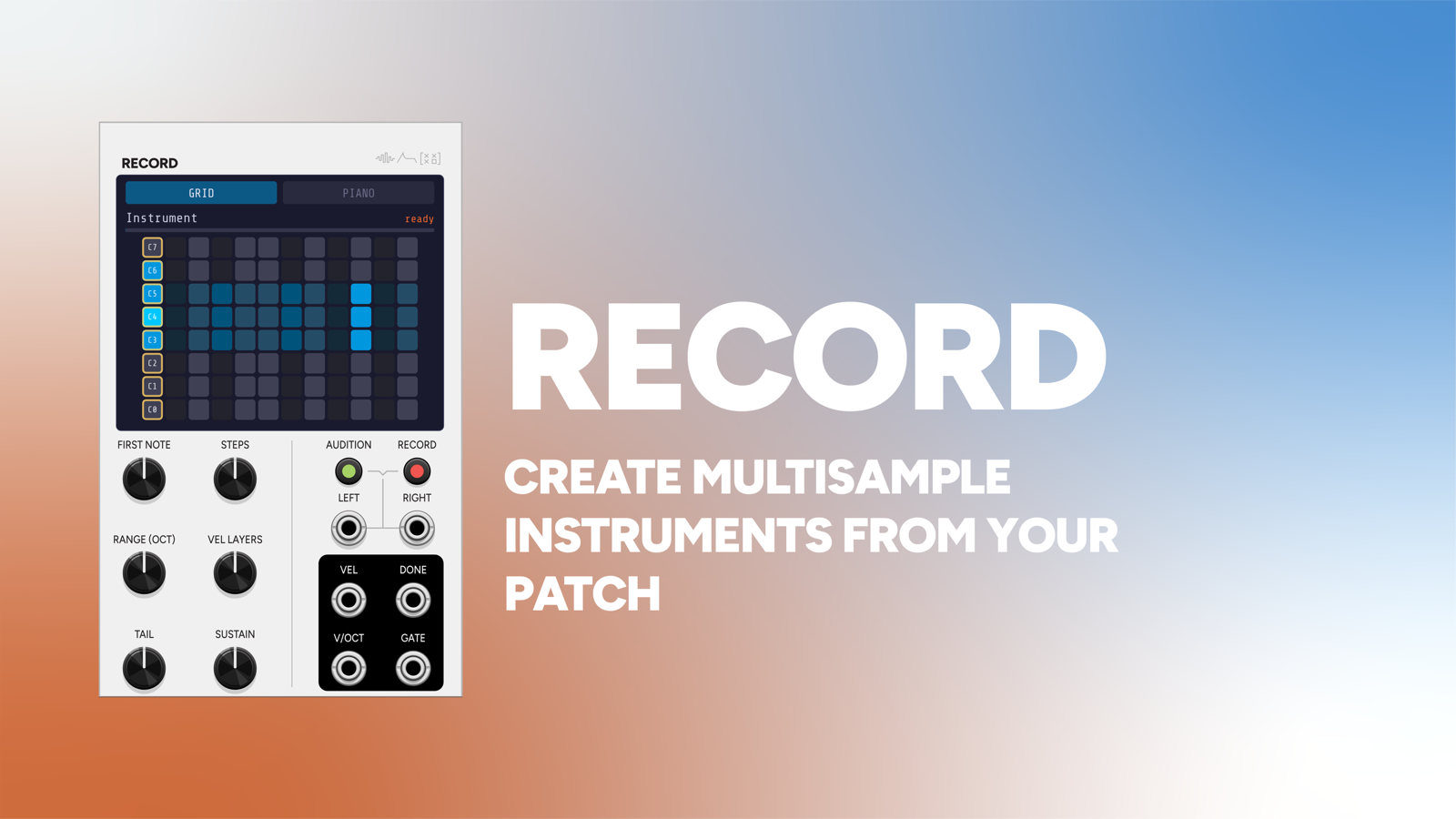
An auto-sampler for VCV Rack. Point it at any voice in your rack, press record, and it plays that voice across a range of notes and velocities and writes a complete multisampled instrument to disk: WAVs plus an .sfz.
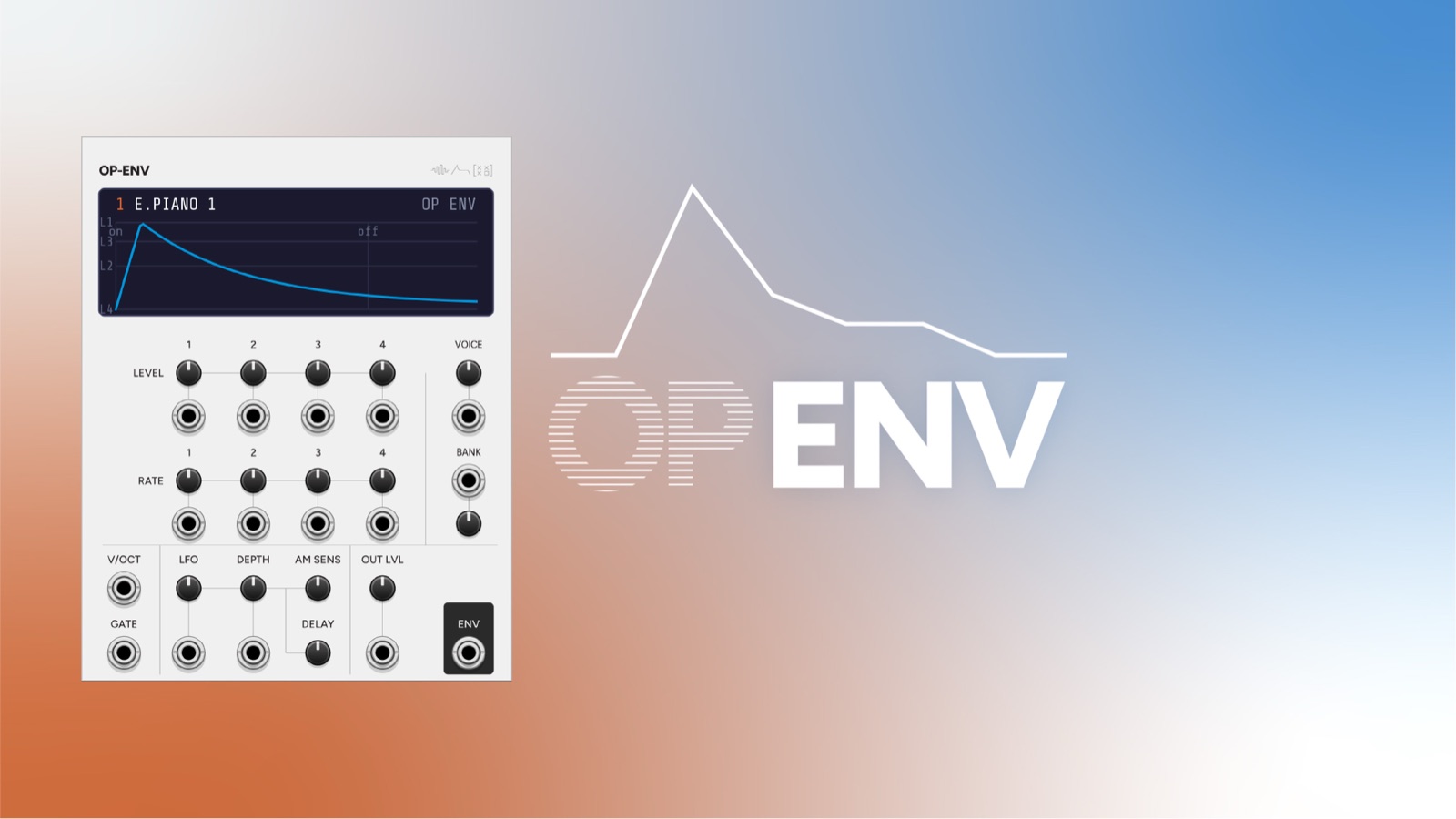
OP ENV
A standalone DX7 operator envelope generator for VCV Rack. Loads a voice from a .syx bank and turns its carrier envelope into a gate-driven CV, with per-stage offsets.
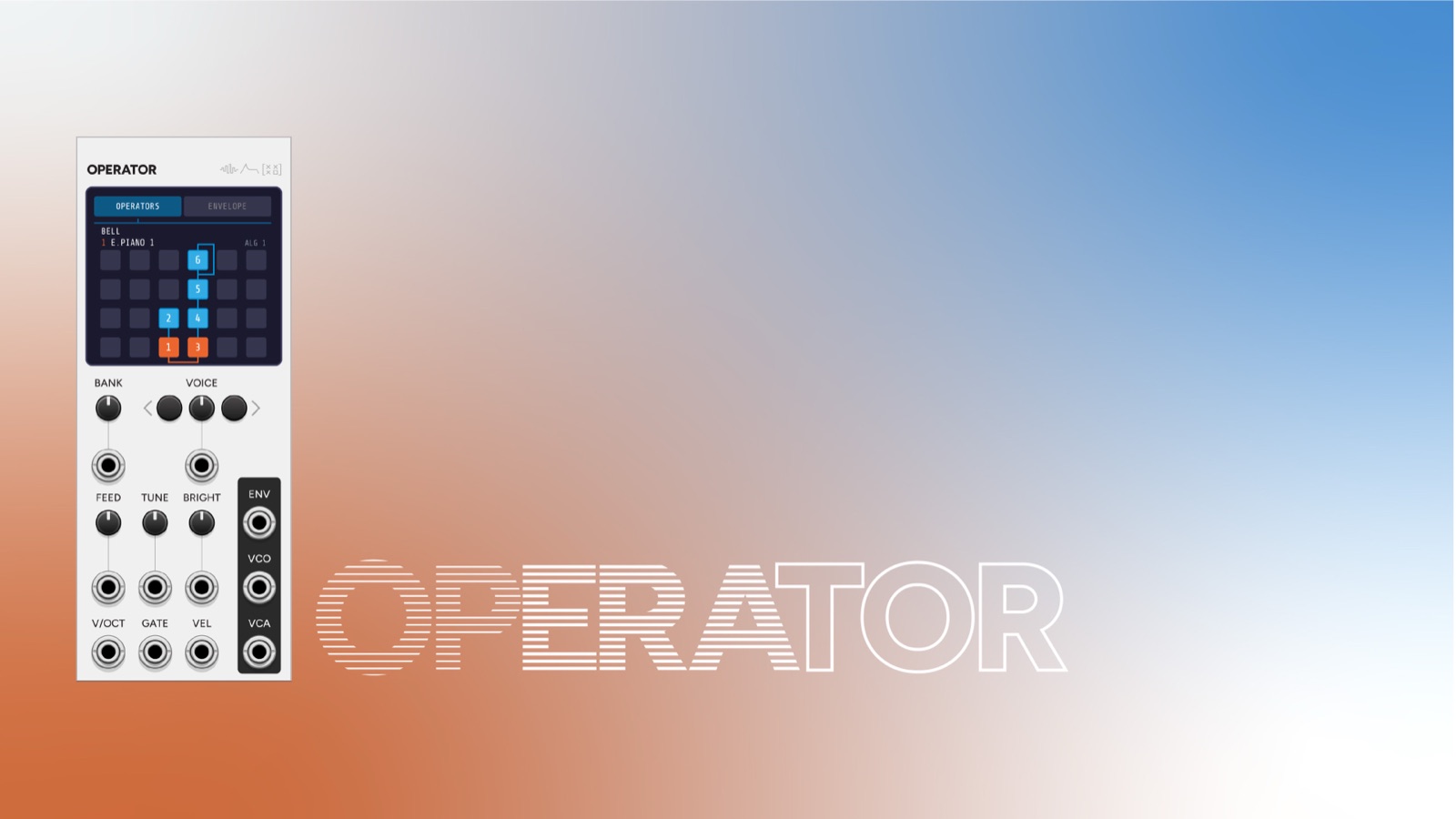
Operator
A 6-operator FM synth voice for VCV Rack in the Yamaha DX7 lineage. Loads DX7 .syx cartridges, plays them polyphonically, and ships with classic Brian Eno patches.
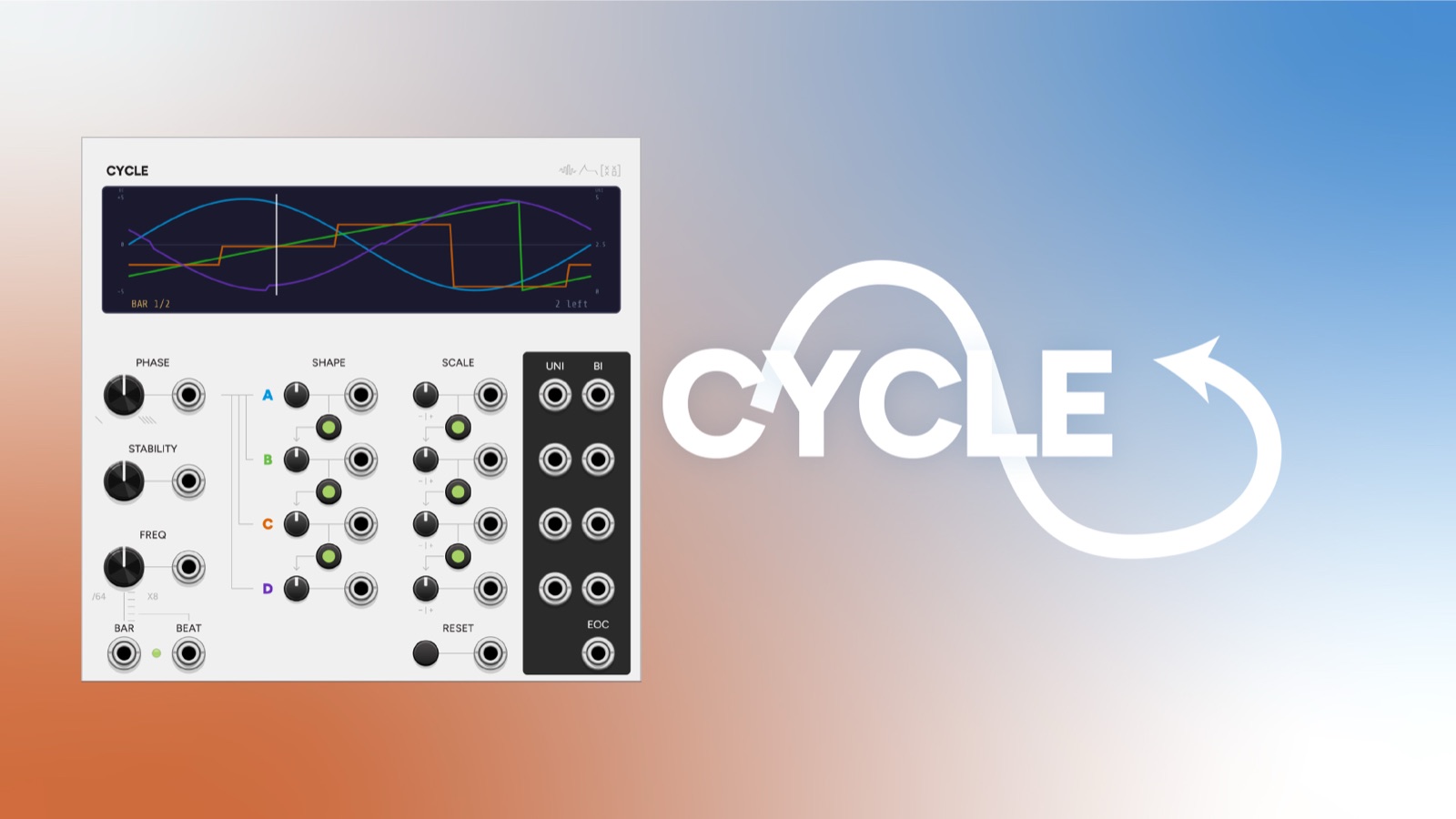
Cycle
A bar-synced quad LFO for VCV Rack. Four channels lock to your song's bar grid with morphing shapes, per-channel depth, and clock-quantized staircases: built to pair with Meter.
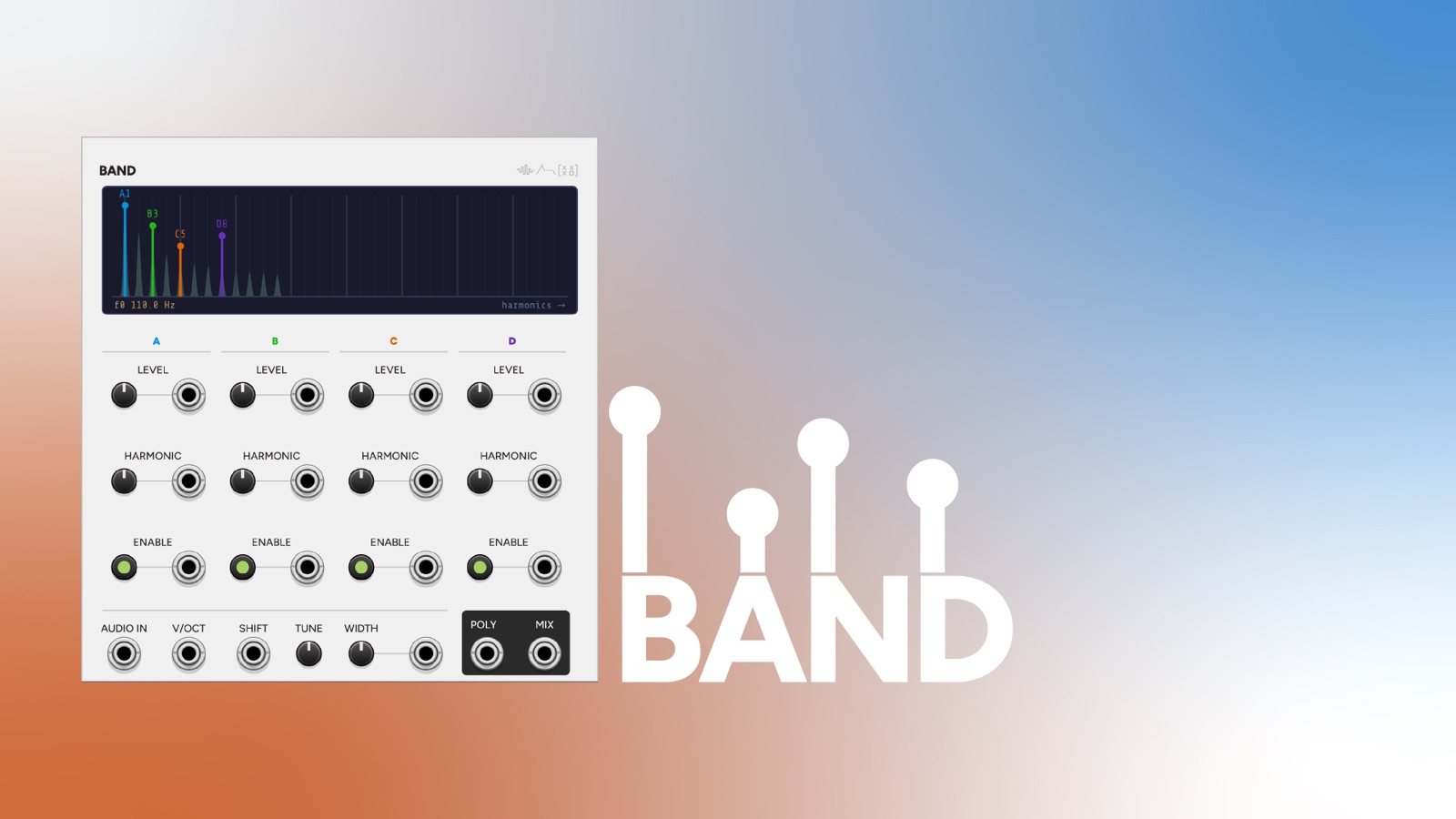
Band
A harmonic bandpass bank for VCV Rack inspired by Suzanne Ciani. Four narrow filters lock to integer harmonics of a shared fundamental that auto-tracks the input.
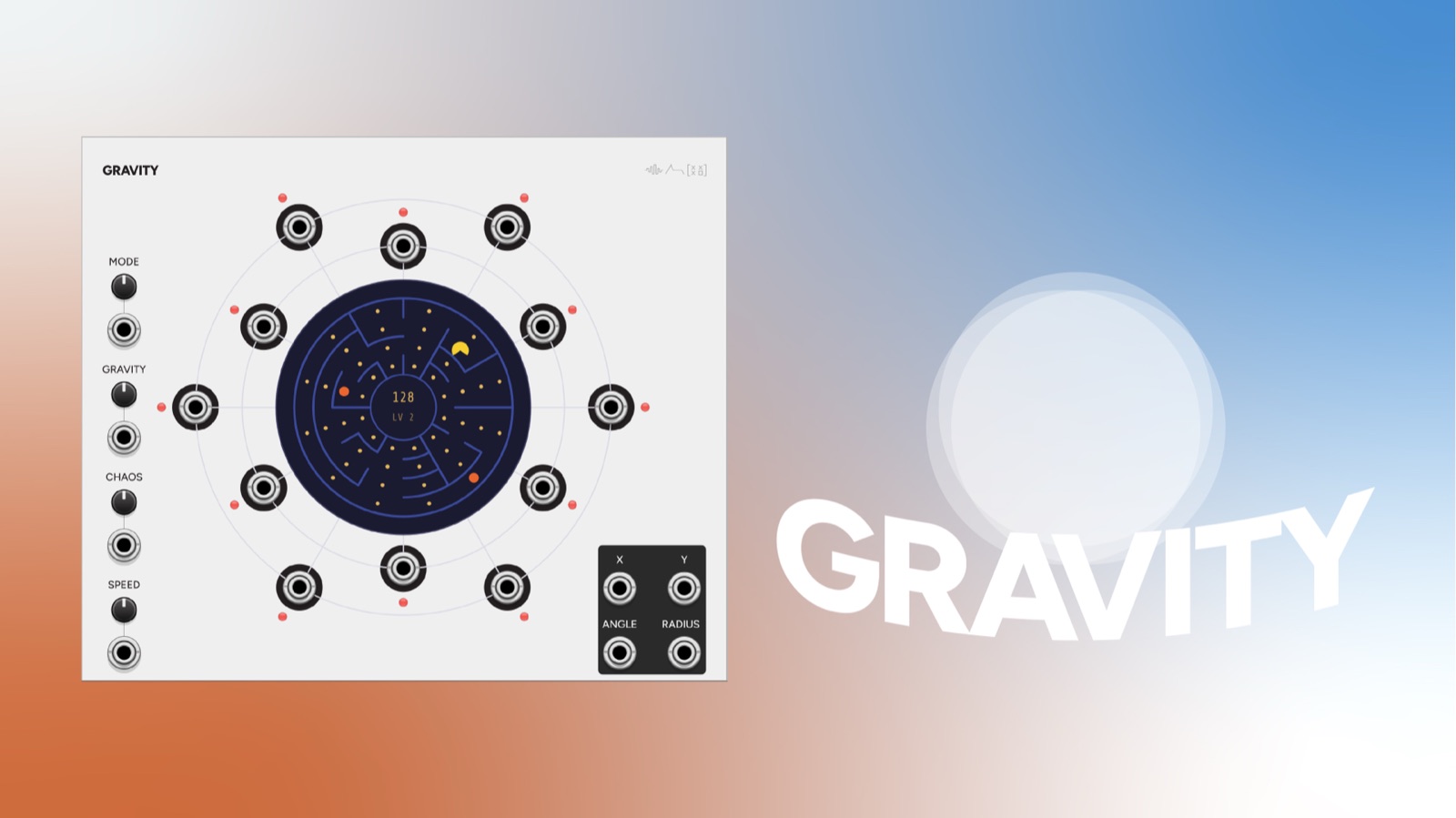
Gravity
A 30HP multi-mode chaos and motion engine for VCV Rack. Six engines drive a moving point read out as bipolar X/Y CVs, six sector CVs, and six boundary-ray gates.
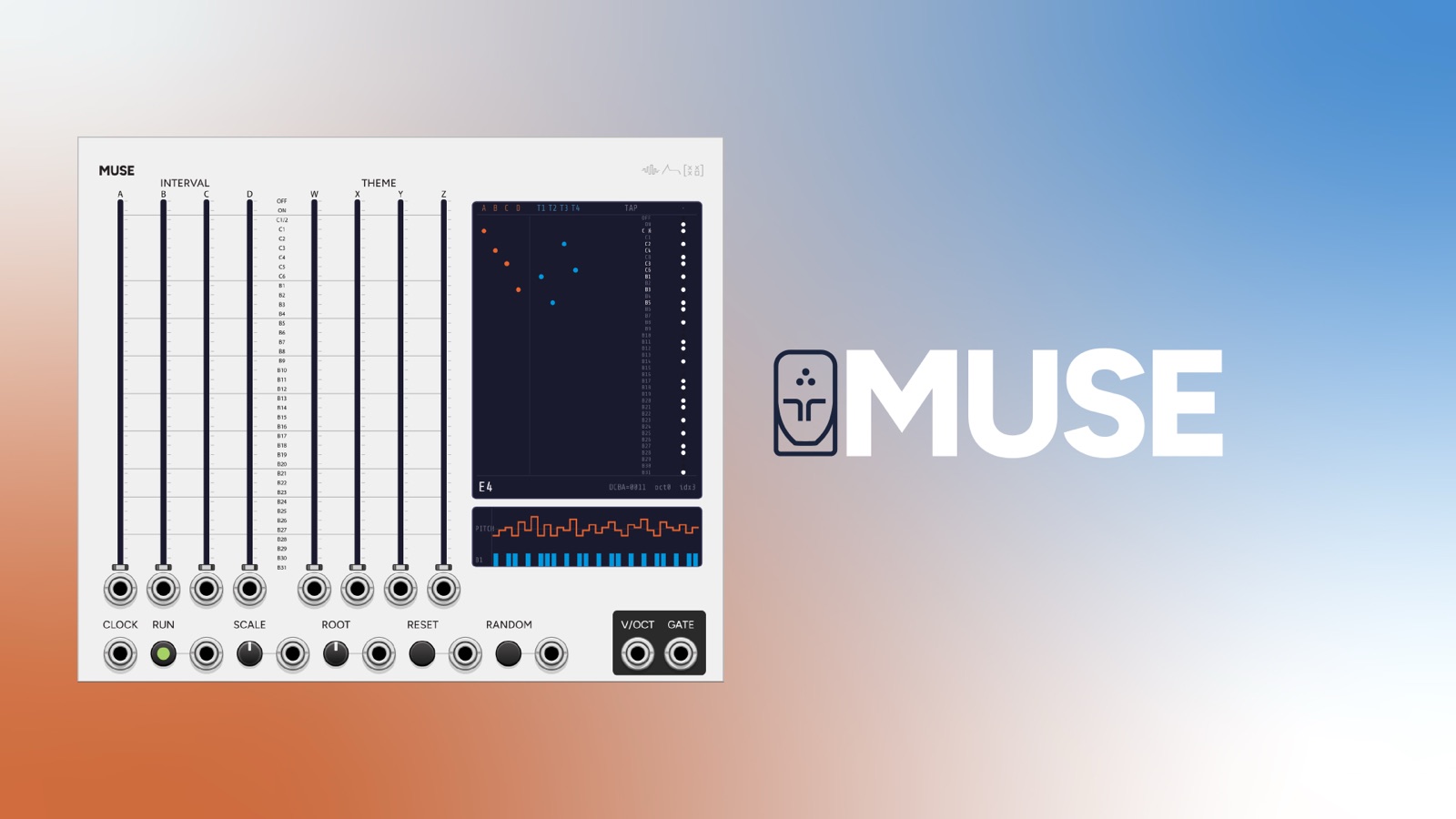
Muse
A VCV Rack recreation of the 1972 Triadex Muse by Edward Fredkin and Marvin Minsky. Eight sliders tap a binary network to generate long, structured algorithmic melodies.
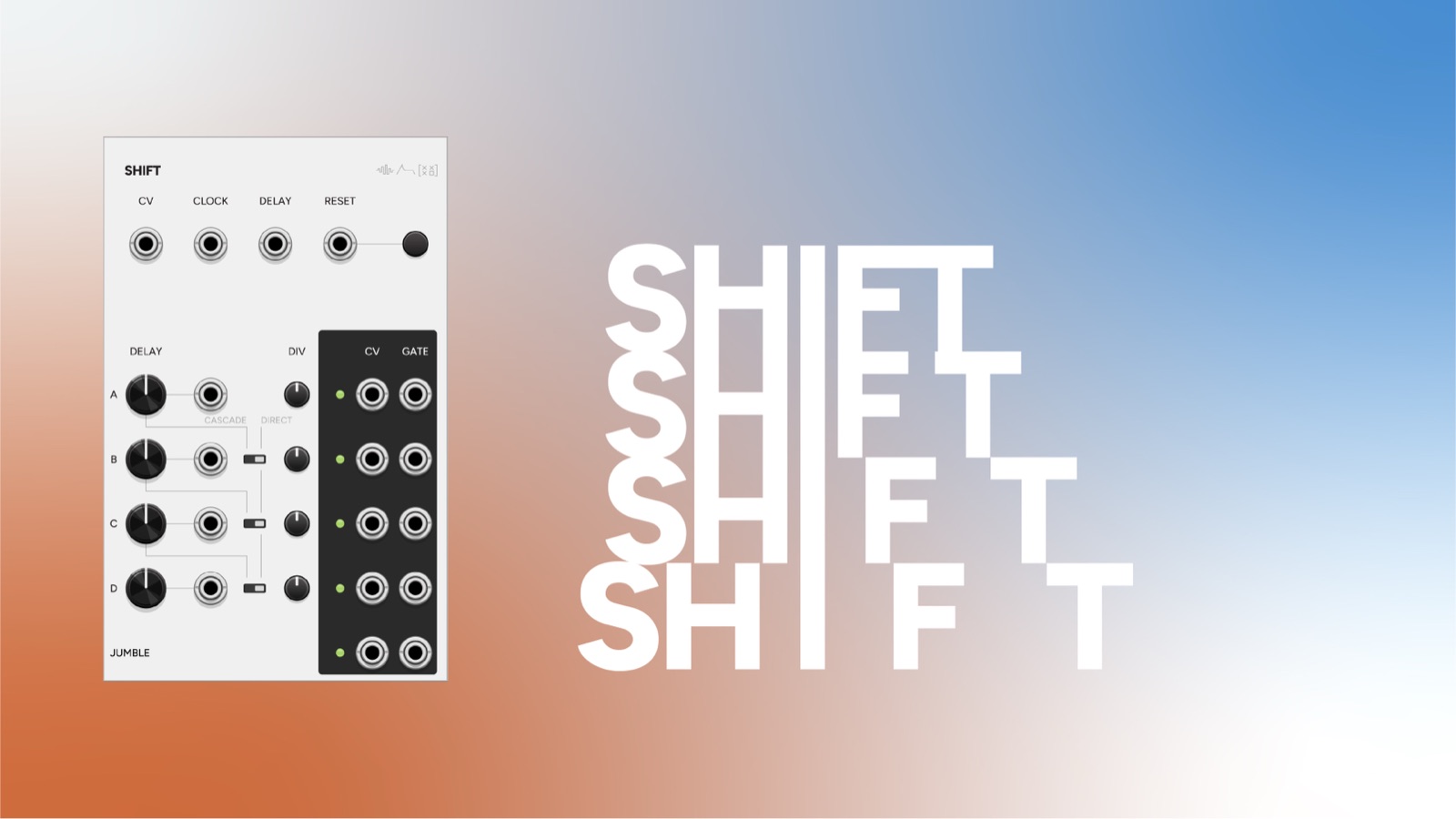
Shift
A 4-output CV shift register for VCV Rack. One signal in, four outputs each with its own delay, divider, and parallel-or-cascade mode, plus a jumbled bonus output.
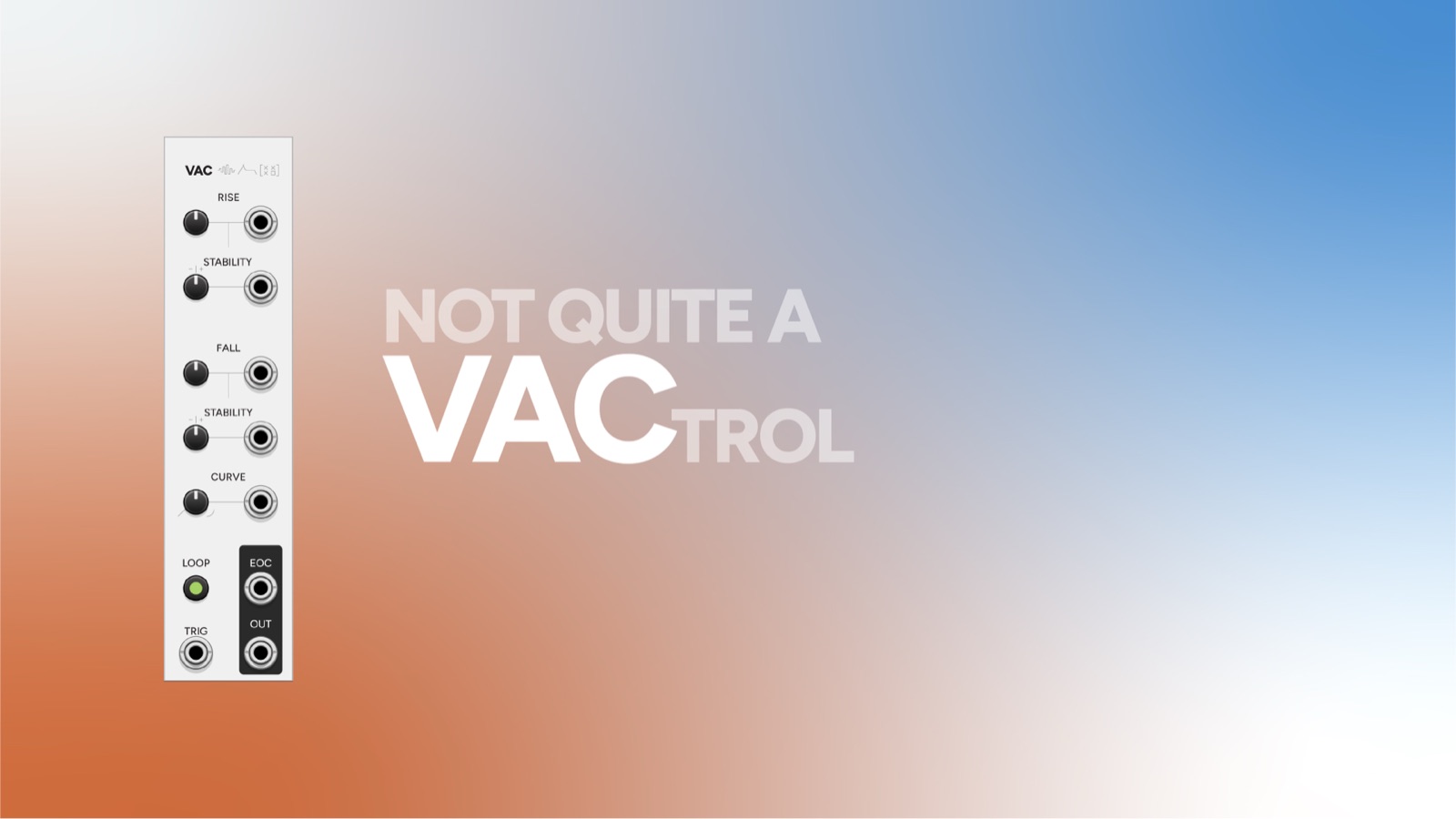
Vac
A semi-stable attack/release envelope generator for VCV Rack. Per-stage stability controls introduce musical cycle-to-cycle variation, like a real vactrol drifting.
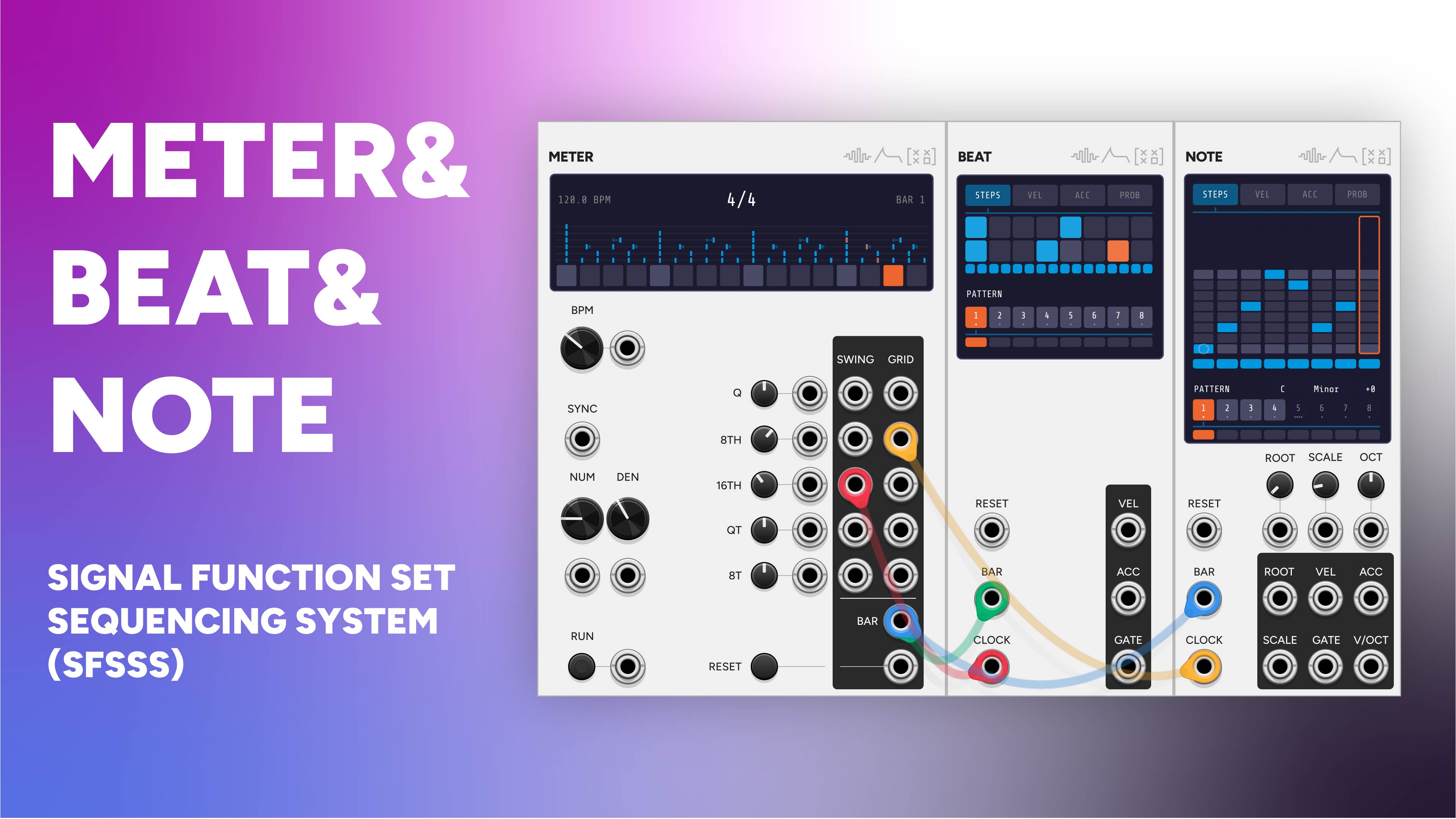
SignalFunctionSet Sequencer System
A modular rhythm and pitch sequencer system for VCV Rack. Arrange holds the song form; Meter is the time-signature-aware master clock (with Meter X for long-form structure); Beat sequences drums; Note sequences pitched voices.

Swell
A ping-driven envelope generator for VCV Rack. Each trigger adds a soft-saturating rise; the envelope decays back toward zero with linear-to-exponential curve shaping.
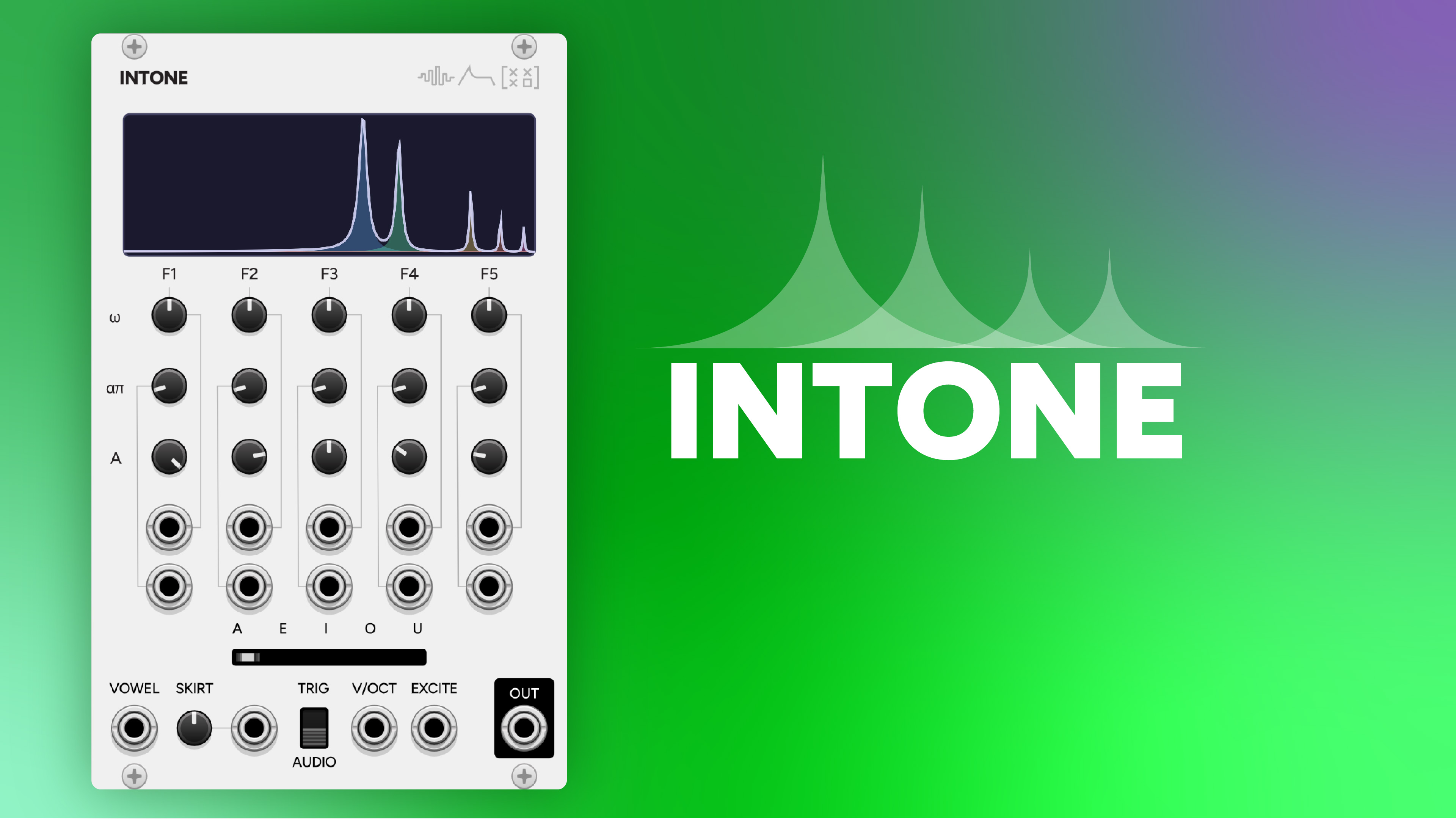
Intone
A formant synthesis voice for VCV Rack based on the IRCAM CHANT project. Five parallel FOF cells with vowel morphing, audio excitation, and trigger modes.
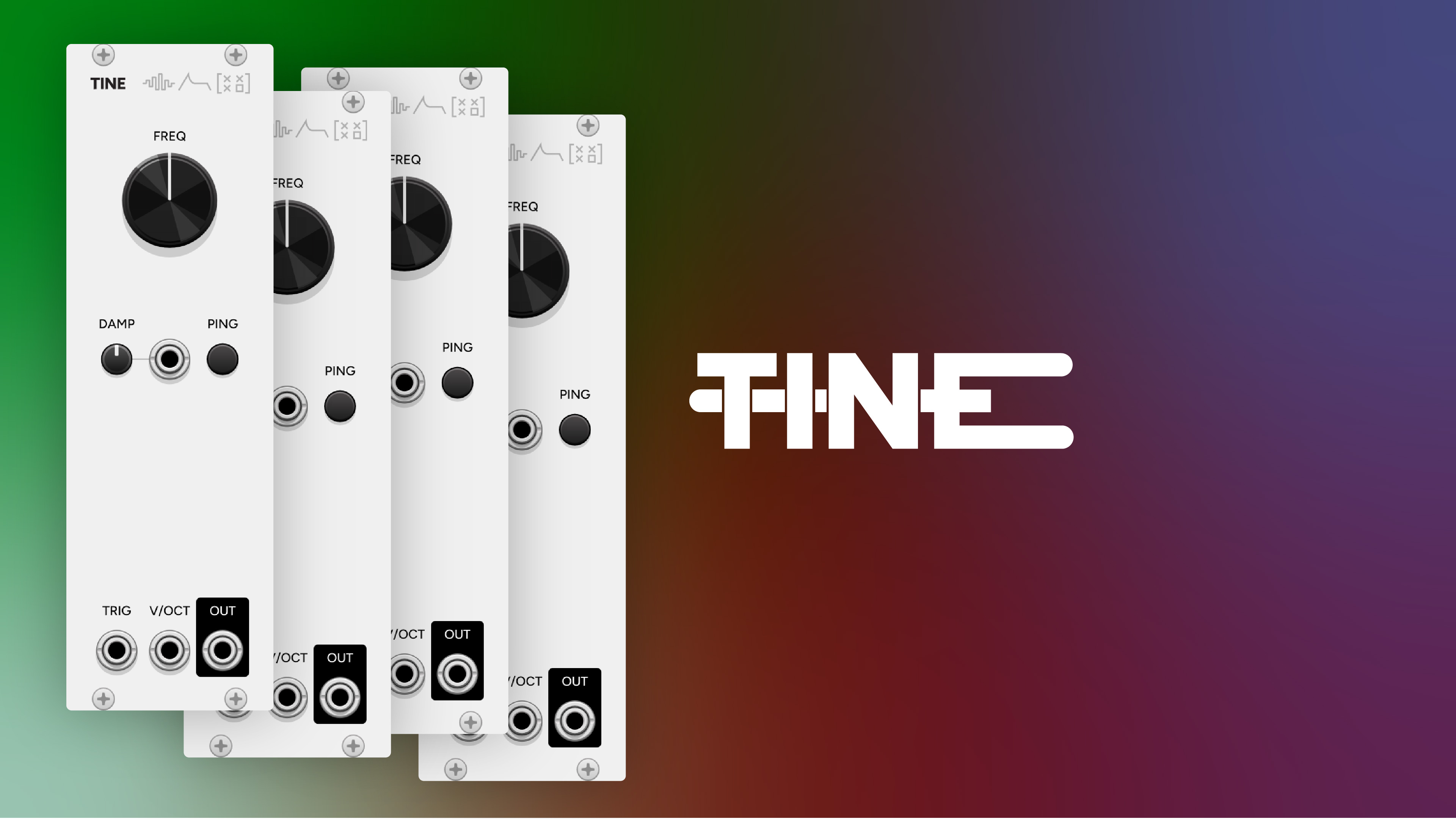
Tine
A tunable 3rd-order pingable resonator for VCV Rack based on the Gamelan Resonator circuit from Paul DeMarinis' Pygmy Gamelan (1973).
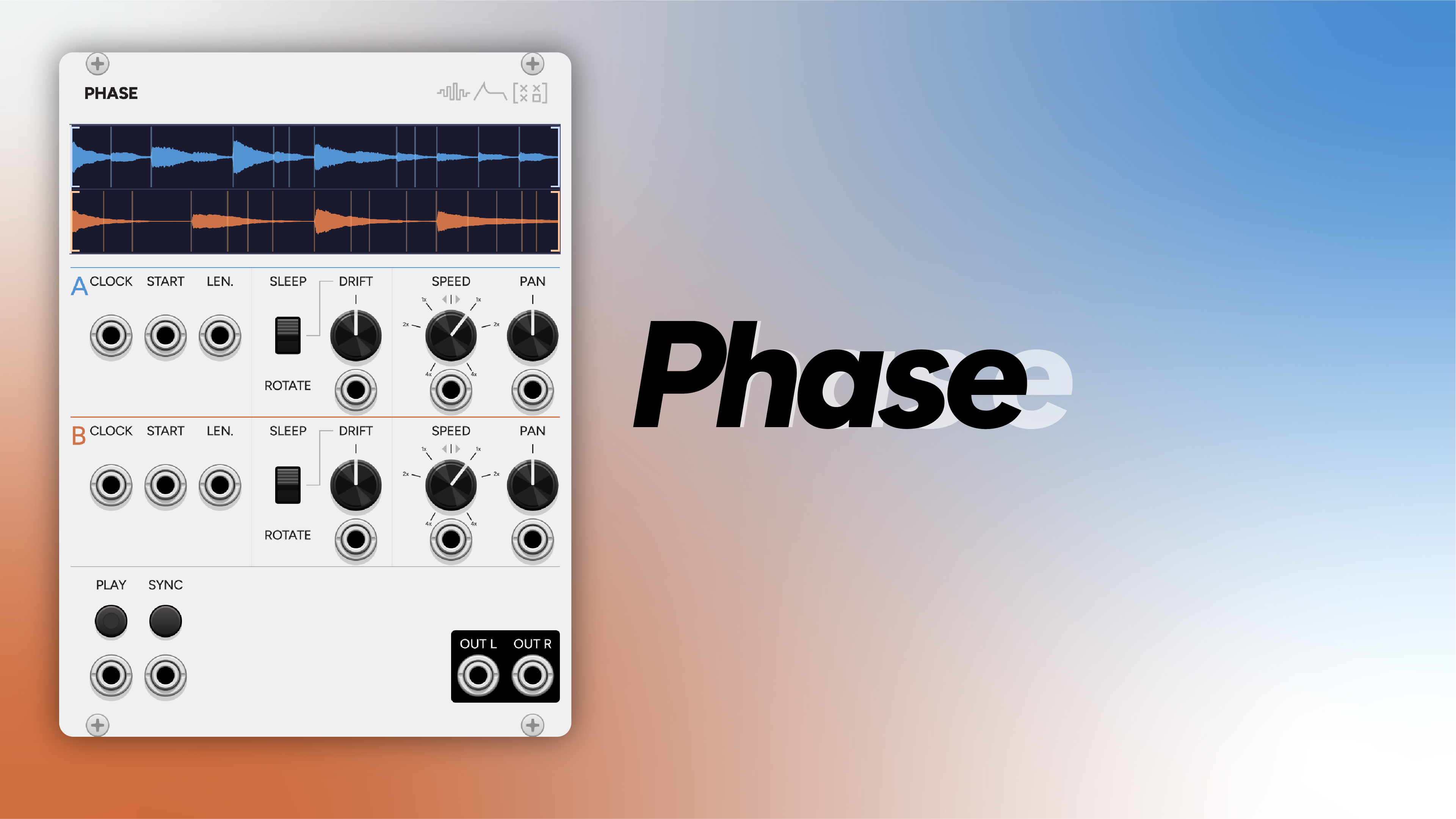
Phase
A dual sample looper for VCV Rack inspired by Steve Reich's tape phase compositions. Two loops drift against each other to generate evolving phase relationships.
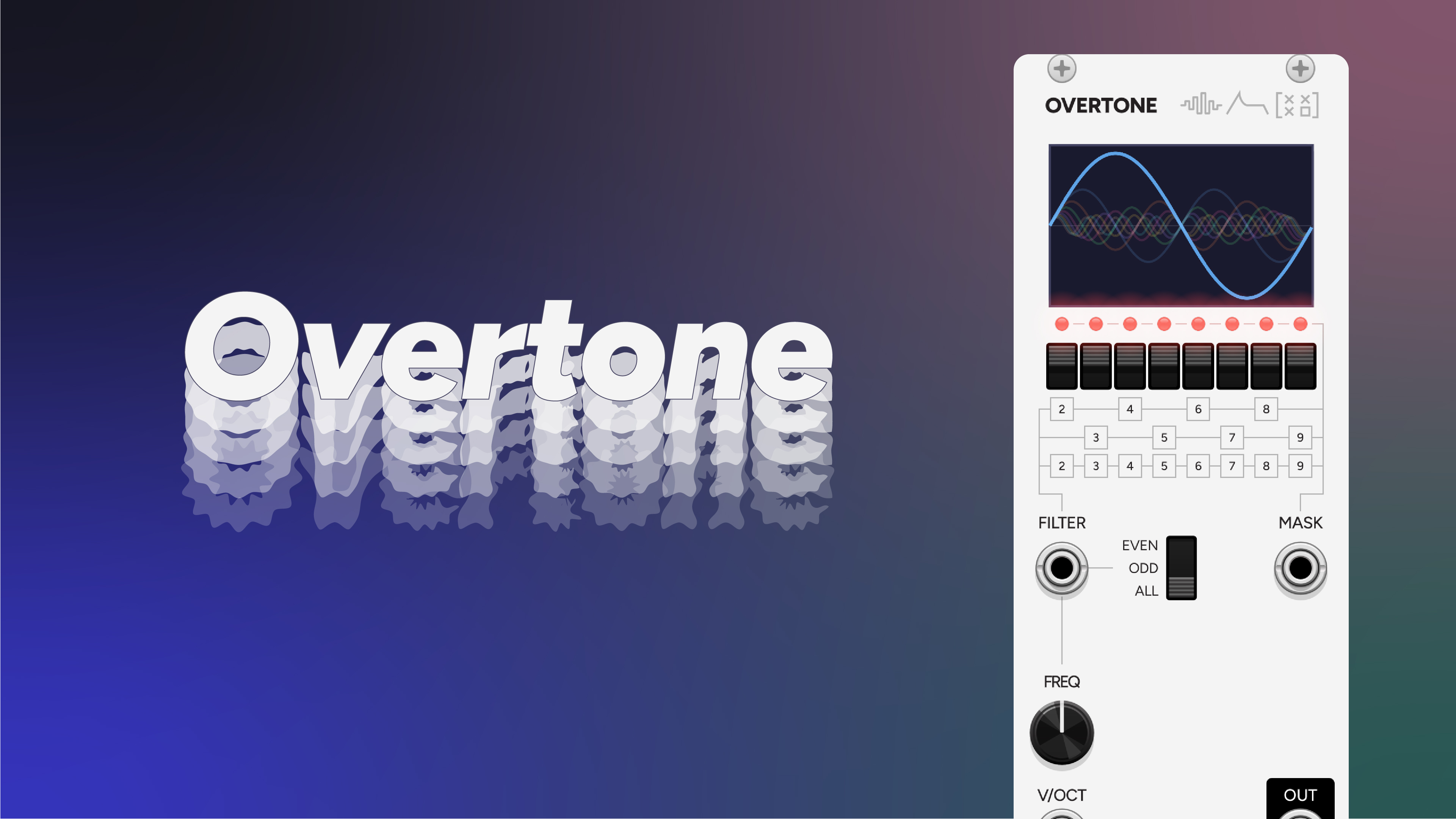
Overtone
An additive synthesis VCO for VCV Rack that builds waveforms by toggling individual harmonics of the overtone series. CV-controllable mask and filter inputs.
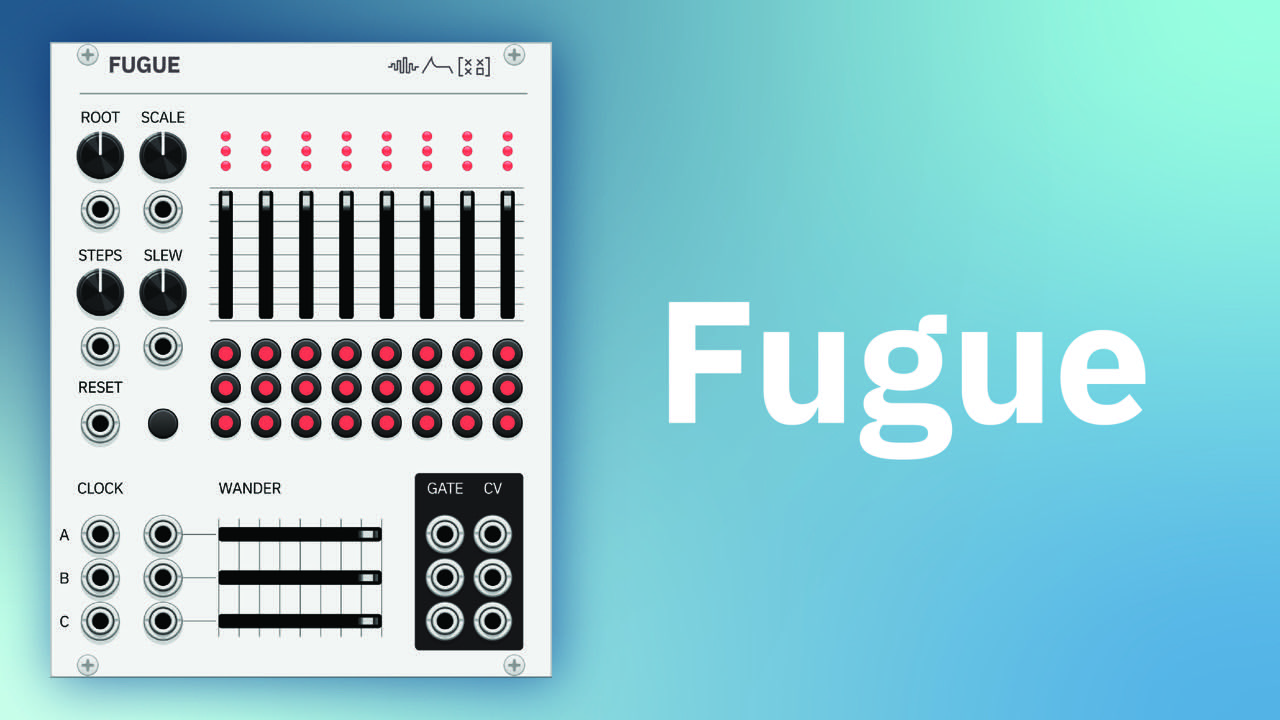
Fugue
An 8-step harmonic deviation sequencer for VCV Rack. Generates three voices of evolving counterpoint from a single melodic sequence using interval offsets.
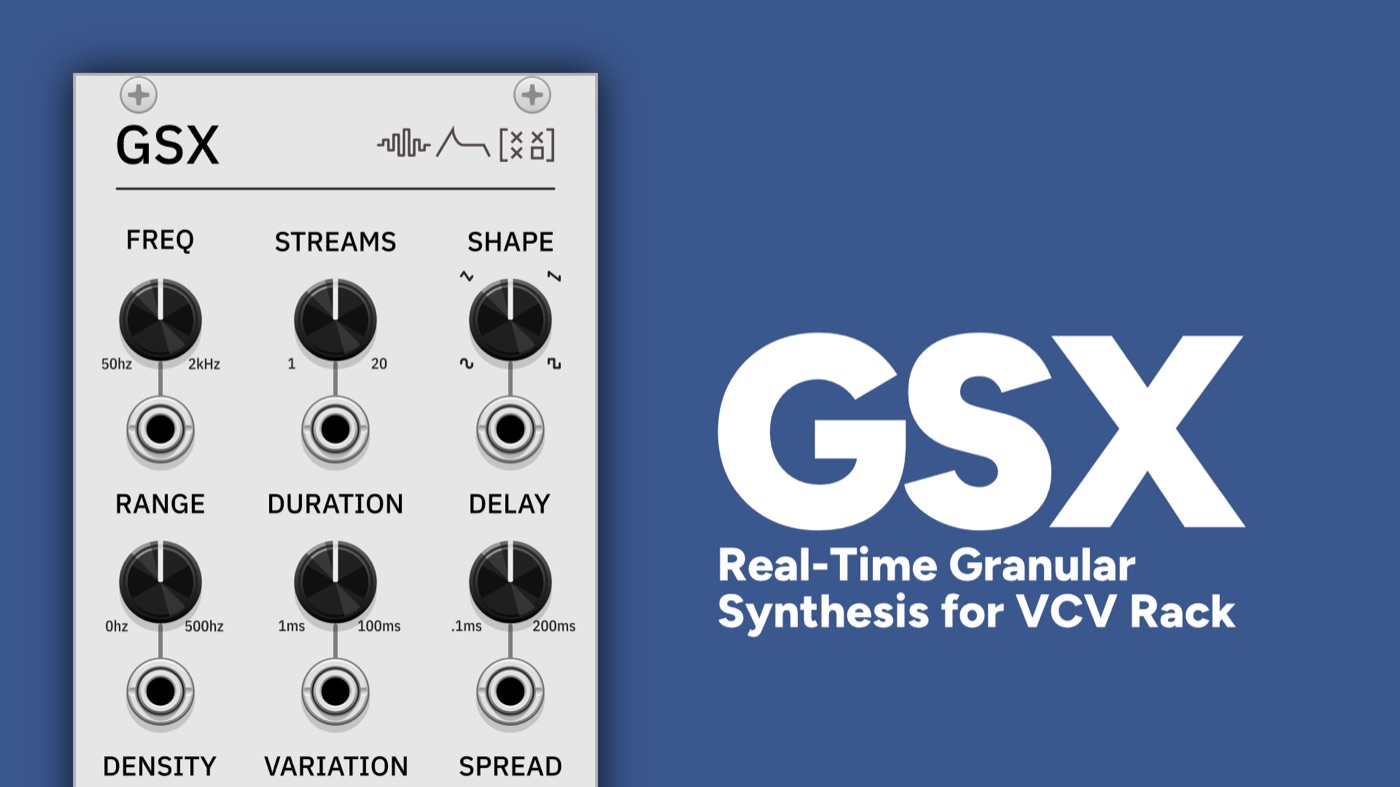
GSX
A real-time granular synthesis module for VCV Rack inspired by Barry Truax's pioneering GSX system. Grain density, duration, pitch, and spray under full CV control.
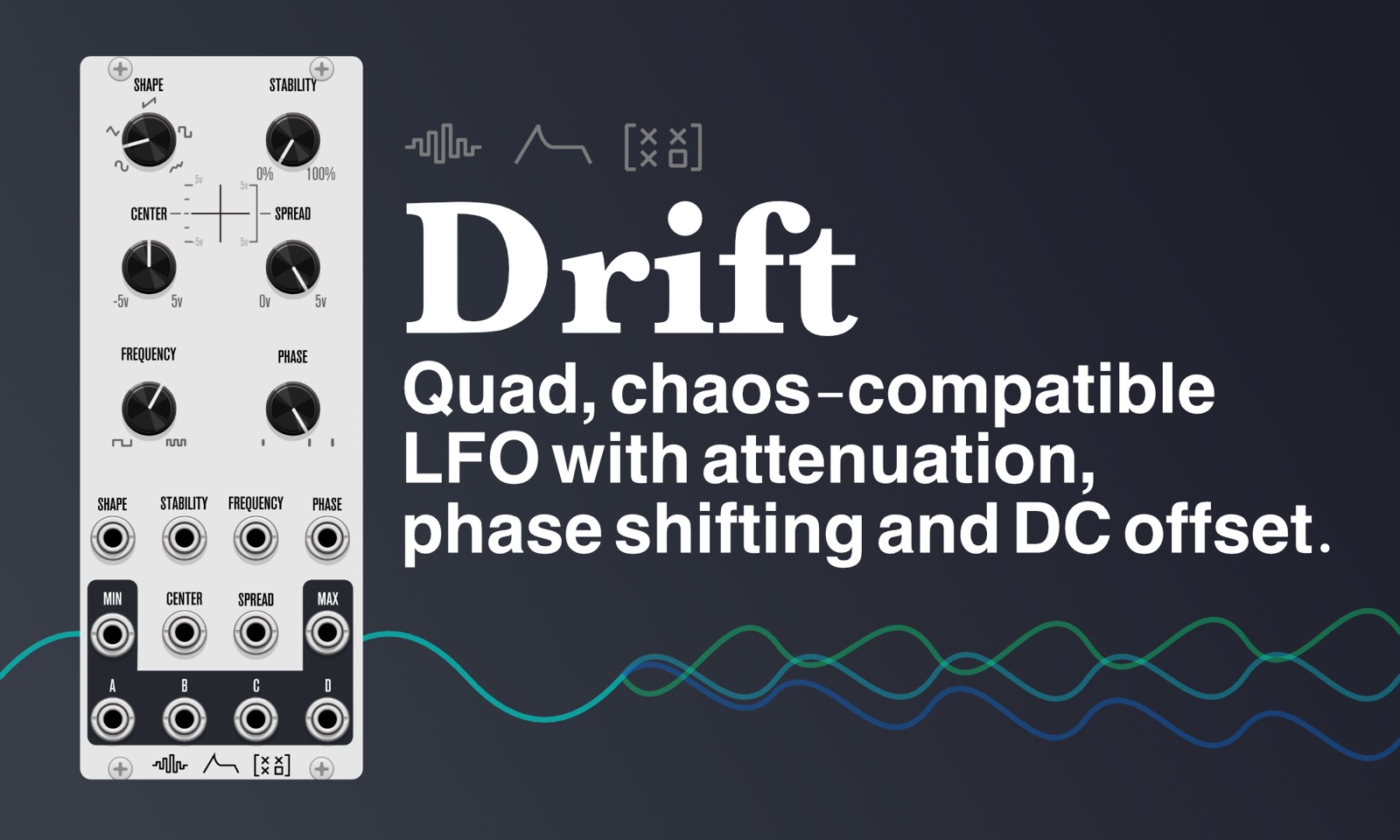
Drift
A 4-channel chaos LFO for VCV Rack with independent phase offset, per-channel scaling, and waveform morphing from sine through chaos. Built for generative patches.
No modules match that tag.
Frequently asked questions
What is SignalFunctionSet?
SignalFunctionSet is a collection of free, open-source modules for VCV Rack and the Critter & Guitari EYESY, developed by Stuart Frederich-Smith. The VCV Rack set spans sequencers, oscillators, filters, envelopes, granular and additive synthesis, and more.
What is VCV Rack?
VCV Rack is a free, open-source virtual modular synthesizer for macOS, Windows, and Linux. It recreates the Eurorack modular experience in software, letting you patch together modules from many developers. SignalFunctionSet modules run inside VCV Rack.
Are the SignalFunctionSet modules free?
Yes. Every SignalFunctionSet module is free and open source, available through the official VCV Rack Library. There is no paid tier and no license fee.
How do I install the modules?
Browse the SignalFunctionSet plugin in the VCV Rack Library, click Subscribe (it is free), then open VCV Rack and use the Library menu to sync. The modules appear in your module browser. You can also download each module from its page on this site.
Can I run these modules on hardware?
Most SignalFunctionSet modules also run on the 4ms MetaModule, a hardware Eurorack module that plays VCV-style plugins. Fugue has additionally been ported to the Expert Sleepers Disting NT as fugueNT. Each module page lists the platforms it supports under Downloads.
Are the modules open source?
Yes. The full source for the VCV Rack plugin is on GitHub, so you can read the DSP, learn from it, or build it yourself. Many of the modules are based on historical works in computer music and document their references.
Can I use the modules in my own music?
Yes. The modules are free to use in your patches, performances, and recordings, including commercial releases. The music you make is yours.