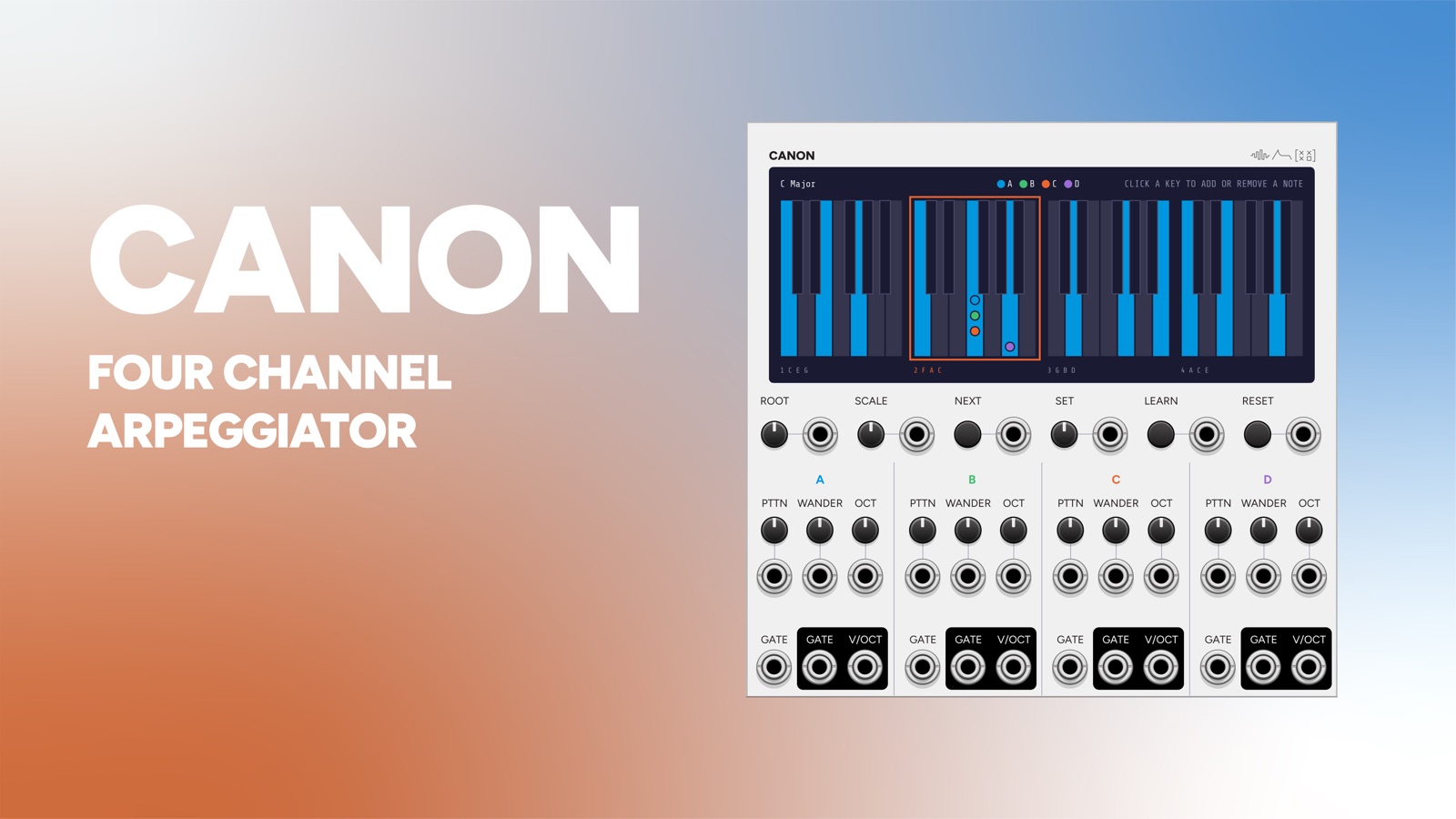
Canon is four arpeggiators reading one chord progression.
It holds four chords and four channels. Each channel plays whichever chord is in force, with its own pattern, octave and clock, and each can wander from that chord the way Fugue does: three candidates per step, and the one that agrees best with what the other channels are playing wins.
Chords are degrees, not notes
A chord is stored as scale degrees, so a progression follows ROOT and SCALE. Move the key and the whole progression moves with it. A note chosen from outside the scale is kept as a semitone from the root instead, so an accidental stays an accidental when the key changes.
Twenty chord progressions are in the context menu.
The four channels
Each has a pattern, a wander and an octave.
Eight pattern families: up, down, up-down, converge, diverge, pedal, random and as-played, over one or two octaves.
WANDER strays to chord tones, then extensions, then colour notes, and never so far that the four channels stop agreeing with each other.
Gates normal left to right. One clock in channel 1 runs all four until you patch another, so four channels on one clock is one cable and four channels on their own clocks is four.
Writing chords in
LEARN writes a held polyphonic chord into the current set. Play it, press LEARN, and it is stored as degrees.
On screen, click a key to add or remove a note. Right-click a keyboard for voicings and for copying one set into another.
Controls
Global: Root, Scale, Set, Next, Reset, Learn.
Per channel: Pattern, Wander, Octave.
Inputs and outputs
Inputs: Root CV, Scale CV, Set, Set CV, Reset, Learn (polyphonic), and per channel a Gate, Pattern CV, Wander CV and Octave CV.
Outputs: a V/OCT and a Gate per channel.
Context menu
Progressions, per-channel step offset, restart on set change, and whether wander may rest.
Patch ideas
One clock, four parts. A single clock into gate 1, four different patterns and octaves. The channels stay on the same chord and arpeggiate it four ways.
A real canon. Same pattern on every channel, then walk the per-channel step offset up. The four chase each other through the chord.
Wandering counterpoint. WANDER up on channels 3 and 4 only. Two hold the chord down while two drift around it and keep resolving back.
Key changes for free. Drive ROOT from Arrange. The progression transposes and keeps its shape, since it was degrees all along.
Pair with
-
 Fugue
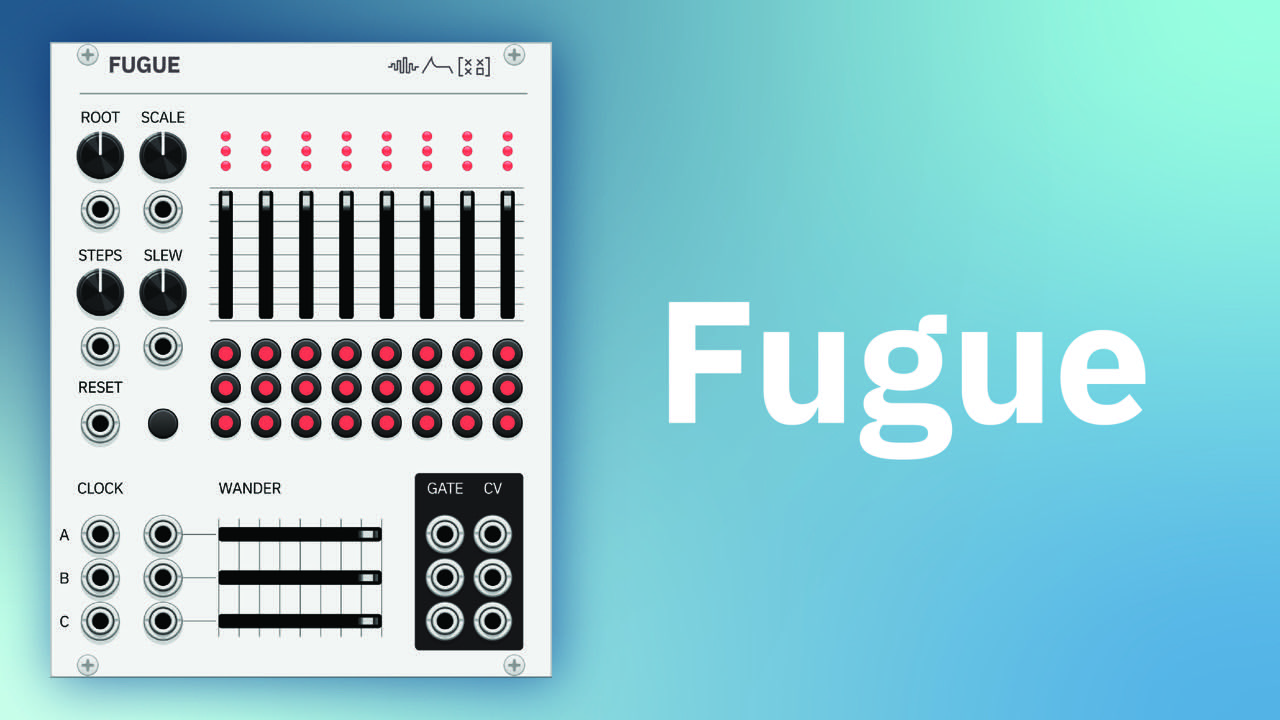
FugueCanon borrows Fugue's wander: three candidates per step, and the most consonant against what the other channels are playing wins.
-
 Key
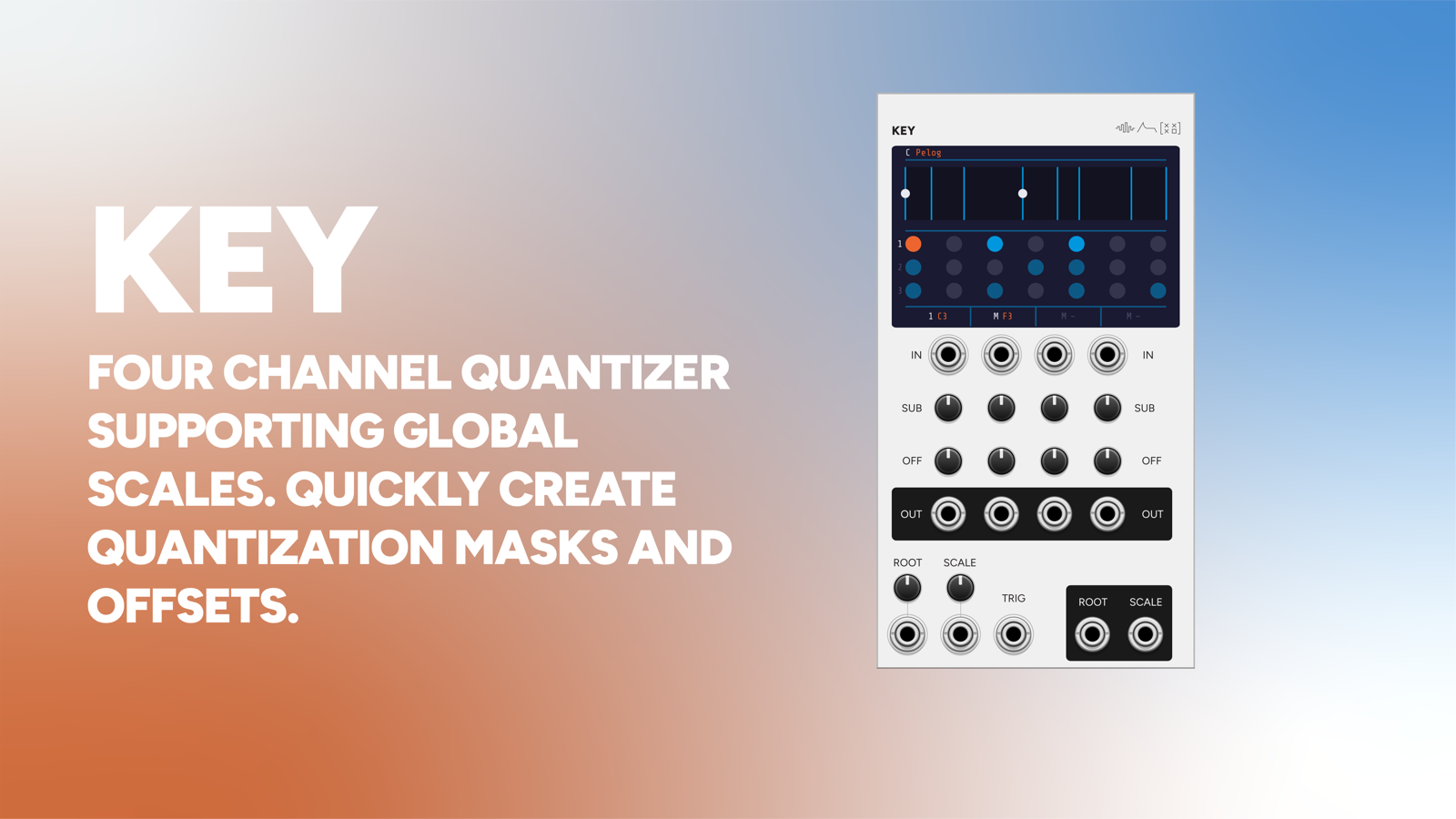
KeyChords are stored as scale degrees, so Key's ROOT and SCALE move a whole progression into another key.
-
 Count
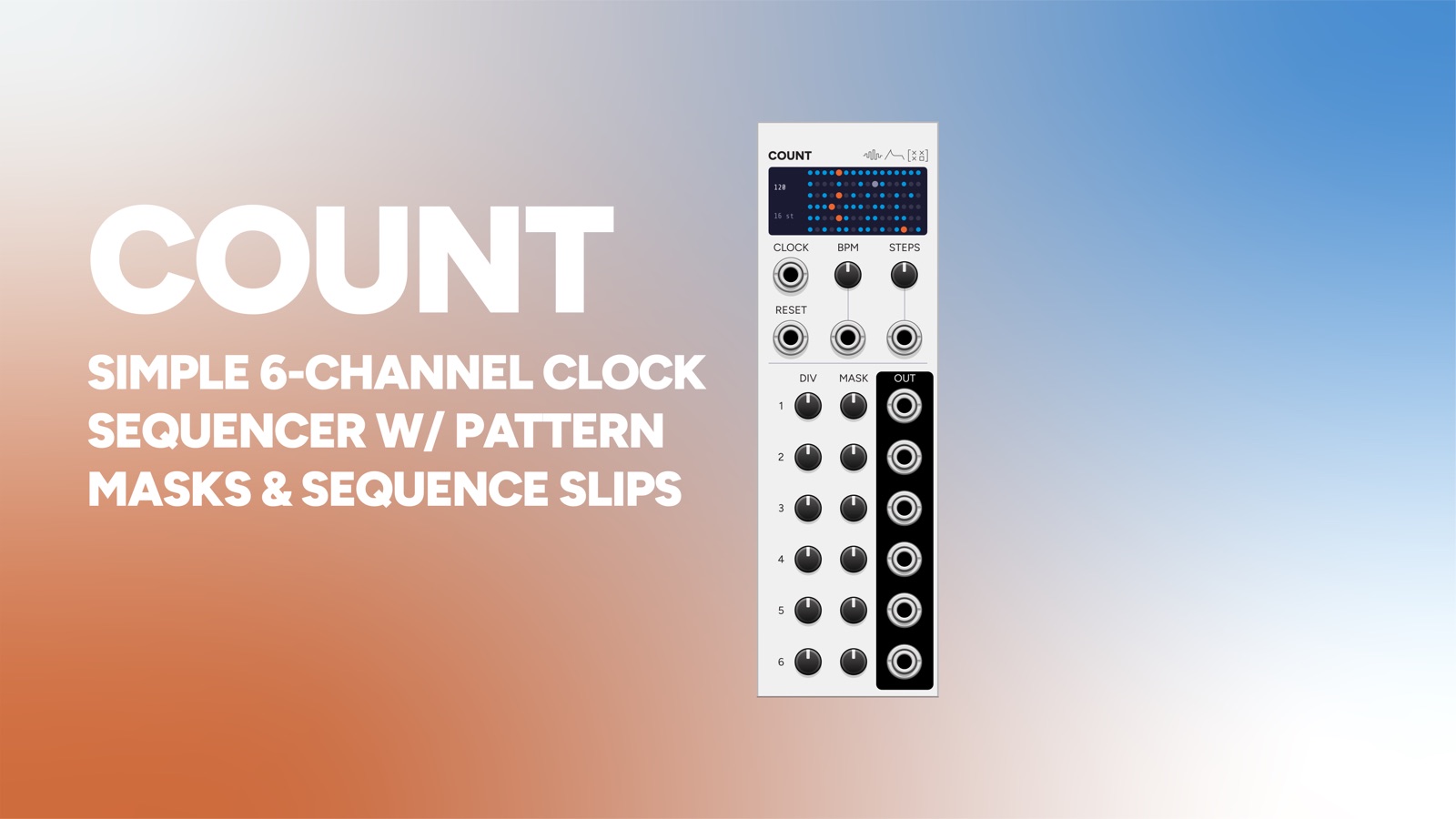
CountFour outputs from Count into Canon's four gates gives each channel its own rate and its own mask.
-
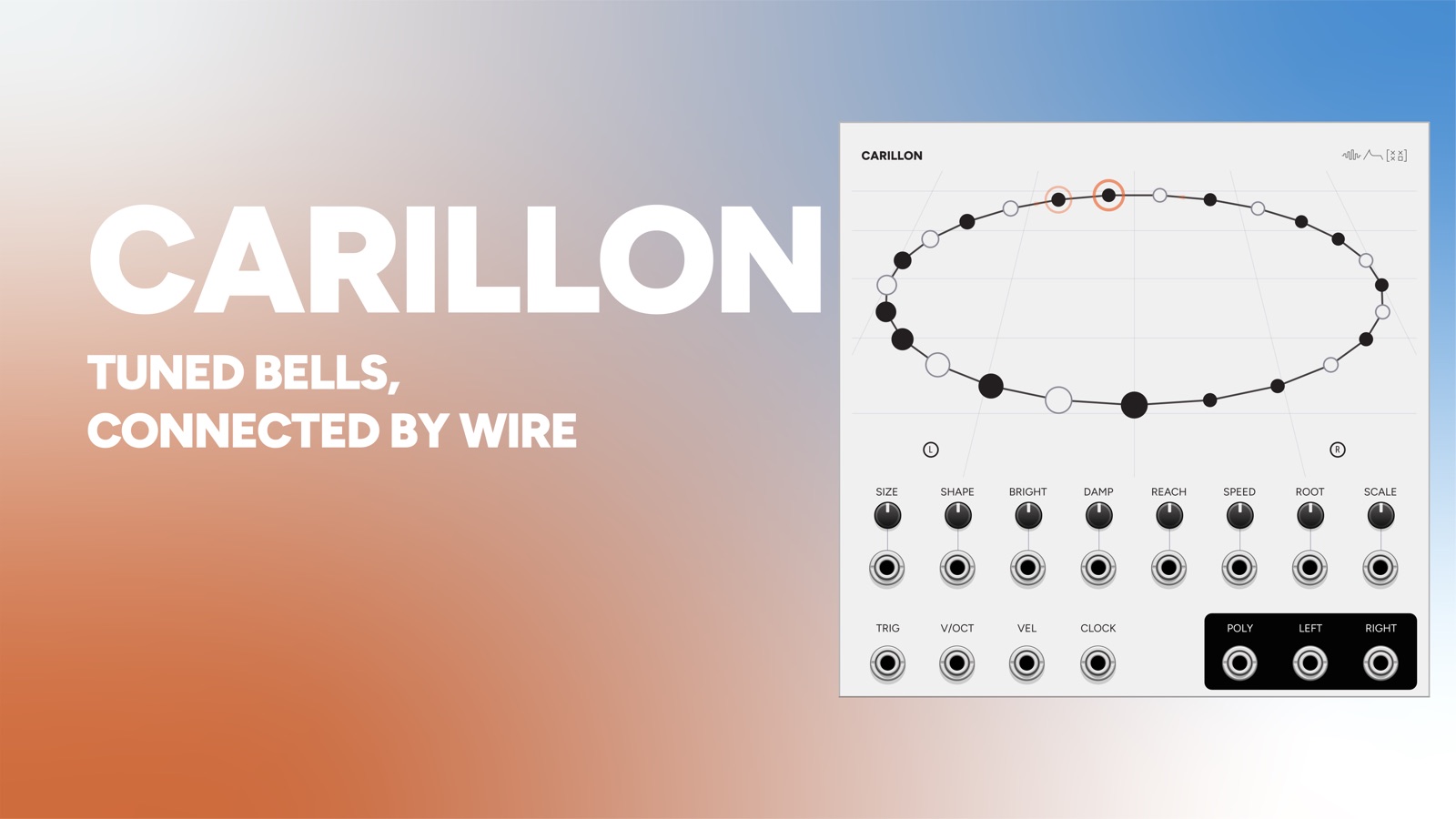 Carillon
Four arpeggios into one set of bells, where a strike on one carries into its neighbours.