
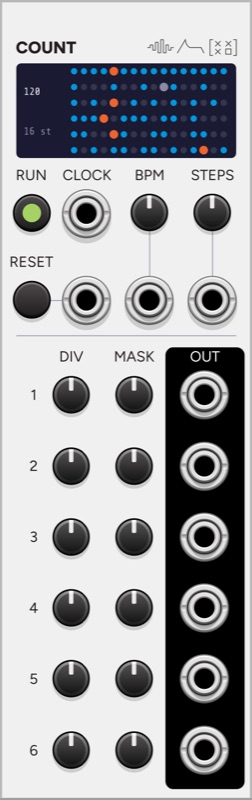
Count is a narrow clock. Set a tempo, or patch one, set a number of STEPS, and each of the six outputs plays its own rate and its own mask over that cycle. The module is 8 HP, with two knobs per output (twelve in all) plus a RUN and a RESET button.
Div and mask
DIV is that output’s rate, from /64 to x64, including 1.5, 3 and 5 each way, so you get triplets and quintuplets alongside the powers of two.
MASK picks which of that output’s own pulses actually sound: all, odd, even, pairs, threes, fours, front half, back half, three Euclidean patterns, bursts, the downbeat, or none.
Each output counts its own pulses. An output at x2 runs the cycle twice as fast, so its mask repeats twice as often rather than being stretched over the bar. The two settings therefore work independently: MASK sets the pattern and DIV sets how fast it repeats.
The Euclidean masks take their density from STEPS, which is why there is no second selector for them.
Clocking
With nothing patched, BPM sets the tempo. Patch CLOCK and Count locks to it at one pulse per beat, landing each beat exactly on the pulse. RESET returns every output to the start of its cycle.
Run and reset
RUN and RST are the two buttons on the left edge. RUN stops the clock: the outputs stay low, the beat holds where it is, and a patched clock is ignored. Press it again and Count carries on from where it stopped, or from the top of the cycle if “Reset when RUN starts” is on in the menu. RST does what the RESET jack does.
Controls
RUN, RST, BPM, STEPS, and a DIV and MASK for each of the six outputs.
Inputs and outputs
Inputs: BPM CV, Steps CV, Clock, Reset.
Outputs: six gates.
Context menu
Gate length: half the pulse by default, or a 5 ms trigger.
Per-output rotation and offset: rotation moves a mask round the bar by a set number of steps every cycle, and an offset shifts it by a fixed number of steps.
Reset when RUN starts: off by default, so a stopped Count resumes where it was.
Patch ideas
A kit from one module. Six outputs into six drums. Kick on the downbeat mask, hat on all at x2, snare on the back half, and a Euclidean on the percussion.
Polyrhythm without arithmetic. Leave every mask on all and set DIV to x3, x5 and x1. The three fall out of step with each other and come back together at the start of each cycle.
One pattern, moving. Turn on rotation for one output. Its mask walks round the bar a step at a time, so the part changes every cycle without you touching it.
Slaved to the patch. Meter’s quarter into CLOCK and Count follows Meter’s tempo.
In the synthesis guide
- Clock Division, Swing and Reset Explained
A clock is a steady stream of pulses, and other parts of a synthesiser act each time a pulse arrives. Its tempo sets how often the pulses come, swing delays every second one, and a divider turns one clock into several related ones.
- Logic Modules: AND, OR, XOR and Comparators
Logic modules combine gates and triggers. AND, OR and XOR produce new rhythms from existing ones, and a flip-flop divides a clock by two.
Pair with
-
 Meter
Meter is a clock built around bars and time signatures. Count is a narrower clock with six outputs, each with its own rate and mask, and it can lock to one of Meter's pulses.
-
 Kit
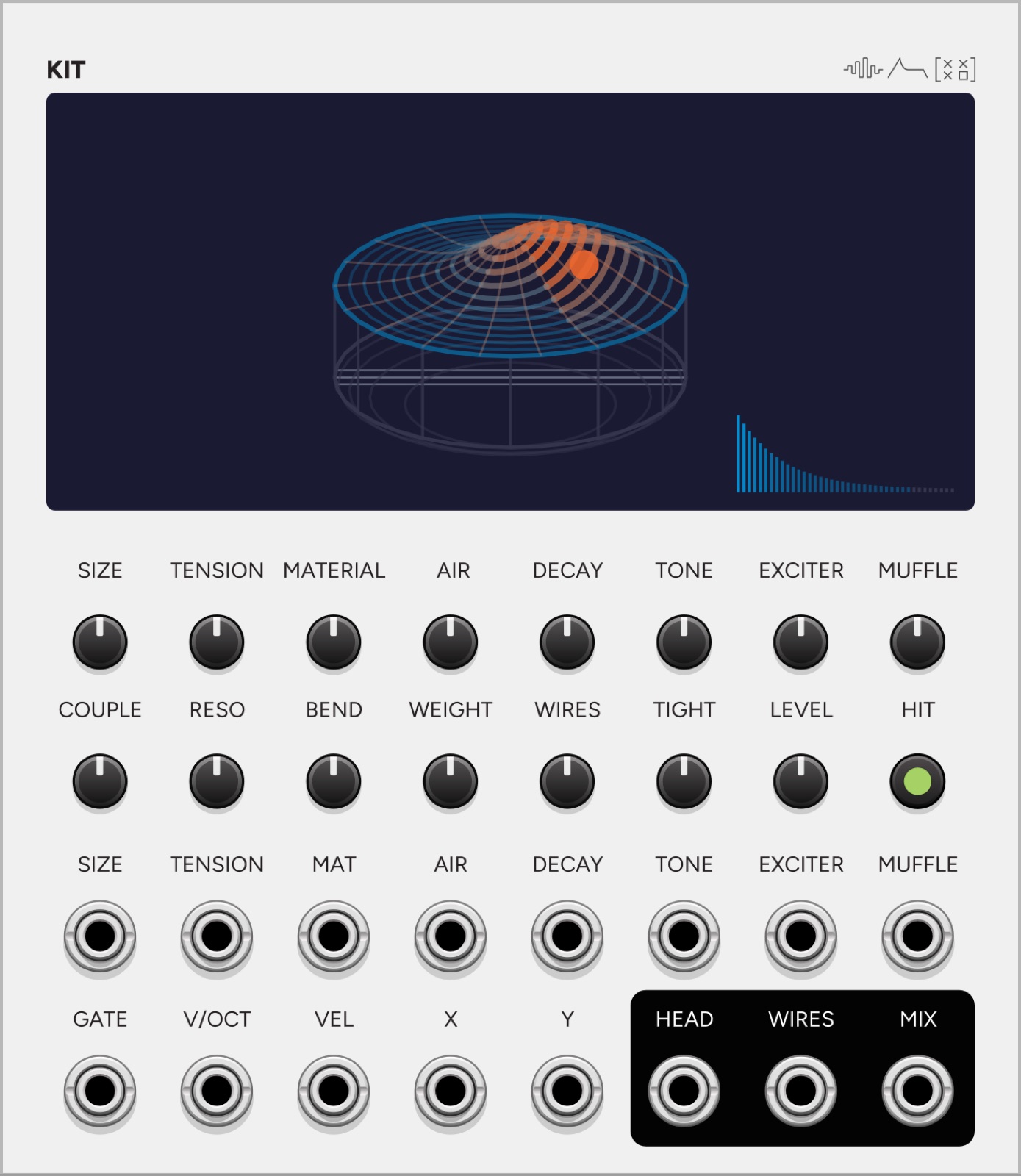
Six gates into Kit, each at its own rate with its own mask, play a drum pattern without a step sequencer.
-
 Canon
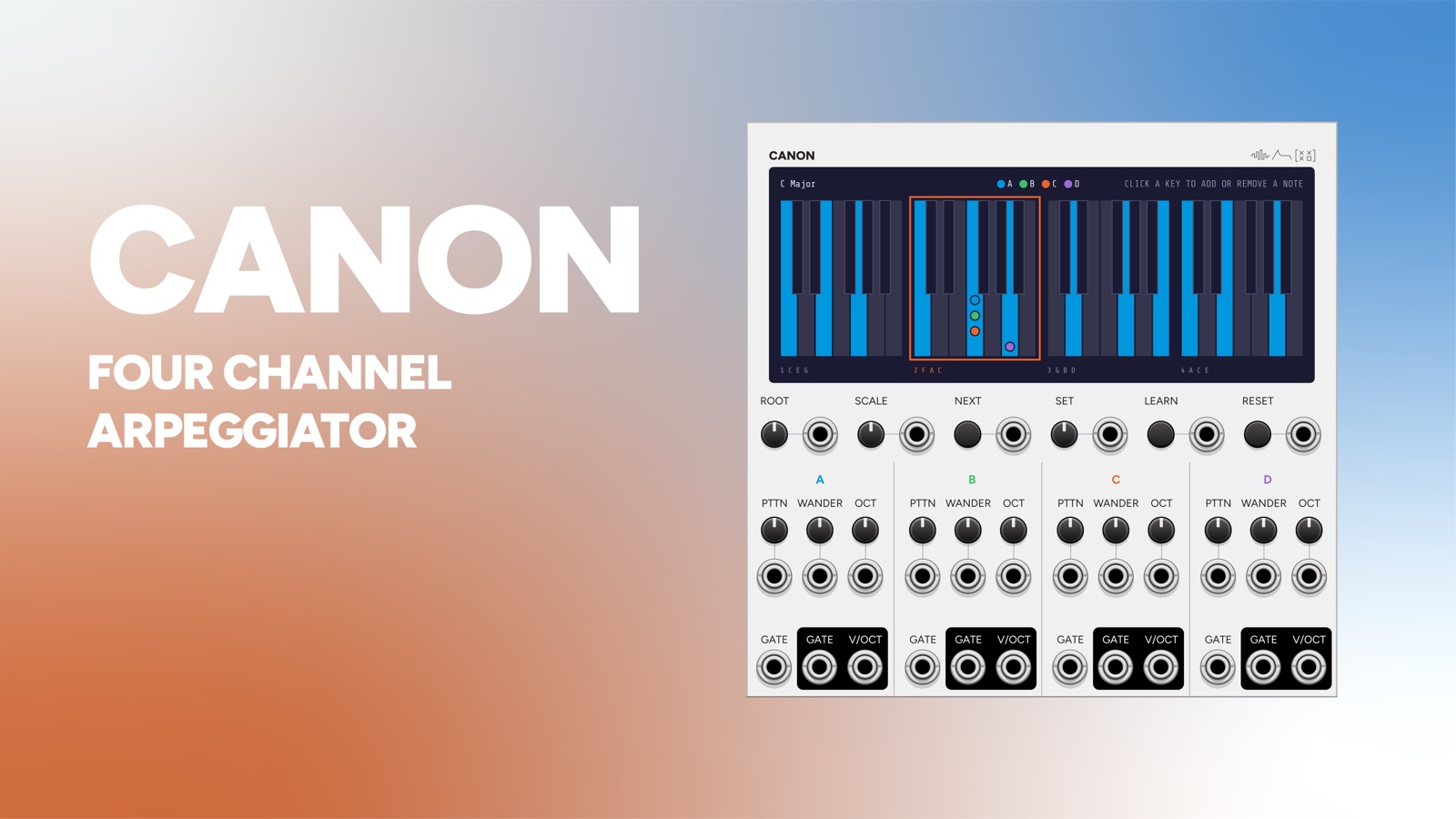
One output per channel gives each of Canon's four arpeggios its own rate.
-
 Beat
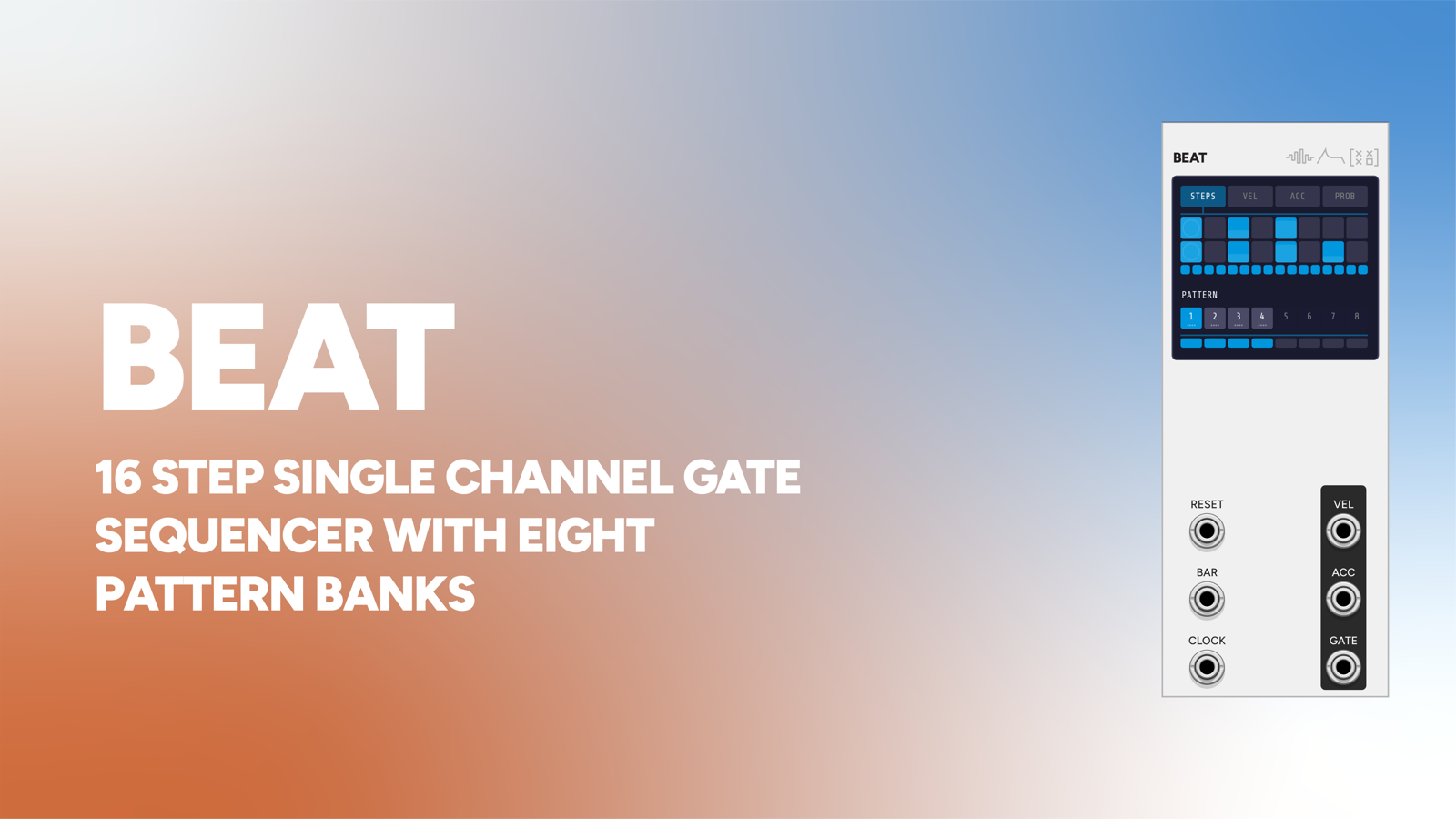
Count builds a drum pattern from rates and masks, and Beat can add the parts that need programming step by step.