
Most VCV clocks are subdivision dividers: they emit evenly-spaced pulses at fixed ratios. Meter understands the musical structure of those pulses: bars, beats, swing, and time signatures with CV control.
It’s built to be the master clock for a whole rig: one Meter drives many Beats and Notes, all sharing bar boundaries, swing, and reset behaviour, so you can shape the macro feel of the patch from one place.
18 HP.
Six musical subdivisions
Each output runs at the rate implied by the current time signature:
- BAR: one pulse at the start of every bar
- QUARTER: quarter notes
- EIGHTH: eighth notes
- SIXTEENTH: sixteenth notes
- QUARTER TRIPLET: three pulses per quarter
- EIGHTH TRIPLET: three pulses per eighth
All gate outputs are 1ms 10V pulses.
Time signature with CV
Both the numerator (1-16) and the denominator (1, 2, 4, 8, 16, 32) are knobs with CV inputs.
Time signature changes are queued for the next bar boundary by default, so the current bar plays to completion. A context menu option applies them immediately if you want unmusical glitching on purpose.
Swing, per output
Each subdivision except BAR has its own swing trimpot (-50% to +50%) and matching CV input. Positive swing delays the off-beats for a shuffle; negative swing fires them early for a rushed feel.
The maths is arranged so each pair of on-beat, off-beat, on-beat periods sums to exactly two straight periods, which means on-beats always land on the grid no matter how much swing you dial in. Swing values are latched per bar, so changing swing mid-bar can’t corrupt the accumulator and swallow or rush a note.
Swung and grid outputs, side by side
For every swingable subdivision Meter gives you two jacks: SWG (swung) and GRD (on-grid).
That means you can patch the swung eighth into the hats and the grid eighth into a synth bass, mixing grooved and straight feels from the same clock, from the same subdivision, without a second module.
External clock sync
Patch a pulse train into EXT CLOCK and Meter measures the interval to derive BPM. PPQN is selectable (1, 2, 4, 8, 12, 16, 24). When external clock is patched the BPM knob is overridden, and a sync indicator flashes on each incoming pulse. Meter still emits its own subdivisions, swing, and bar boundaries. It just takes its tempo from outside.
Display
A top status line shows BPM, the time signature (with a 7/8 pending-change indicator when one is queued), and a bar counter.
Below it, six per-output hit-indicator rows visualise each output’s pulses across the bar: a bright tick at each fire position, ghost ticks at the un-swung positions with connector lines to where the swung pulse actually lands, so you can see the groove. The tick that just fired flashes and decays. A position tracker at the bottom shows the current sixteenth in the bar.
Inputs and outputs
Controls: BPM (30-300), Num, Den, Run, Reset, and five swing trimpots.
Inputs: BPM CV, Num CV, Den CV, Run gate, Ext Clock, and five swing CVs.
Outputs: Bar; Quarter, Eighth, Sixteenth, Quarter Triplet, and Eighth Triplet each as SWG + GRD; and Reset out (Meter is the master, so downstream modules take reset from here).
Context menu
External clock PPQN selector; apply time-signature changes immediately (default: queue for the next bar); reset on play (default: resume from the current position); and a detected-BPM readout when an external clock is patched.
Patch ideas
A kit with per-voice feel. Three Beats: kick, snare, hat. QUARTER to the kick, swung EIGHTH to the snare, swung SIXTEENTH to the hat, all three BAR inputs from Meter’s BAR. Dial swing per voice from one place.
Straight bass, swung hats. 8 GRD into a Note driving the bass, 8 SWG into the hat’s Beat. Same subdivision, two feels.
Cross-rhythm. QUARTER TRIPLET into one Beat and EIGHTH into another for 3-against-2.
Sequenced time signatures. A slow LFO or sequencer into NUM CV and DEN CV to morph the meter mid-piece; pending changes land on the bar line, keeping it musical.
Follow hardware. A hardware MIDI clock into EXT CLOCK at 24 PPQN. Meter follows the external tempo while still providing swing and bar structure the source doesn’t have.
Pair with
-
 Signal Function Set Sequencer System
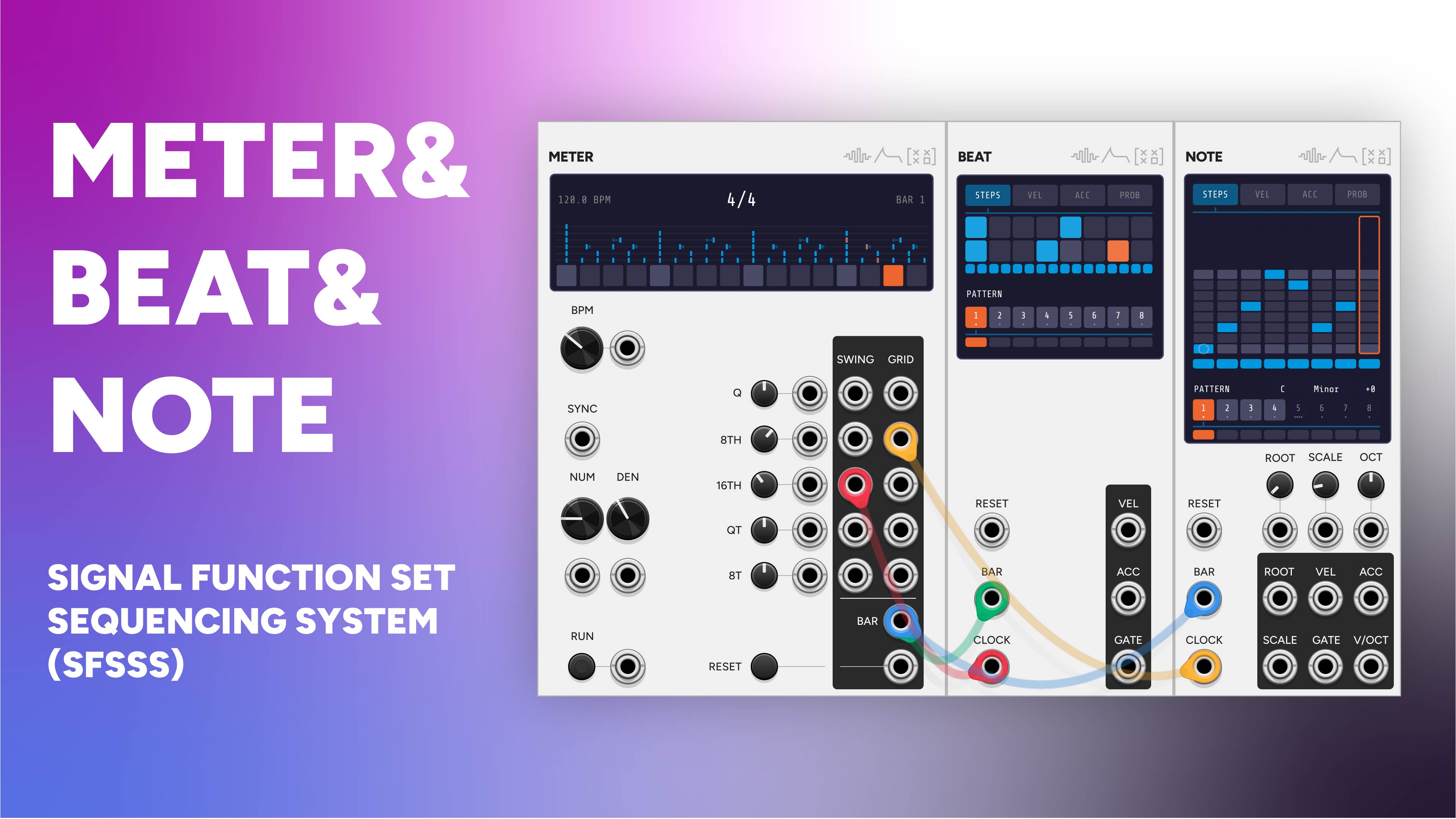
Meter is the clock at the centre of this system: one Meter drives a rig of Beats and Notes, all sharing bar boundaries, swing, and reset.
- Meter X
Meter's expander. Place it to the right for a 24 PPQN clock, a run gate, and bar-multiple triggers out to 128 bars, with pie charts showing where you are in each cycle.
-
 Arrange
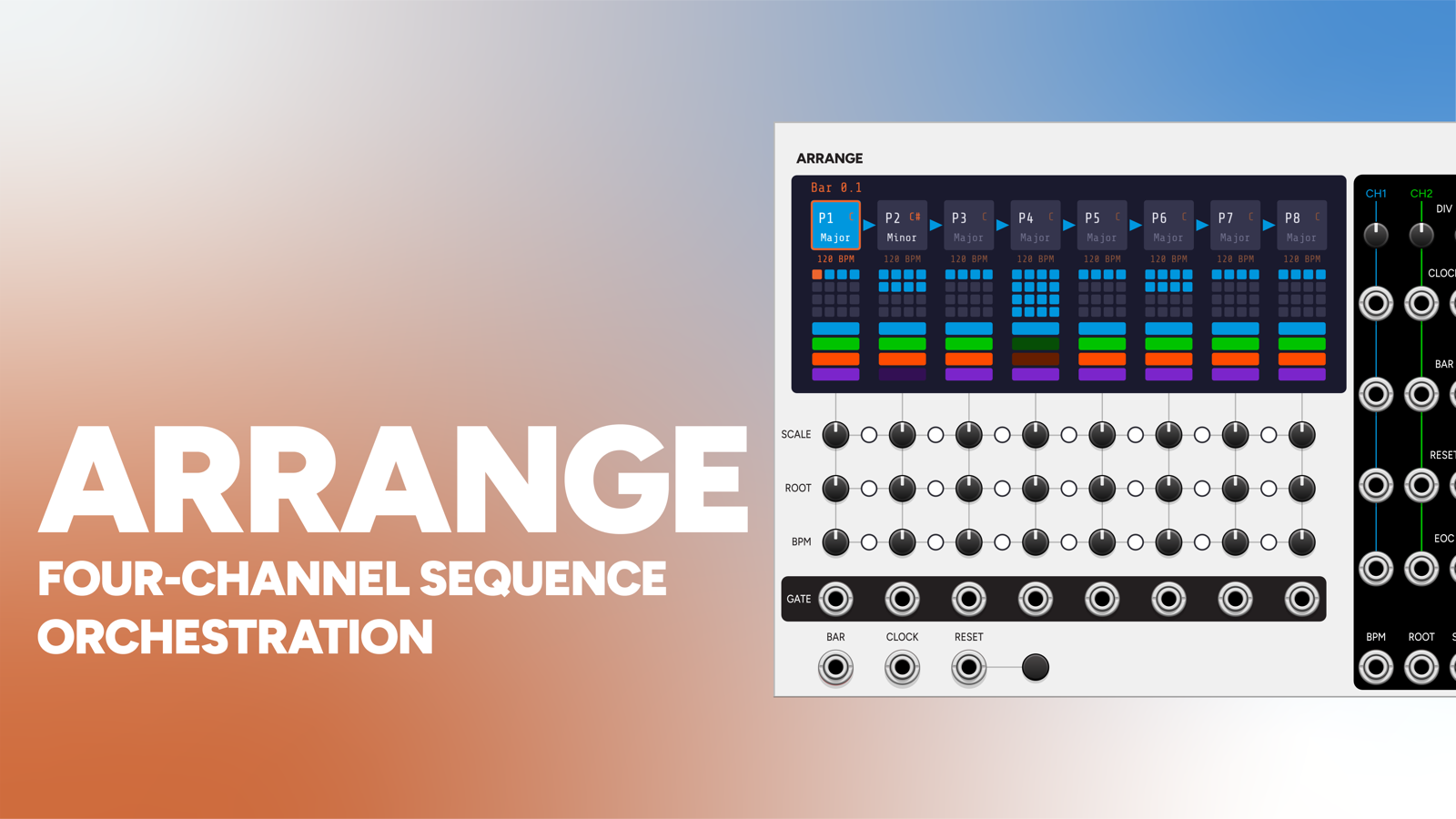
Arrange sits above Meter: it counts Meter's bars to advance a song's sections, and sends its per-phrase BPM back into Meter's BPM CV.
-
 Cycle
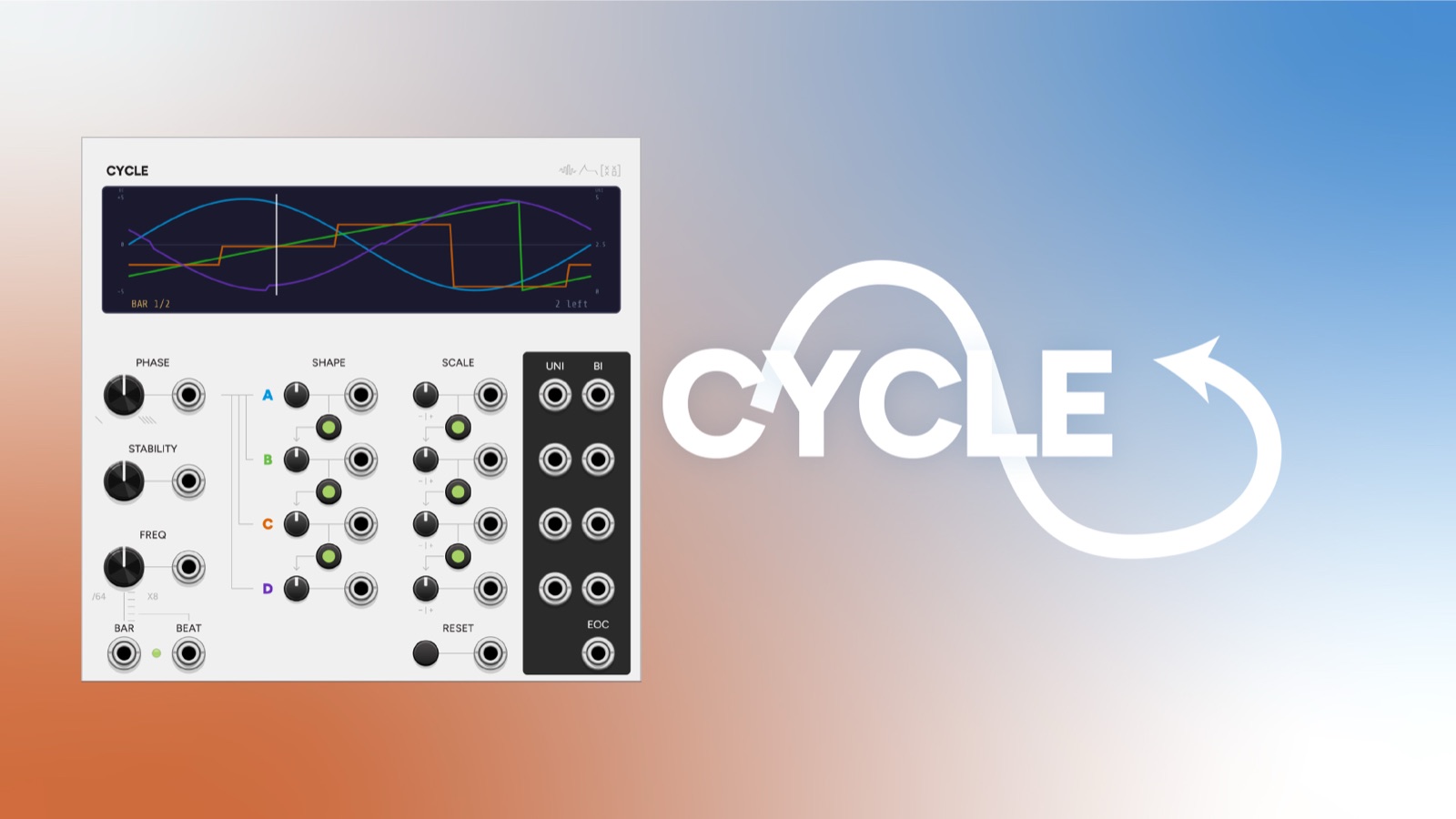
CyclePatch Meter's BAR and a subdivision into Cycle and every LFO in the patch phase-locks to the bar.