
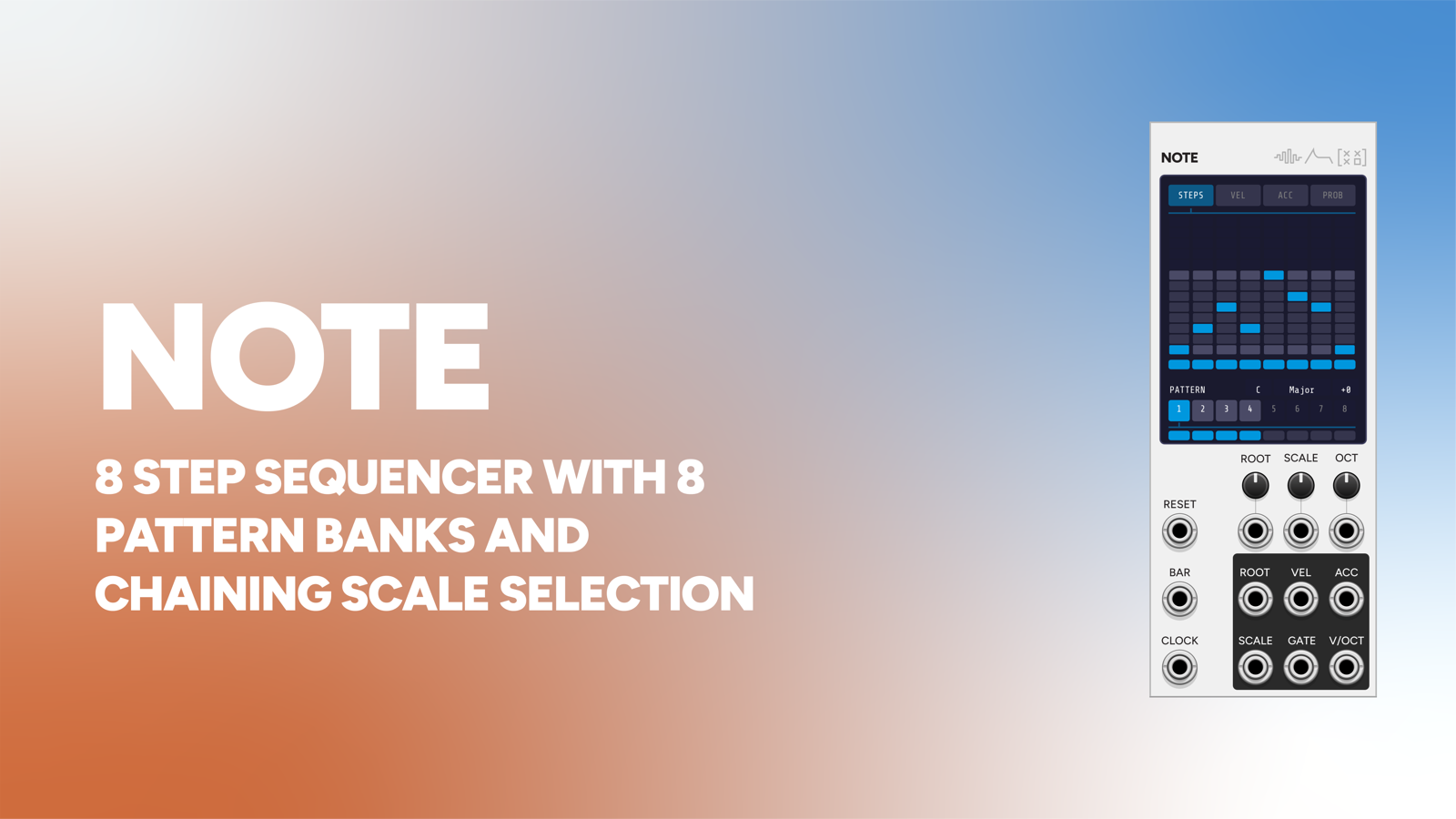
Note is the pitched cousin of Beat. Same architecture (eight patterns, per-step velocity, accent and probability, the same four edit modes, the same clock/bar/repeat behaviour), but each step also carries a pitch, quantized to a selectable scale and root.
10 HP, 8 steps per pattern.
The pitch matrix
The display is a matrix: steps across, scale degrees up. Click a cell to place a note at that step, on that degree. The matrix has one row per scale degree plus an extra row at the top for the root an octave up, so the octave is always reachable without changing the octave control.
Because the rows are the scale, changing the scale doesn’t produce wrong notes. It re-reads the same shape in a new key. A melody you drew in Major becomes a valid melody in Slendro.
The other three edit modes (velocity, accent, probability) work exactly as they do on Beat.
19 scales, including non-12-TET
Note draws from the plugin-wide scale list. Alongside the familiar ones (chromatic, major, minor, the modes, pentatonics, blues, whole tone, harmonic and melodic minor, Hijaz) there are three that aren’t 12-tone equal temperament at all:
- Harmonic series: just-intonation harmonics 1 through 12. Sweep it and you’re stepping through the actual overtone series, not an approximation of it.
- Pelog and Slendro: Indonesian Gamelan tunings, with the intervals that make gamelan sound the way it does.
These are the reason the scale list is stored as floats rather than semitone integers: the pitches genuinely fall between the keys of a piano.
Sharing a key
ROOT, SCALE, and OCT all have CV inputs (1V/oct semitone-quantized, 1V per scale, 1V per octave), and Note also has ROOT OUT and SCALE OUT that relay its current values.
That means you can chain them: patch one Note’s ROOT/SCALE out into another’s CV in, and changing the key on the first transposes the whole group. The same voltages work on Fugue, Muse, Chance, MetaFugue, and Arrange. The convention is shared across every module in the plugin that has a scale, so a single source of key can drive the entire patch.
Bar and clock behaviour
As with Beat, a coincident BAR and downbeat pulse collapse into a single event, and pattern advances happen on BAR by default, so with BAR unpatched a pattern loops on its own.
Inputs and outputs
| I/O | Function |
|---|---|
| CLOCK / BAR / RESET | Same as Beat |
| ROOT / SCALE / OCT CV | 1V/oct semitones, 1V per scale, 1V per octave |
| GATE | 1ms 10V pulse on each fired step |
| V/OCT | 1V/oct pitch (sample-and-hold) |
| VEL / ACC | Velocity CV and accent pulse |
| ROOT / SCALE OUT | Relays current values for chaining |
Patch ideas
Bass and arp from one Meter. Two Notes sharing clock and bar. Note 1 (bass): pentatonic, low octave, 4-step pattern. Note 2 (arp): same scale, +1 octave, 8 steps, all on. Patch Note 1’s ROOT and SCALE out into Note 2’s CV inputs, so changing the bass key transposes the arp automatically.
Gamelan ensemble. Four Notes on Slendro, chained by SCALE OUT, each at a different octave with different pattern lengths (5, 7, 8, 11) for shifting polyrhythm. Each into a Tine for metallic inharmonic voicing.
Just-intonation drone. Scale = Harmonic, a single sustained note on the root row. The V/OCT output gives precise just-intonation harmonics 1-12; step through them to sweep the overtone series.
Key that follows the song. Arrange’s ROOT and SCALE outputs into Note’s CV inputs: the melody changes key with the arrangement, with no re-programming.
Probabilistic melody. Drop PROB on a few steps so the line thins and thickens while the shape stays fixed.
Pair with
-
 Signal Function Set Sequencer System
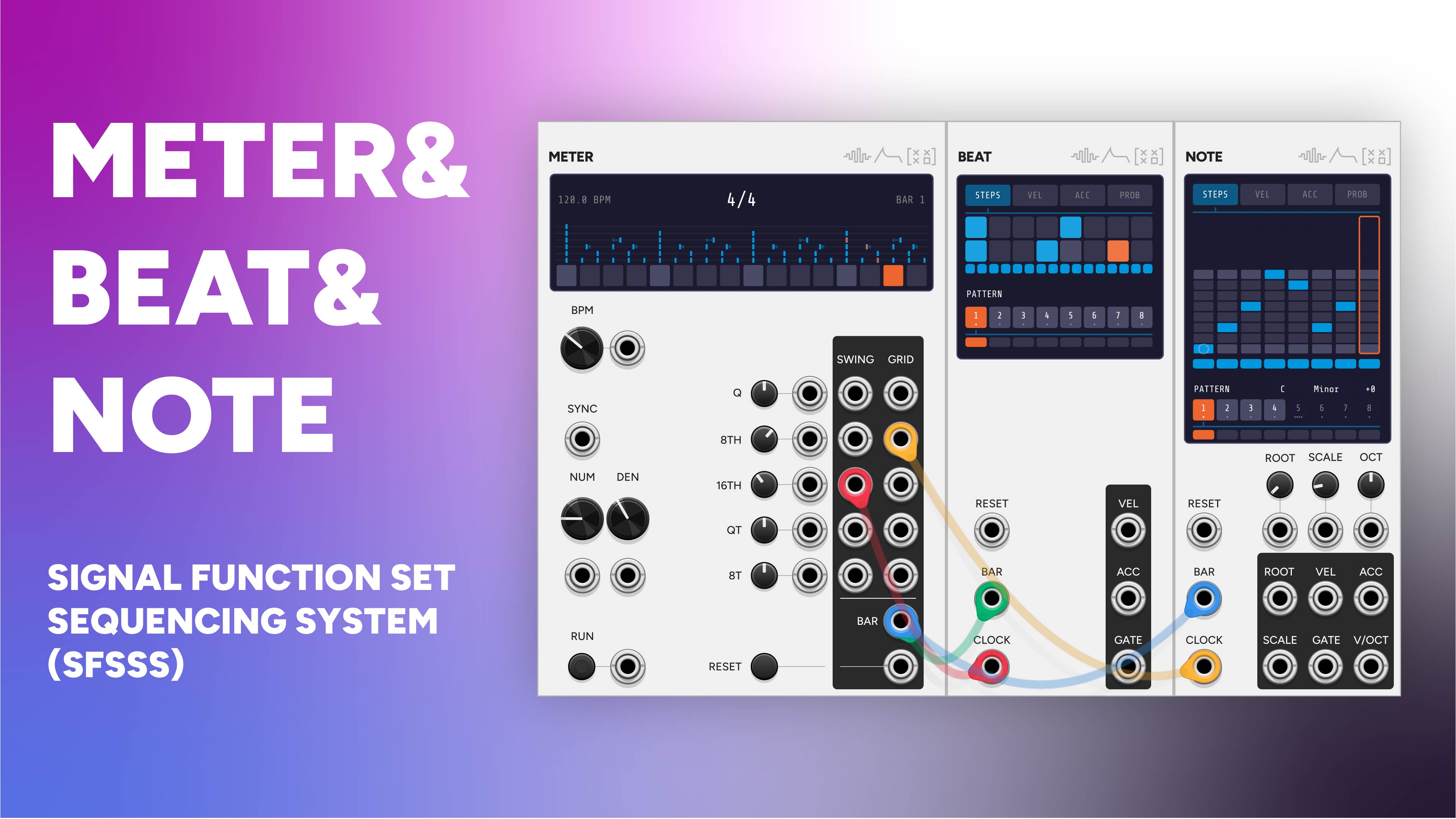
Note is the pitched voice of this system, sharing Meter's clock, bars, and reset with the Beats around it.
-
 Beat
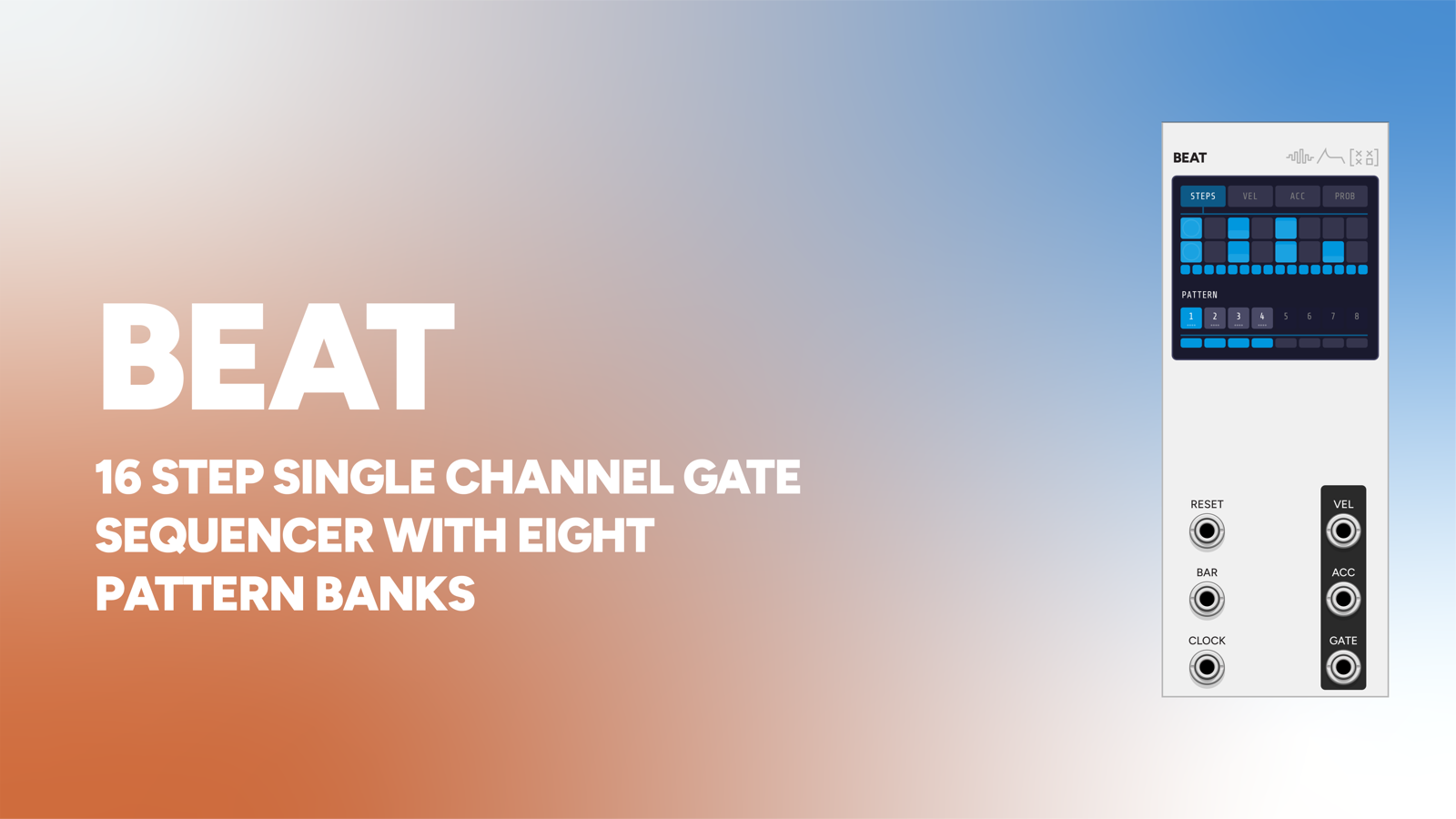
BeatNote's rhythmic cousin: the same pattern architecture and edit modes, without pitch. Build a kit from Beats and melodies from Notes on one clock.
-
 Tine
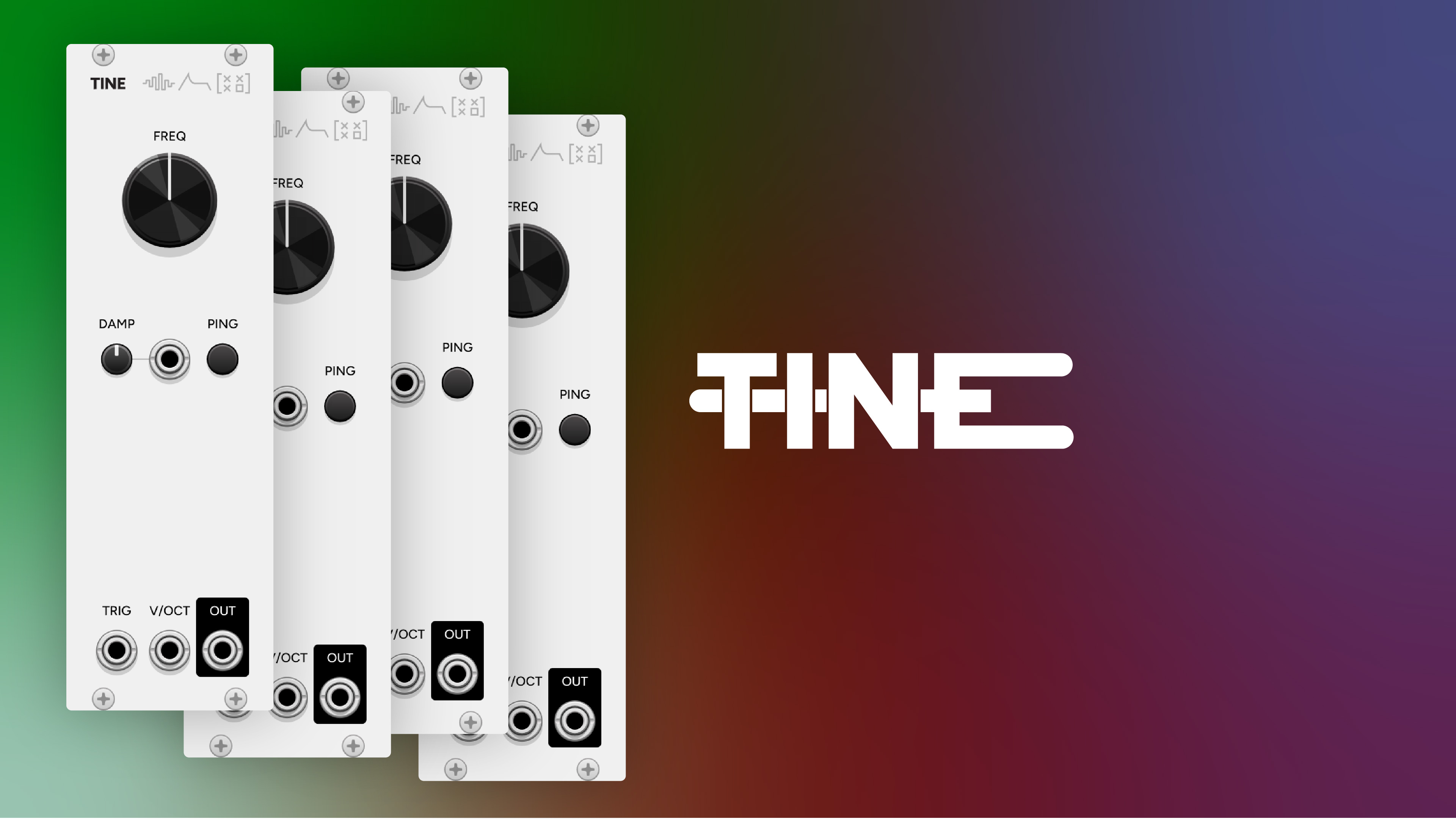
TinePatch Note's V/OCT into Tine, set Note to Slendro or Pelog, and you have an instant gamelan voice, inharmonic resonator and all.
-
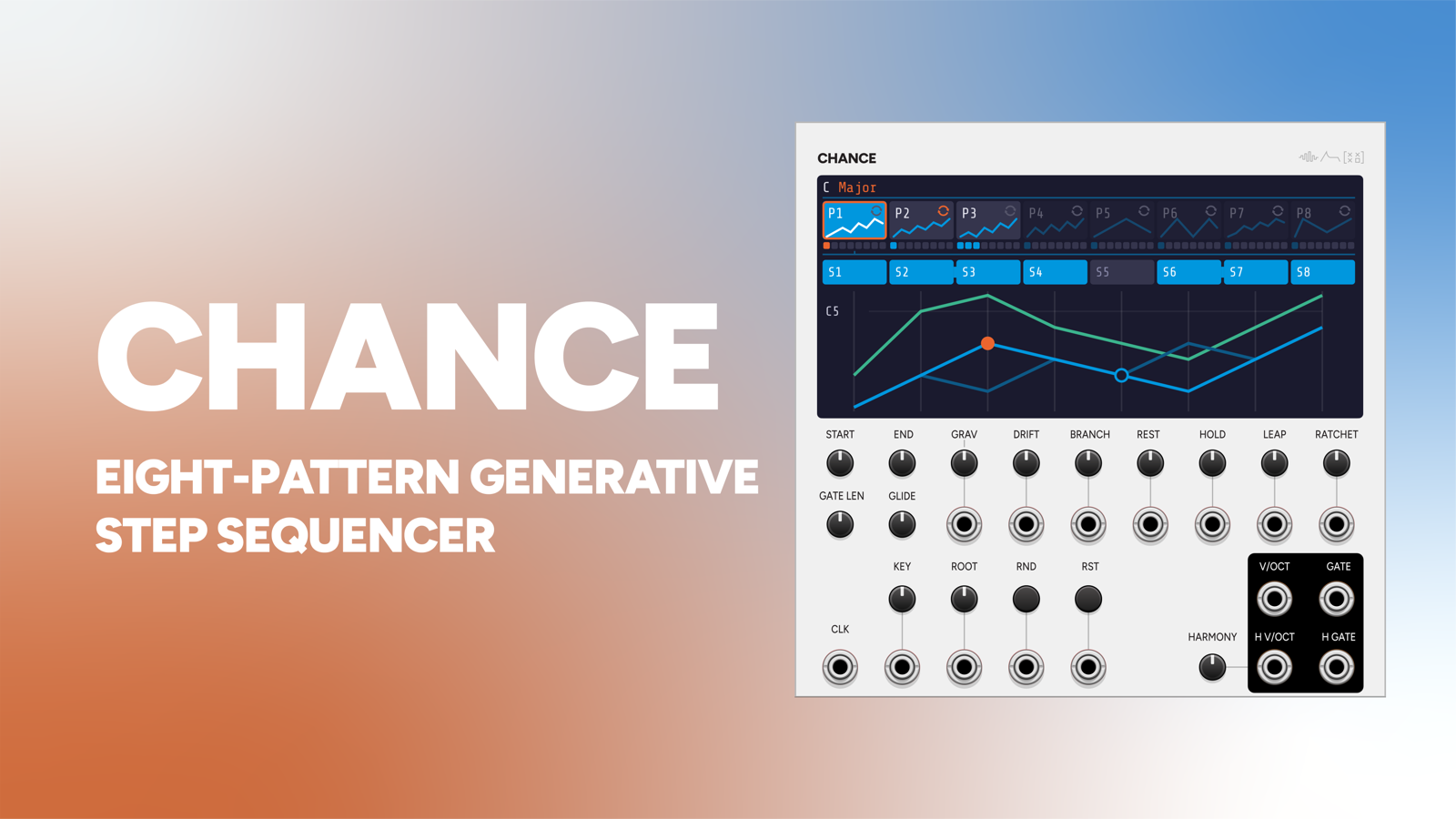 Chance
Note plays the melody you wrote; Chance writes one for you. Both read the same root and scale CV, so they can share a key.