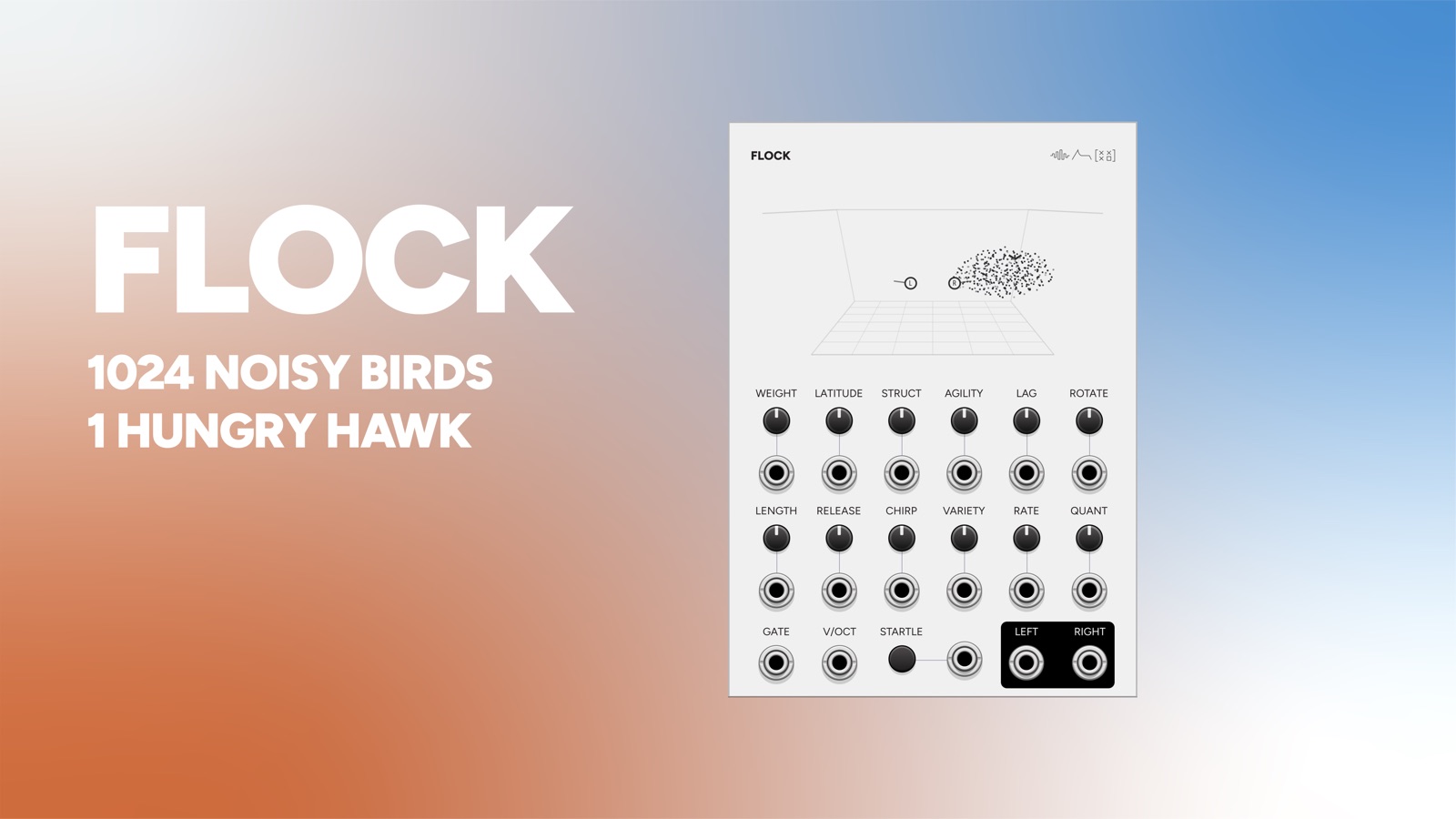
Flock is a murmuration as a voice.
Up to a thousand birds fly as a real flock, each steering by its seven nearest neighbours, the way starlings do. Every call a bird makes is a grain. Height in the flock is pitch: V/OCT is the roost the flock leans toward, LATITUDE is how far above and below it the birds may range, and a new pitch travels through the flock bird to bird, so the flock arrives at a note rather than jumping to it.
The stereo image is the flock heard from a pair of listeners standing at its edge. A startled flock scattering past them is a startled stereo field.
18 HP. The display is the flock drawn in perspective on the faceplate, with the listeners, the floor and the box the birds are leashed to. Drag it to move the camera; double-click puts the camera back.
The flock
The birds are persistent. They keep their shape between notes, and the shape is what you hear: a tight knot is a chord of near-unisons, a loose cloud is a spread. Three rules steer each bird, separation, alignment and cohesion, against its nearest seven neighbours rather than everything within a radius, which is what keeps a real murmuration one object at any density.
LAG is a delay made of birds. Each bird carries its own slowly settling copy of the pitch the flock is asked for, so a new note reaches the front of the flock first and the back last, up to four seconds later. At zero the flock moves as one.
STARTLE sends a hawk through. The flock scatters, the calls thin and spread, and it settles back over RELEASE.
Controls
Each control has a trimpot and a CV input beneath it; plus or minus 5 V covers the whole knob.
| Control | What it does |
|---|---|
| WEIGHT | How many birds, 1 to 1024. The cost is in voices, not birds. |
| LATITUDE | How far the flock may stray from the pitch, a tenth of a semitone to three octaves. |
| STRUCT | Pulls the flock into wells at just intervals of the pitch, so the birds gather at the octave, fifth and third. |
| AGILITY | How fast the flock changes shape. |
| LAG | How late the slowest birds hear a new pitch, up to four seconds. |
| ROTATE | Walks the listener pair round the flock. |
| LENGTH | The call, 10 ms to 300 ms. |
| RELEASE | How long the flock takes to settle after the gate falls. |
| CHIRP | The pitch glide inside each call, up to seven semitones either way. |
| VARIETY | How far the birds differ from one another, in voice and in the syllables of their calls. |
| RATE | How often each bird calls, 0.2 to 20 a second. Calls are not a metronome; each bird draws its next call at random, and some talk more than others. |
| QUANT | Snaps each call toward the grid chosen in the menu. At zero the calls are wherever the birds are, microtonally. |
Inputs and outputs
GATE high and the flock flies and calls. V/OCT is the roost. STARTLE is a trigger, and there is a button beside it. LEFT and RIGHT are the flock as heard from the listener pair.
The gate is flight rather than a trigger, since the calls come from each bird’s own clock. A menu option, on by default, has one lead bird call the instant the gate rises, which is what makes a small flock playable from a keyboard. With a thousand birds it is one call among the rest.
The stereo field
Each call is panned by its bearing from the pair, divided by the flock’s own spread, so a tight knot of birds fills the field as much as a loose cloud does. The spread it is divided by is the settled one, held while the hawk is in the flock, so scattering birds fly past the speakers rather than being re-centred as they go. Level and brightness fall with distance.
Stereo width in the menu sets where the typical bird lands: most of the way to the speaker, just past it, or well past, so most of the flock sits hard left or right.
Context menu
Register, the roost at V/OCT plus 0 to 3 octaves. Quantize grid: semitones, whole tones, root and fifth, octaves, three triads, a seventh, pentatonic, and fourths and fifths. Stereo width. Lead bird calls on the gate.
Patch ideas
A note that arrives. LAG up, WEIGHT a few hundred, and play slow changes. Each new note spreads through the flock over a second or two.
Chords from one voice. STRUCT up and QUANT toward a triad grid. The flock gathers at the chord tones and the calls land on them.
The hawk on the downbeat. A trigger into STARTLE from Meter’s BAR out scatters the field once a bar and lets it settle.
A single bird. WEIGHT at the bottom with the lead bird on is a chirping microtonal monosynth that follows a keyboard.
Pair with
-
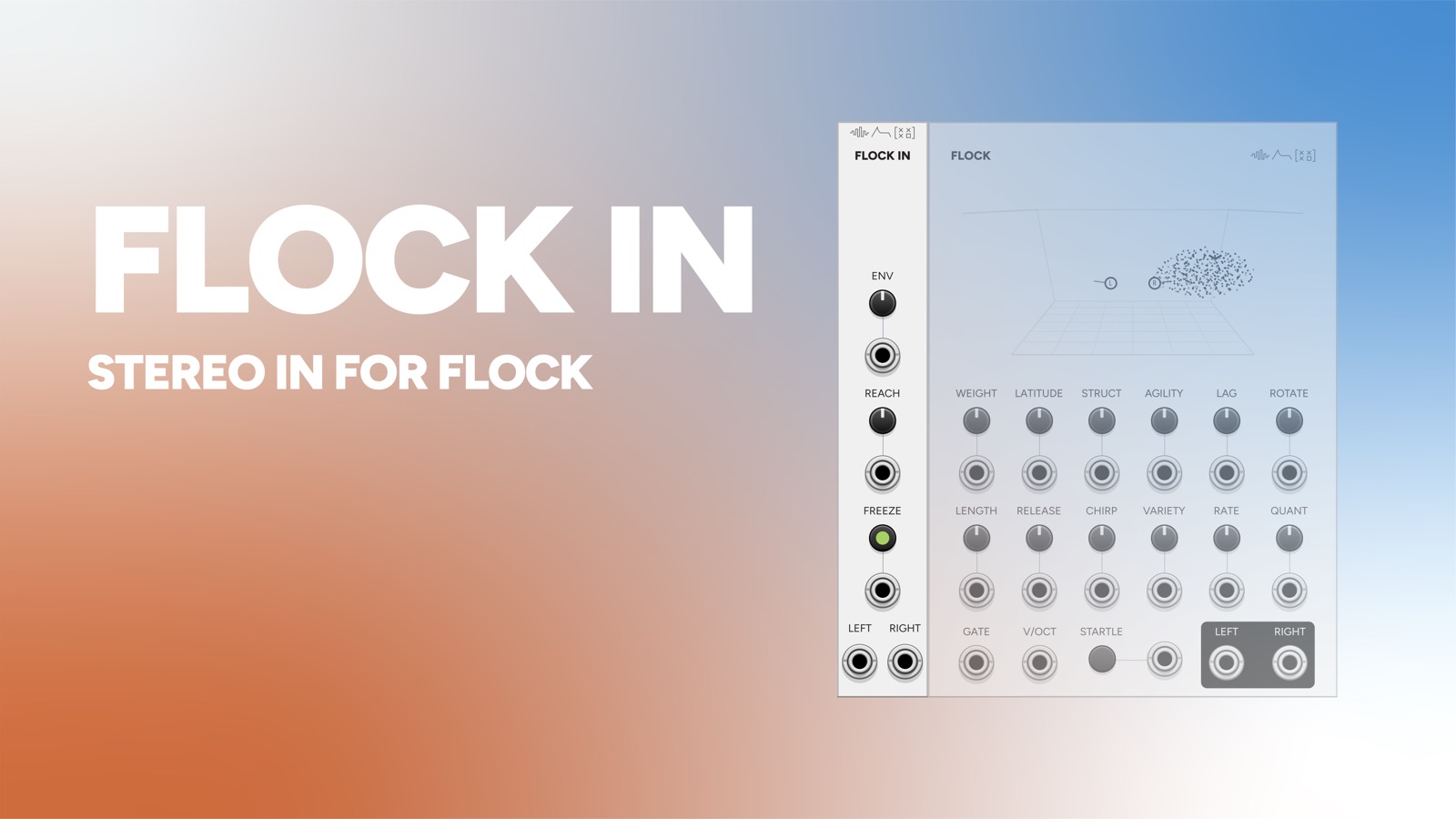 Flock In
The expander that feeds Flock live audio, so the birds sing grains of whatever you patch in.
-
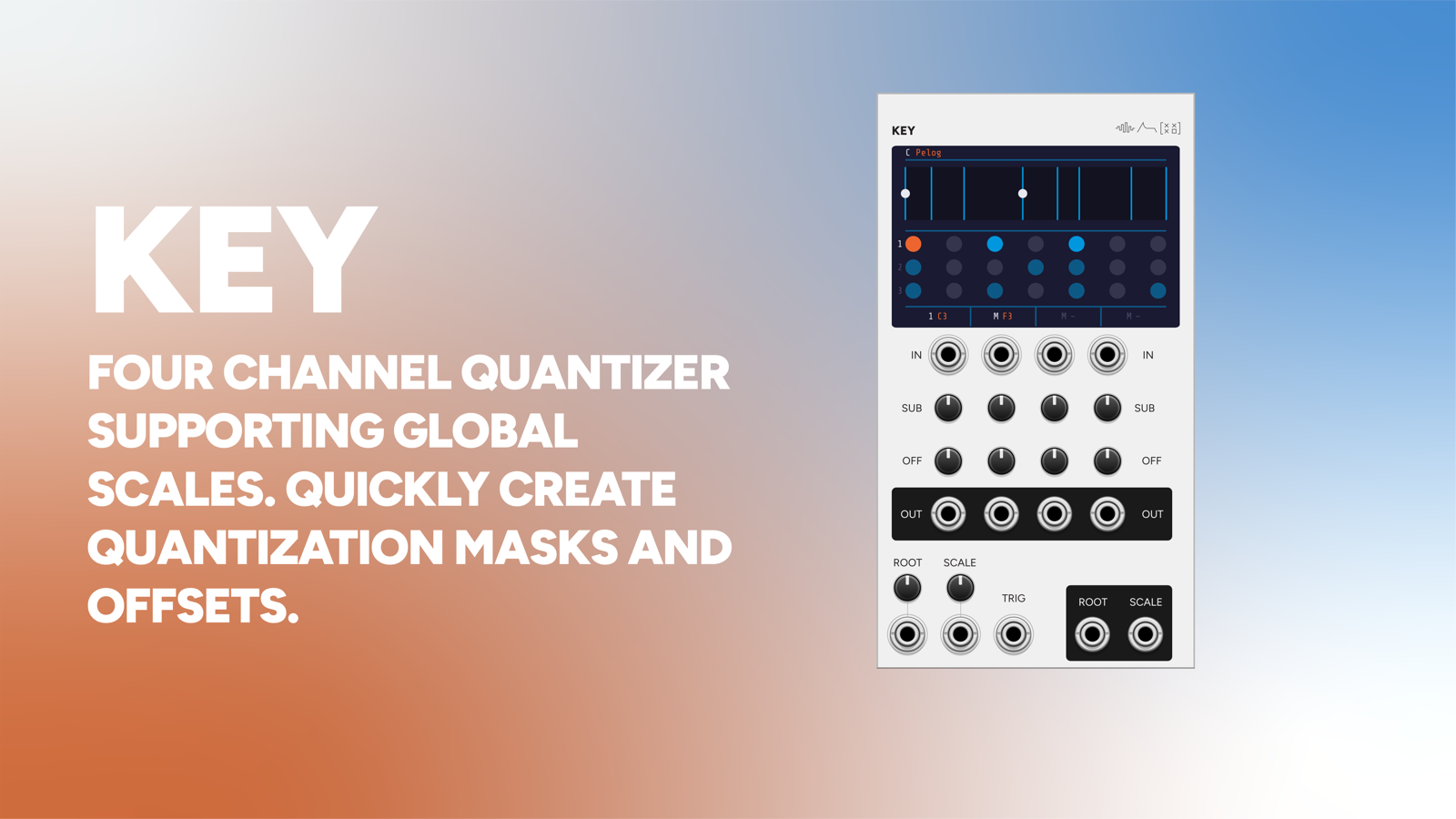 Key
KeyQUANT snaps every call toward a grid, and ROOT from Key keeps the roost in the patch's key.
-
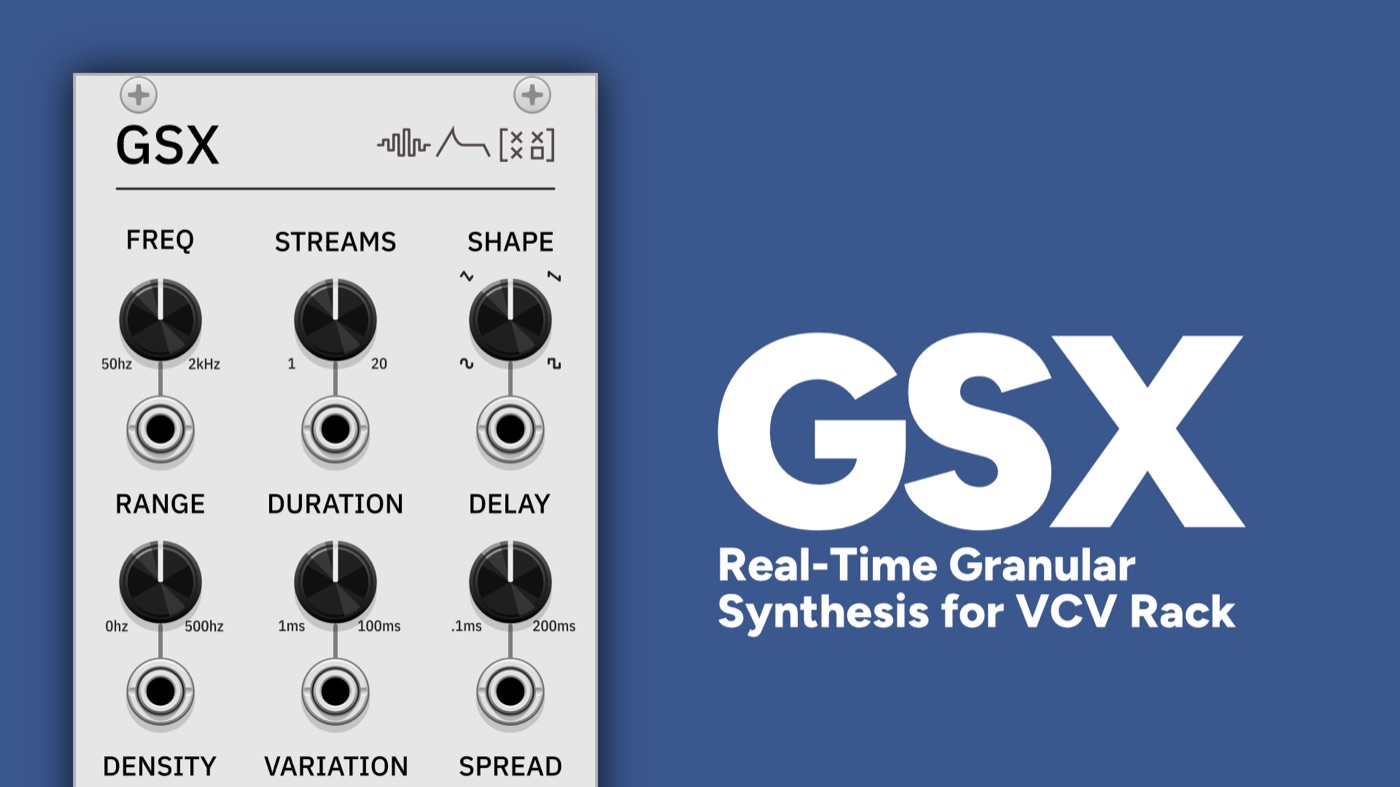 GSX
GSXTwo granular voices from opposite ends. GSX schedules grains from parameters, Flock lets birds decide when to call.