
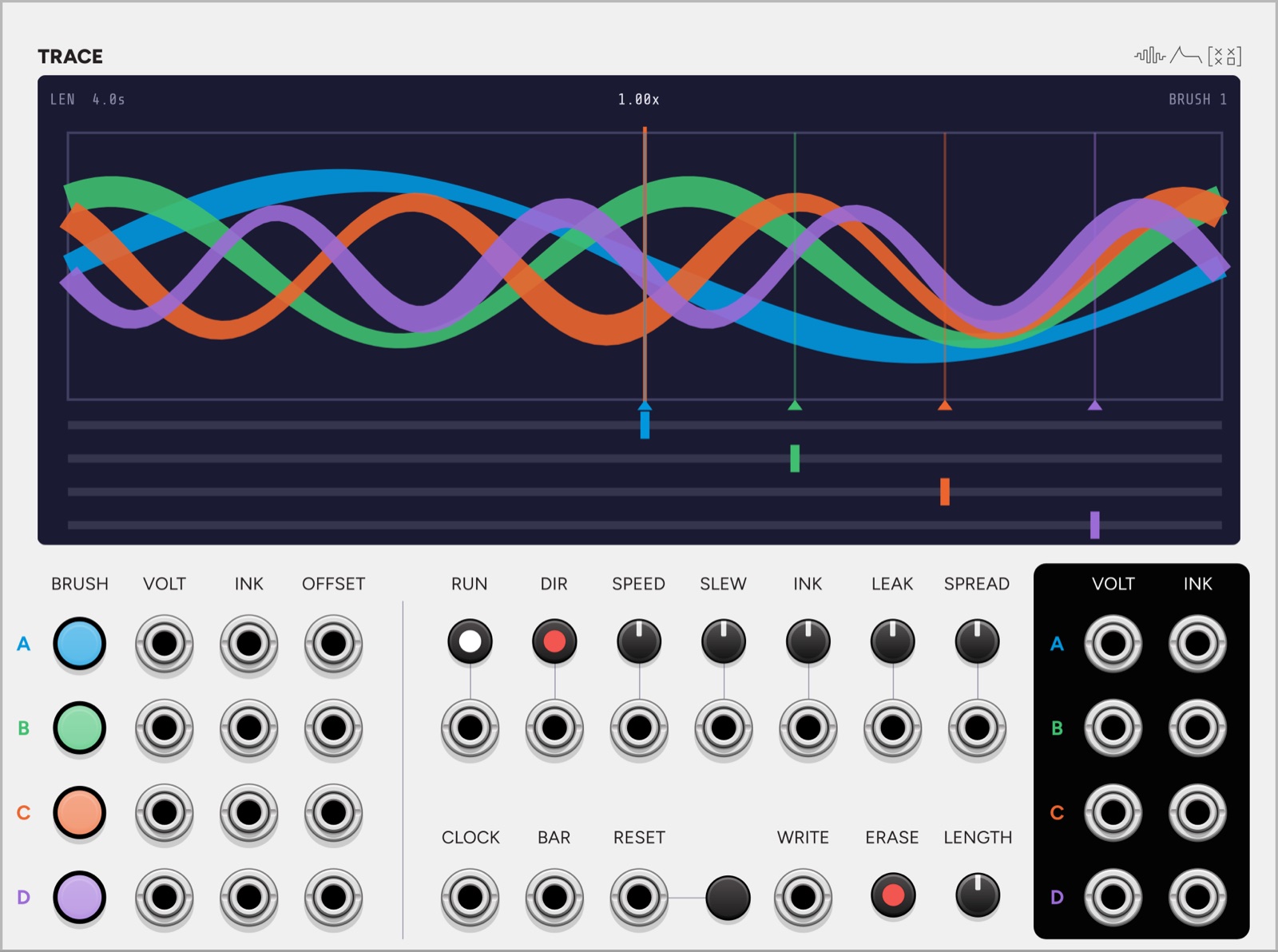
Trace is a paper loop and four brushes.
You draw four CVs onto moving paper, or let the patch draw them for you, and four read heads play them back. It is part Oramics, which read drawn shapes off moving film, and part chart recorder, whose pens sit at different points along the drum. That second half is why the read offsets here are per lane rather than global.
34 HP.
Two things carry it
Neither of them is “a curve editor”.
The transport is uncoupled from the brush
Every draw-a-shape module is a static editor: you see the whole loop, you edit it as an object, and playback is a cursor sweeping over your artwork. Here the paper moves whether you are drawing or not, which is what makes it an instrument rather than an editor.
It also gives you three behaviours for free, decided by nothing except where the mouse is:
- Left of NOW, you are editing what just played.
- Right of NOW, you are composing the future, with lead time.
- On NOW, you are performing.
Ink is a second dimension
The brush lays down weight as well as position, so every lane carries two signals. Ink accumulates over repeated passes and pools where the line sits still. The thickness track is therefore “how settled is this line”: sustains heavy, transitions light, without anyone having drawn it.
The paper is a length, not a duration
LENGTH sets how many cells go round and SPEED sets how fast they pass the head, so speeding up shortens the loop rather than compressing what is drawn on it. That is how a tape loop behaves.
Events come from the shape, not the value
Each lane classifies its slope as rising, falling or flat and fires on the transitions, so a scribble makes notes where it turns around and no quantization is involved.
Controls
| Control | Range | What it does |
|---|---|---|
| SPEED | -4× to +4× | Negative runs the paper backwards. |
| LENGTH | How much paper goes round. | |
| SLEW | Smooths the read, not the drawing. | |
| INK | 0 to 100% | How much ink a pass lays down. |
| LEAK | How much a pass lifts. Balance against INK to decide whether repeated passes build up or wash out. | |
| SPREAD | ±100% | Fans the four read heads apart. |
| RUN / REV / RESET | Transport. | |
| Brush 1-4, ERASE | Which lane the mouse writes to, or erase. |
Inputs
Per lane: DRAW (draw this lane from CV instead of the mouse), THICK (thickness, or velocity), and OFFSET (that lane’s read head position).
Globally: CLOCK, BAR, RESET, RUN, REV, and CV for SPEED, SLEW, INK, LEAK and SPREAD.
Outputs
Per lane: VALUE (the line under the head), OFS (the line under that lane’s offset head), and INK (the weight there).
Globally: LOOP, a trigger each time the paper comes round.
The brush cannot be down while the paper runs backwards
This is stated as a rule about state rather than as “a direction change lifts the brush”, and the difference matters. The state version already answers what happens if you press the mouse while reversed, which is that nothing is written. An edge rule has to answer that separately, and gets it wrong.
A brush writing onto paper moving the other way retraces over what it has just laid down, so the stroke eats itself.
Context menu
Per lane: Range (bipolar ±5V or unipolar 0 to 10V), Read (smooth or stepped, for sharp edges), Quantize, Clear lane, and Copy to lane.
Copying a shape across lanes and then offsetting their heads is how you get phase-shifted reads of one gesture, so those copy items are load-bearing rather than a convenience.
Globally: Stroke weight (hairline, fine, normal, bold, heavy), Clocks per bar, Clear all paper.
Stroke weight is how far ink is allowed to swing the width. At the top of the range the width varies a lot along a stroke, which is the point. A brush that never changes width is a pen.
Patch ideas
Four takes of one gesture. Draw one lane, copy it to the other three from the menu, then wind SPREAD up. The same shape reads at four points along the paper, which is the chart-recorder arrangement and gives you a canon from one drawing.
Let the patch draw. An envelope into lane 1’s DRAW and a slow random into its THICK. The paper records what the patch did, and you can then play it back at a different speed, backwards, or with the heads spread.
Ink as a second envelope. Draw the same passage several times with INK low and LEAK lower. The line stays where it is but its ink builds, so the INK output climbs over repeats while VALUE does not.
Turnaround sequencing. Scribble a loose shape and take the lane’s events rather than its value. Notes land where the line changes direction, so the rhythm comes from the drawing’s shape and not from a grid.
Pair with
-
 Meter
MeterMeter's clock into CLOCK and its bar into BAR puts the paper on the patch's own grid, so a loop is a musical length.
-
 Muse
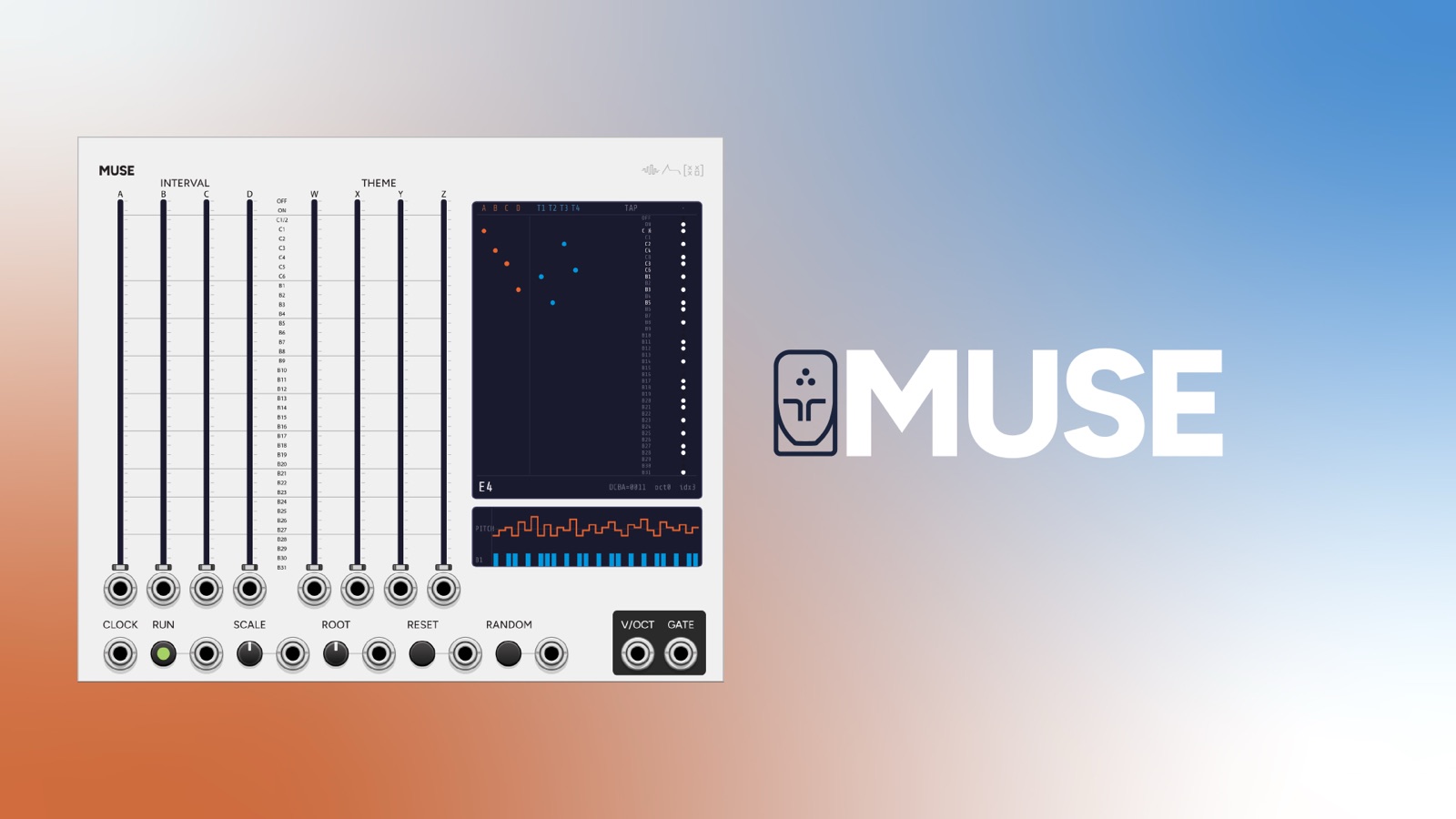
MuseMuse generates a line, Trace records the shape of one you drew. Two different answers to where a melody comes from.
-
 Drift
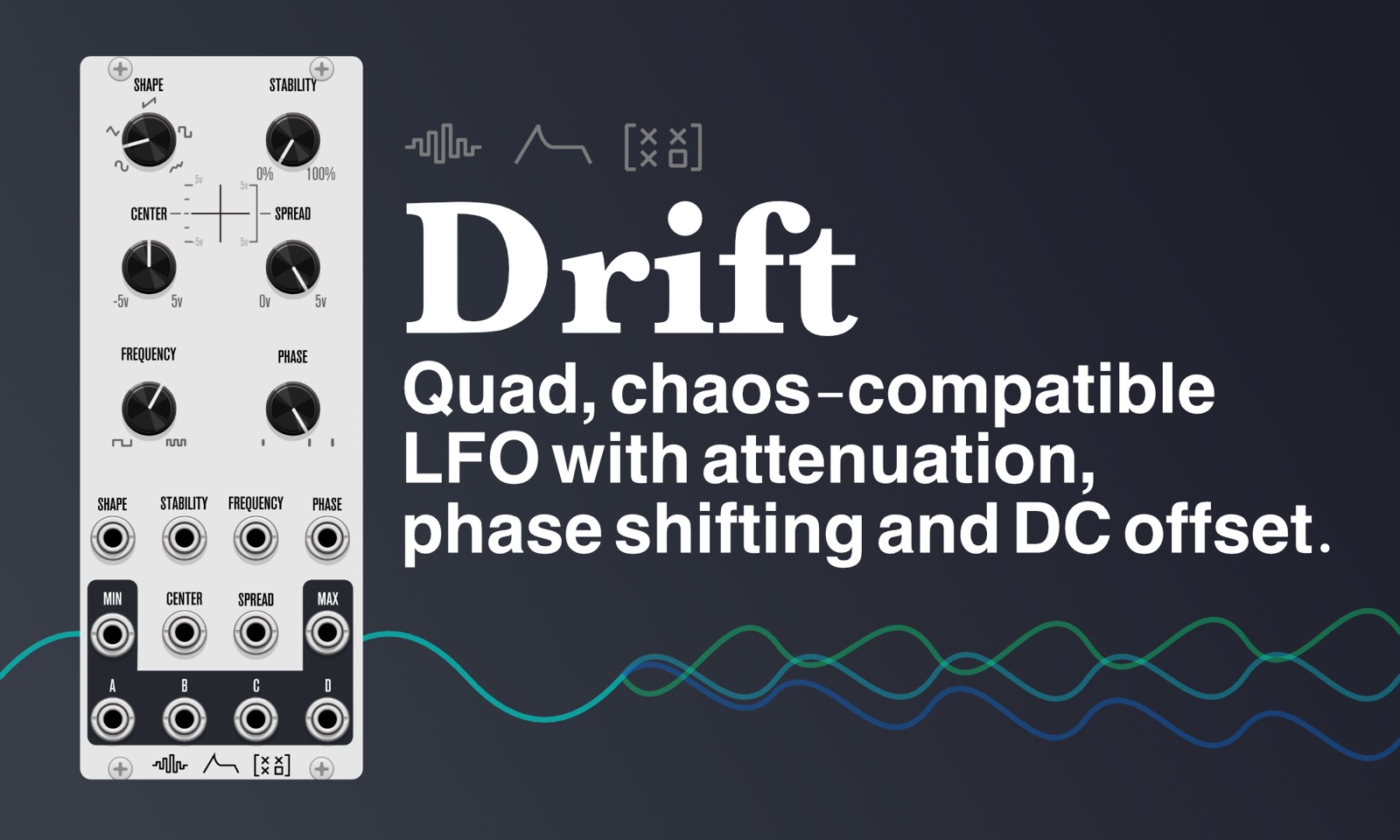
DriftPatch Drift into a lane's DRAW and the paper records an LFO you can then read back backwards, slower, or from four heads at once.
-
 Key
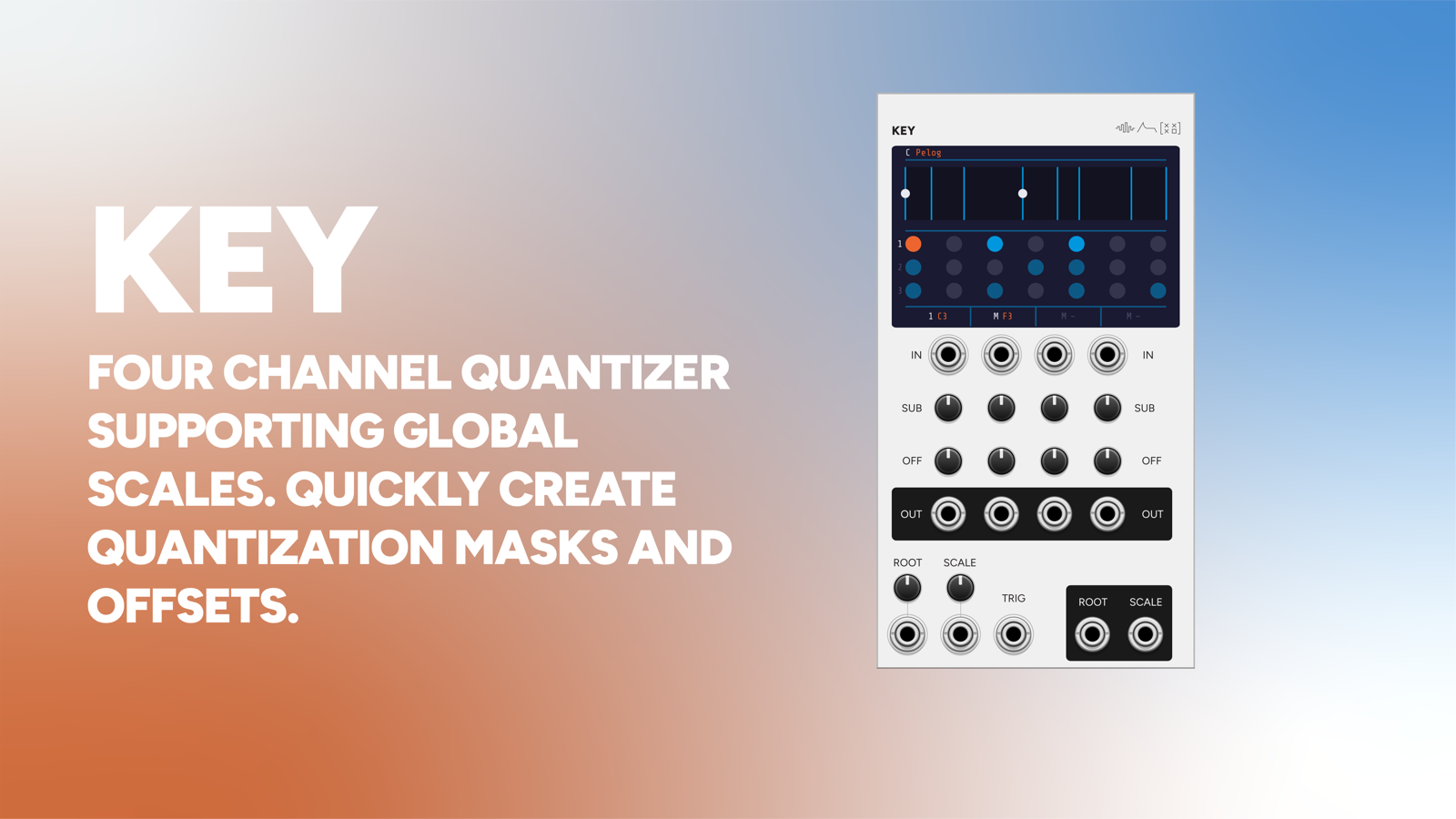
KeyTrace's events come from the shape rather than a grid. Key puts the resulting pitches in a scale.