
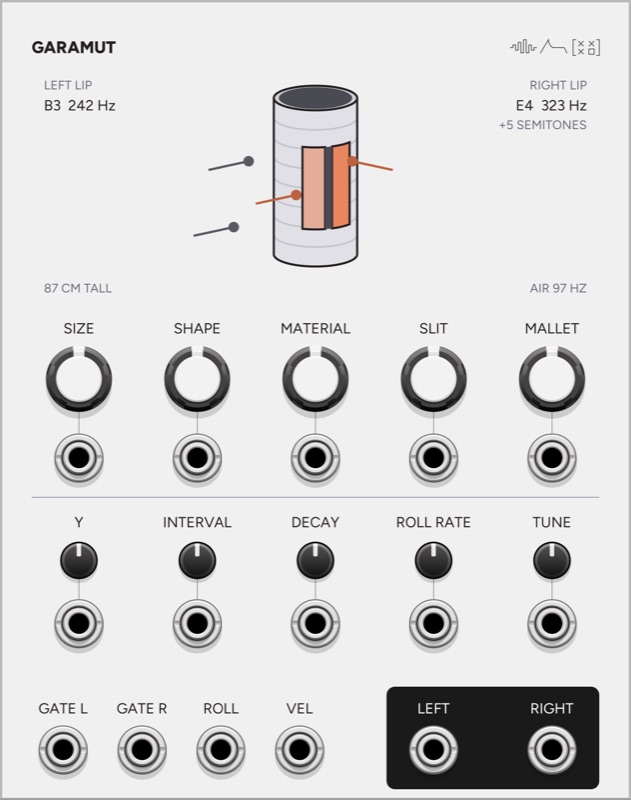
Garamut is a slit drum: a hollow column of wood or metal with a long slit cut into it. The wall on each side of the slit is a lip, and the two lips have different notes because they are cut to different thicknesses. The name comes from the garamut of Papua New Guinea, a slit drum carved from a single log. GATE L and GATE R strike the left or the right lip, at the height set by Y. Every channel of every gate input plays the same drum, so a strike can land on a lip that is still ringing from the last one, the way it does on the instrument.
The drum is drawn on the faceplate from the same geometry the sound is computed from. Each lip fills with orange as it rings, and there is one mallet per channel, resting beside the lip it last struck and swinging in when it strikes. Clicking a lip on the drawing strikes it at that height.
How the drum is modelled
Each lip is modelled as a set of vibrating modes along and across the slit, with the stiffness of the wall it is cut from. The air inside the column is a resonator through the slit, with further resonances along the length of the column, and the lips drive it. The mallet is a contact model: it presses into the lip for as long as it is touching it, so a soft mallet stays in contact longer and excites fewer high partials than a hard one.
INTERVAL sets the right lip’s note above the left lip’s, from unison to an octave. It works by changing the thickness of the right lip, and the result is exact to the cent. V/OCT and TUNE move the whole drum.
The controls
SIZE sets the height of the column, from 30 cm to 2.5 m. It transposes the drum and changes how long it rings, and the mallet grows with it, so the level stays even across the range. SHAPE runs from a square column through a round one to a pear shape that is wider at the base. MATERIAL runs from cedar through a hardwood to aluminium and steel, and metal lips are thinner than wooden ones so that the drum stays in a playable range. SLIT makes the lips longer, which lowers their notes, and the slit wider, which raises the note of the air inside, both at once. MALLET runs from felt through rubber and wood to brass. DECAY sets how long the drum rings.
Y sets where the mallet lands along the slit, and it is polyphonic, so each channel can strike at its own height. A strike near the middle of a lip gives its fundamental, and a strike toward either end brings in more of its upper modes. VEL sets how hard each strike is, and defaults to 70% when nothing is patched.
Rolls
ROLL strikes for as long as its gate is high, at ROLL RATE, from 4 to 30 strokes a second. The strokes come from two hands taking turns. The second hand strikes a little more lightly and a little off the first hand’s spot, and every stroke varies slightly in timing and force, so a roll does not sound like a machine repeating one strike. A roll stays on the lip that its channel last struck. With “A roll alternates the two lips” on in the menu, the hands move between the two lips instead.
Inputs and outputs
Inputs: GATE L, GATE R, ROLL, Y and VEL (all polyphonic), V/OCT for the whole drum, and a CV for SIZE, SHAPE, MATERIAL, SLIT, MALLET, INTERVAL, DECAY and ROLL RATE.
Outputs: LEFT and RIGHT.
Patch ideas
Two players. Patch one sequencer into GATE L and another into GATE R, with different rhythms. The two lines share one drum, so a strike on one lip while the other is ringing changes the sound of both.
Rolls between strikes. Patch a slow clock into GATE L and a gate that is high for a beat into ROLL, a bar apart. Each roll starts on the lip the last single strike landed on.
A moving strike point. Patch a slow LFO into Y. The same rhythm moves between the fundamental at the middle of each lip and the brighter upper modes toward its ends.
In the synthesis guide
- Physical Modelling Synthesis Explained
Physical modelling recreates the sound of a string, a tube or a drum head by calculating how the object vibrates.
Pair with
-
 Battery
's A gate into GATE L and its B gate into GATE R let each step's ROUTE chance choose which lip it strikes.
-
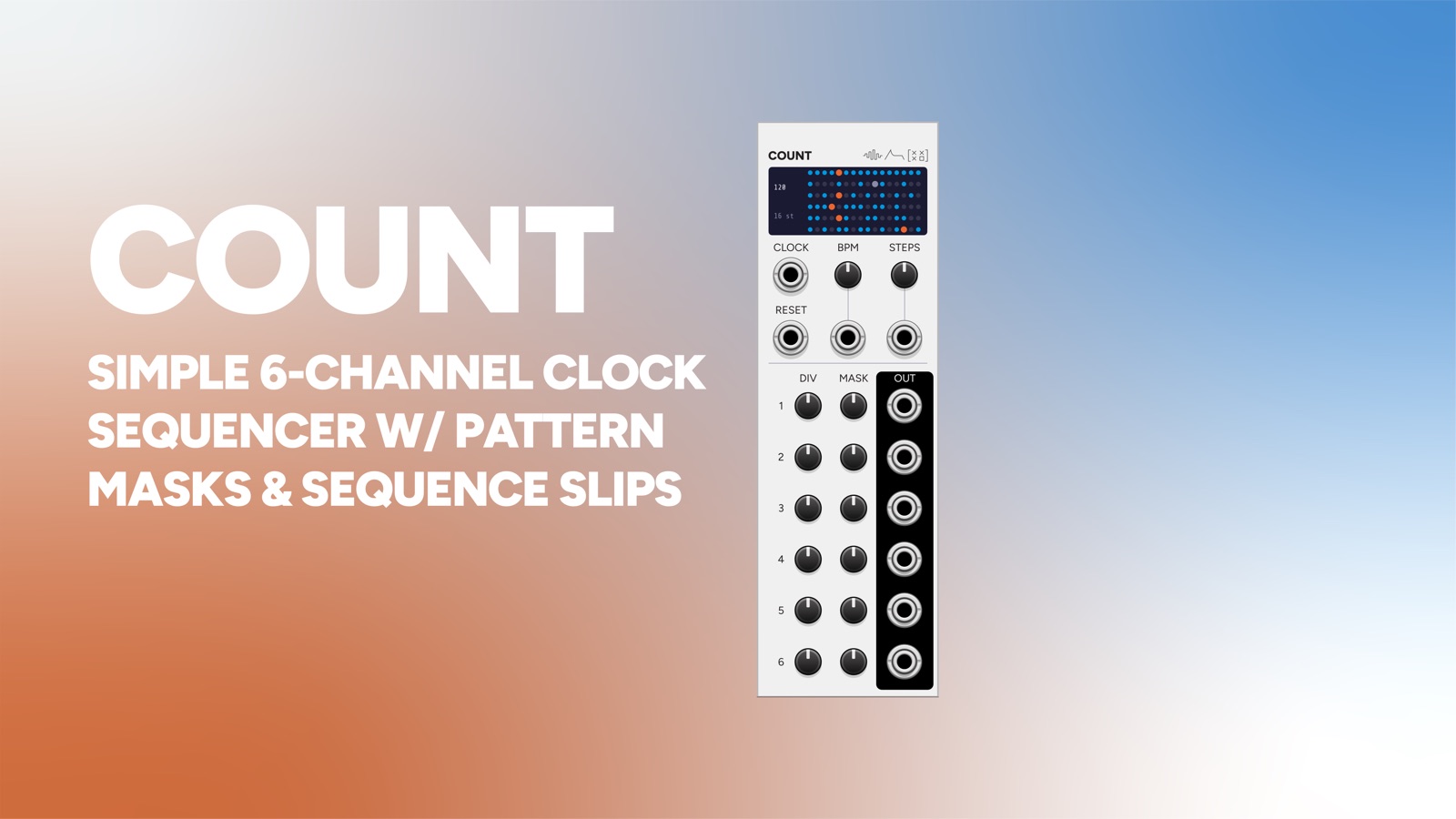 Count
Two of Count's outputs into GATE L and ROLL give a pattern of single strikes with rolls between them, each set by its own mask.
-
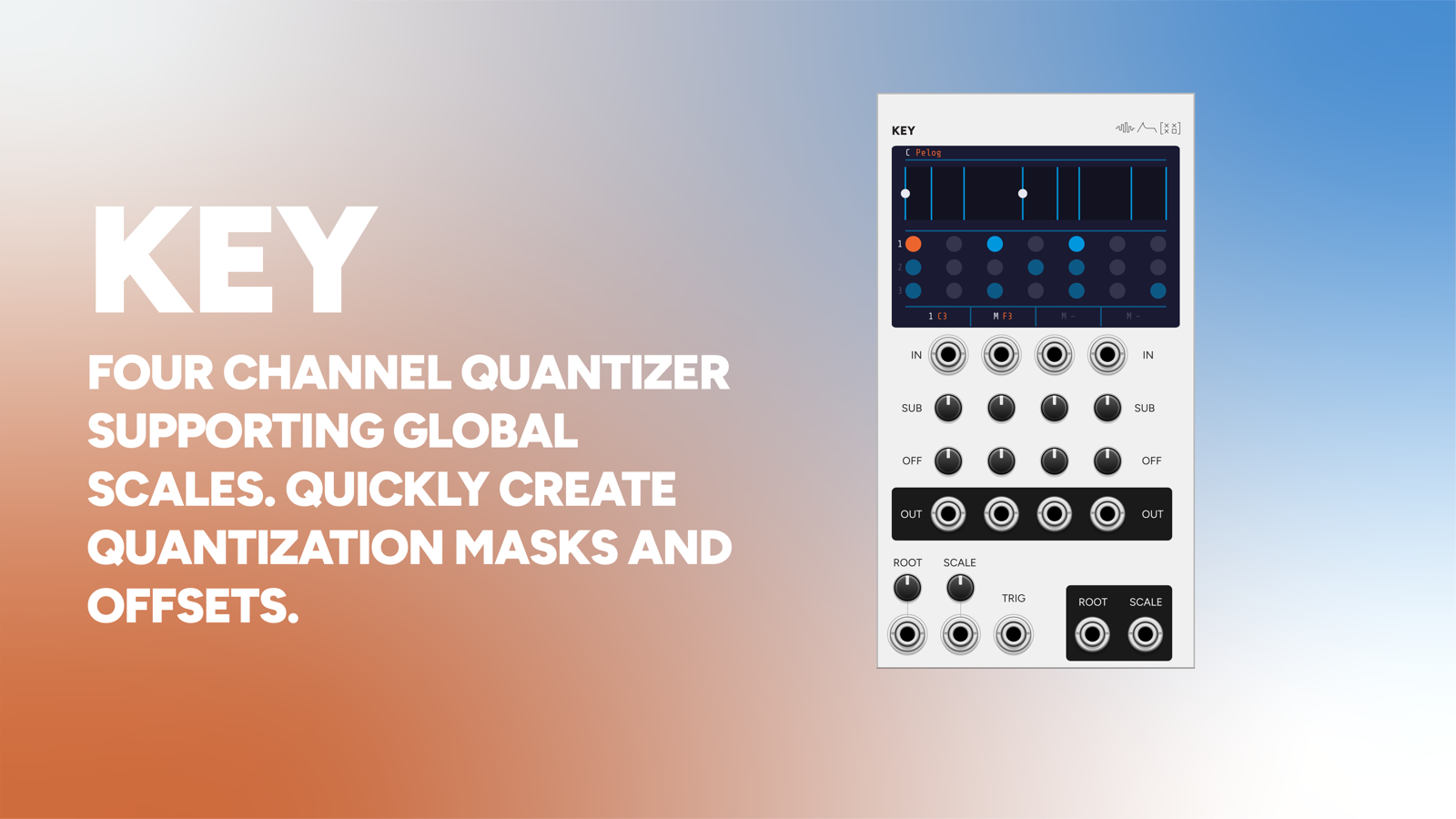 Key
Key's ROOT output into V/OCT keeps the drum in the patch's key, and INTERVAL sets the second lip against it.
- Cistern
Garamut's LEFT and RIGHT into Cistern's L and R place the drum in a modelled room.