
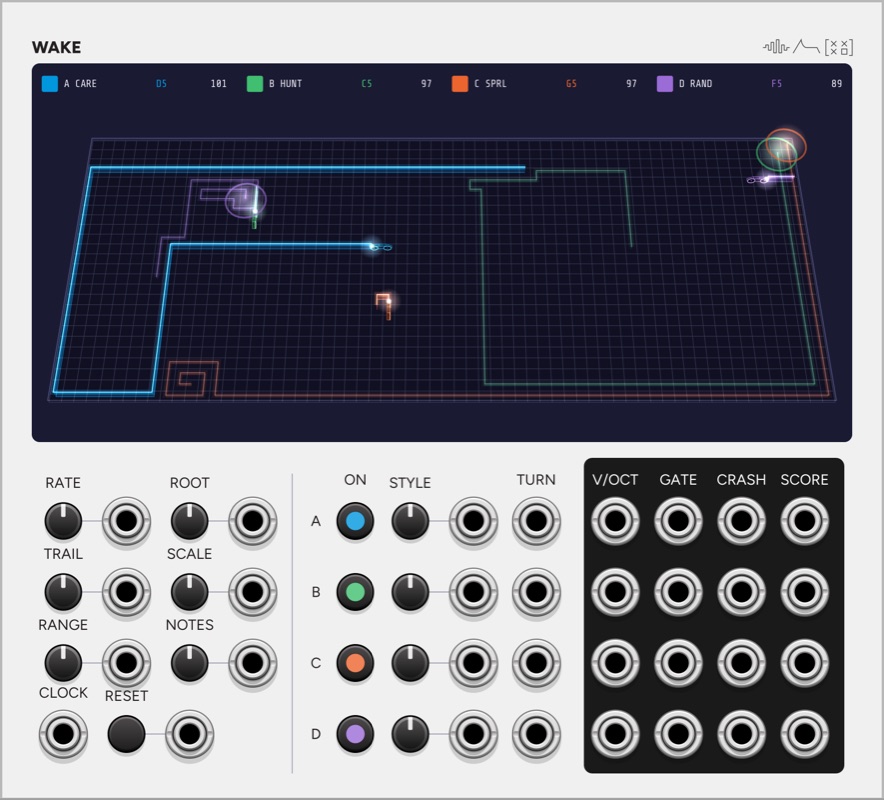
Wake is a sequencer in which up to four cycles drive on a grid. Each cycle moves one cell per step and leaves a trail, and a cycle that runs into a trail, the edge of the arena or another cycle crashes. The idea comes from the light-cycle game in the film TRON. Each cycle’s moves set its pitch, a crash fires its CRASH gate, and after a crash its trail is removed and it starts again at a free cell.
The screen shows the arena in 3D by default, with the trails drawn as walls of light behind each cycle. Dragging the screen turns the view, and a double-click puts it back. The menu also has a flat view from straight above.
Driving styles
Each cycle has a STYLE knob with a CV input at 1 V per style. Straight turns only when the cell ahead is blocked. Careful takes the move with the most free cells reachable beyond it. Hunter heads for the cell in front of the nearest other cycle. Random turns at random, about one move in five. Hugger keeps beside walls and trails, filling the space it is in. Zigzag turns every three cells, left and right in turn, so it moves diagonally, and Spiral turns the same way after runs of 1, 1, 2, 2, 3, 3 cells and so on. When a style wants a move that would leave the cycle with much less room than the best move, it falls back to Careful. A trigger at a cycle’s TURN input turns it at its next move, toward the side with more room.
Keys is the style you steer. Click the screen, then Z and X turn the first Keys cycle left and right, and comma and period turn the second. These keys are ones Rack uses only with Ctrl or Cmd, so they do not trigger anything else in Rack.
Pitch
NOTES sets how a cycle’s moves become a pitch, with a CV at 1 V per mode. In Turns, the default, each turn adds the interval for the new heading: an octave up for north, a fifth for east, and the opposite for south and west, with other interval sets in the menu. Every cell adds the interval at every move. Steps moves one degree up the scale on a right turn and one down on a left. The other four modes take the pitch from where the cycle is: its column, its row, the amount of free room around it, or its distance from the nearest other cycle. Every pitch is quantized to ROOT and SCALE and kept within RANGE octaves above the root. SCALE reads Key’s polyphonic scale bus, so a Scala scale loaded into Key reaches Wake as well.
GATE fires when the pitch is set: on each turn in Turns and Steps, on each move in Every cell, and when the degree changes in the four position modes. A cycle also fires its gate when it starts.
The arena
The grid is 64 columns of square cells by default, with 32, 48 and 96 in the menu. The menu’s Grid shape item also offers hexagonal and triangular cells. On a hex grid a cycle turns 60 degrees at a time, and with the fifth and major third interval set the notes lie out as a Tonnetz, the grid of fifths and thirds used in music theory to show related chords. A triangular cell has no cell straight ahead, so every move is a turn, and a cycle driving straight zigzags along a line.
TRAIL sets the length of the trails, from 4 cells to no limit. The edges are solid by default, and with Open in the menu a cycle that leaves one edge comes in at the opposite one. RATE runs from 0.5 to 32 steps a second, or CLOCK steps the arena once per pulse, and right-clicking a cycle’s name on the screen sets it to move on every second, third or fourth step.
Score
SCORE counts one point for every cell a cycle drives and 50 for every other cycle that crashes into its trail, at 0.01 V a point. By default it wraps back to 0 V above 10 V, and the menu can hold it at 10 V. RESET clears the arena and the scores.
Inputs and outputs
Inputs: CLOCK, RESET, RATE, TRAIL, RANGE, ROOT, SCALE, NOTES, and for each cycle STYLE and TURN.
Outputs: for each cycle V/OCT, GATE, CRASH and SCORE.
Patch ideas
Four voices that interrupt each other. Patch each cycle’s V/OCT and GATE into its own voice. The lines run independently until two cycles meet, and a crash restarts one of them somewhere else on the grid.
Crashes as percussion. Patch the four CRASH outputs into a drum module and the GATE outputs into a melodic voice. A short TRAIL setting gives few crashes, and no limit fills the arena until the crashes come quickly.
A melody you steer. Set one cycle to Keys and the others to Careful, with NOTES on Steps, and steer with Z and X. Each right turn moves the melody up the scale and each left turn moves it down.
In the synthesis guide
- Step Sequencers: Pitch, Gates, Ratchets, Slides
A step sequencer stores a pitch and a gate for each step and moves to the next step on every clock pulse. Length, gate length, ties, slides and ratchets change how each step plays.
Reference
- Root and Scale CV
This reference lists the voltage for every root and scale, how each module responds to them, and the format of the scale bus.
Pair with
-
 Key
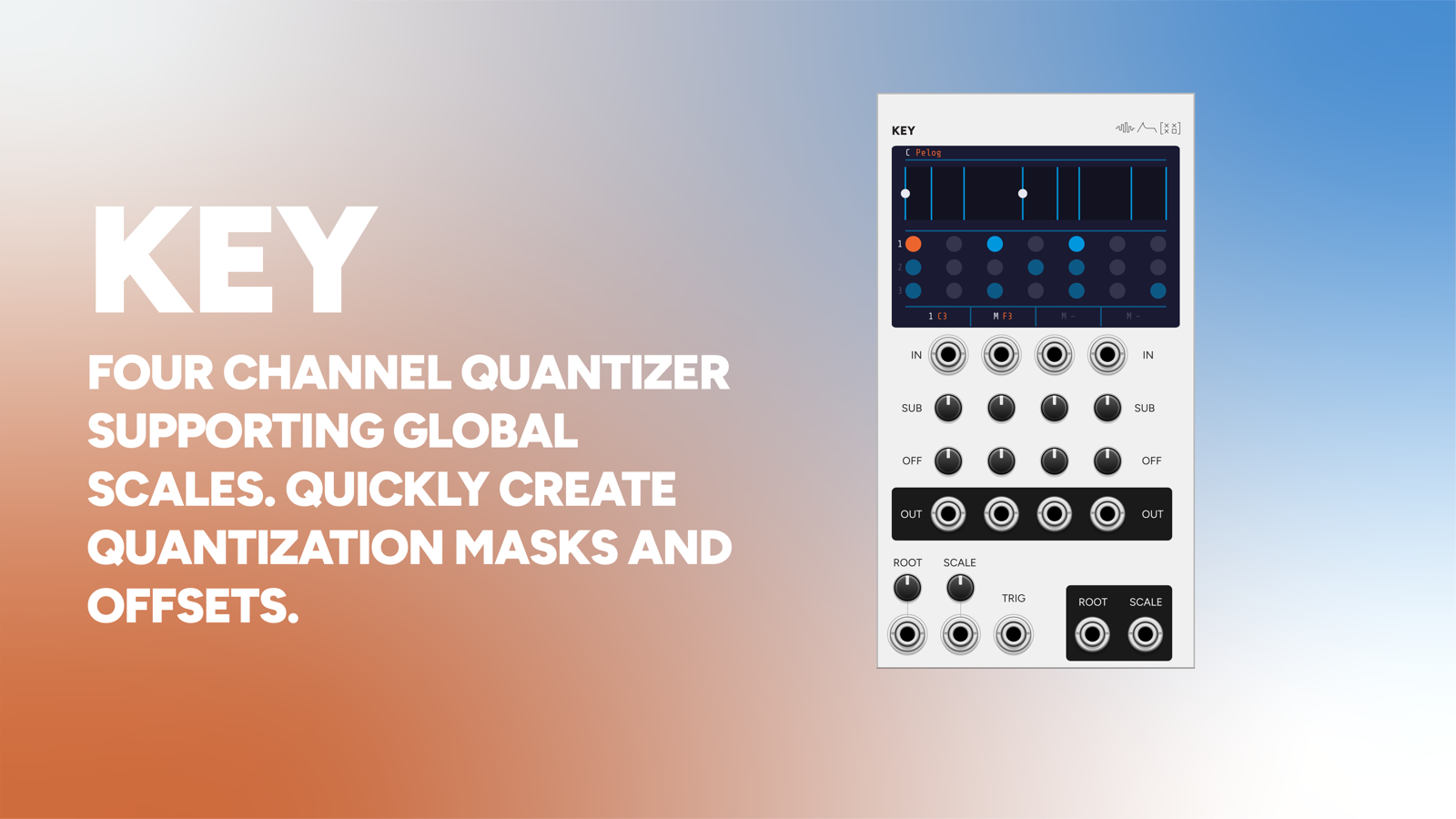
Key's ROOT and SCALE outputs set the key every cycle's pitch is quantized to, and Key's scale bus carries scales outside the shared list.
-
 Hocket
One cycle's V/OCT and GATE into Hocket spread its line across eight voices.
-
 Kit
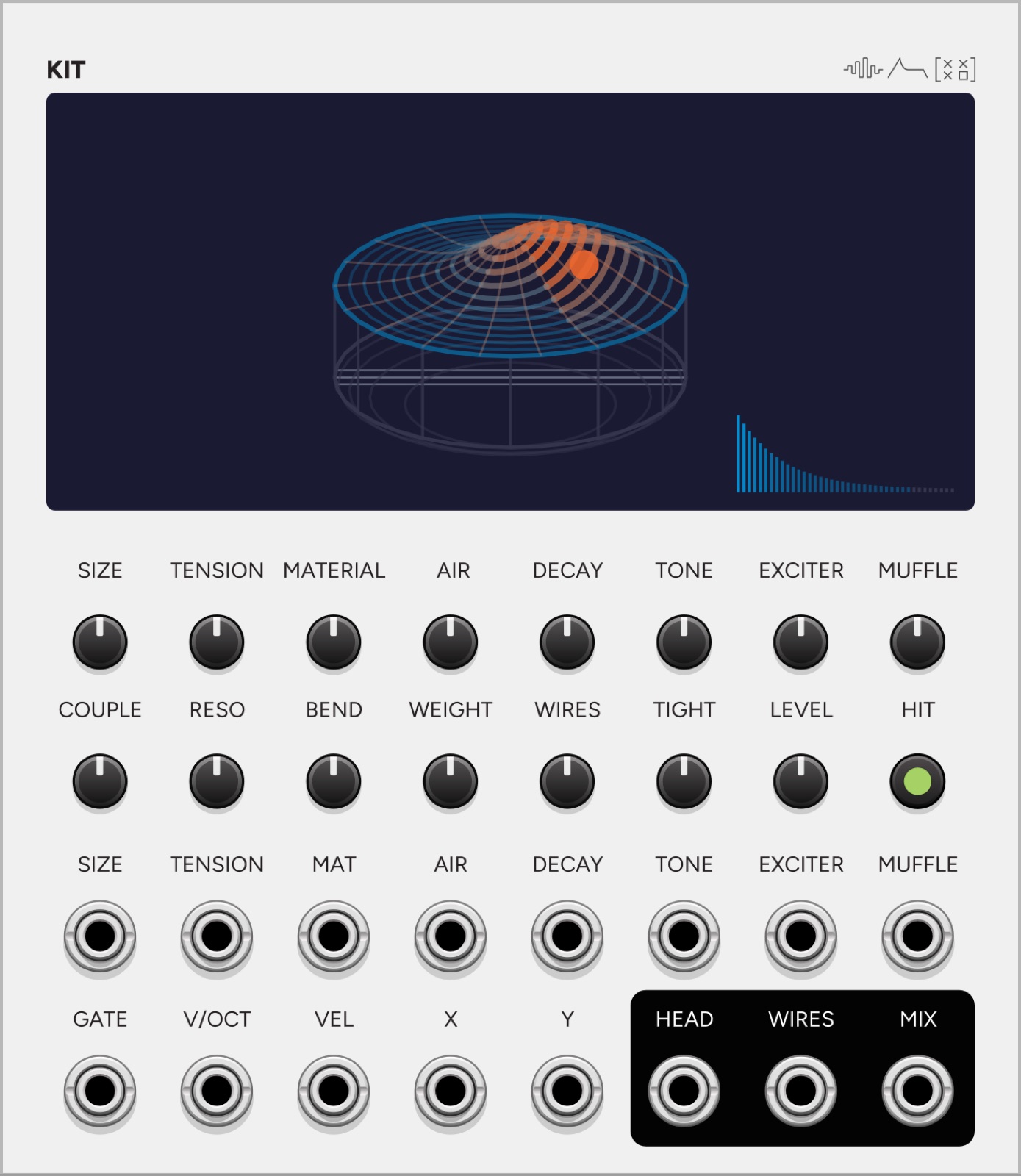
The four CRASH outputs into Kit's GATE inputs turn every crash into a drum hit.
-
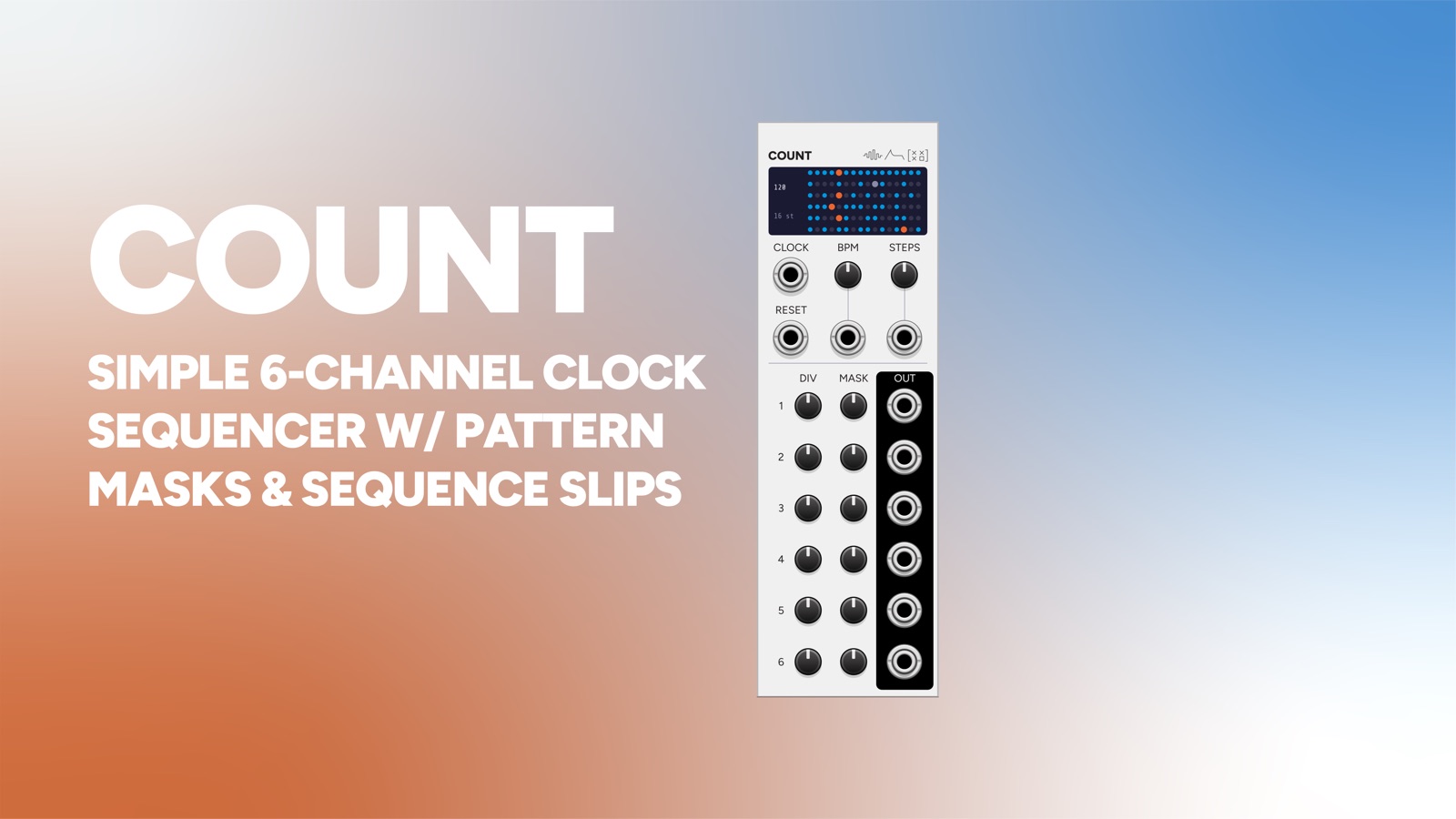 Count
A gate output from Count into CLOCK steps the cycles at a rate and mask set on Count.