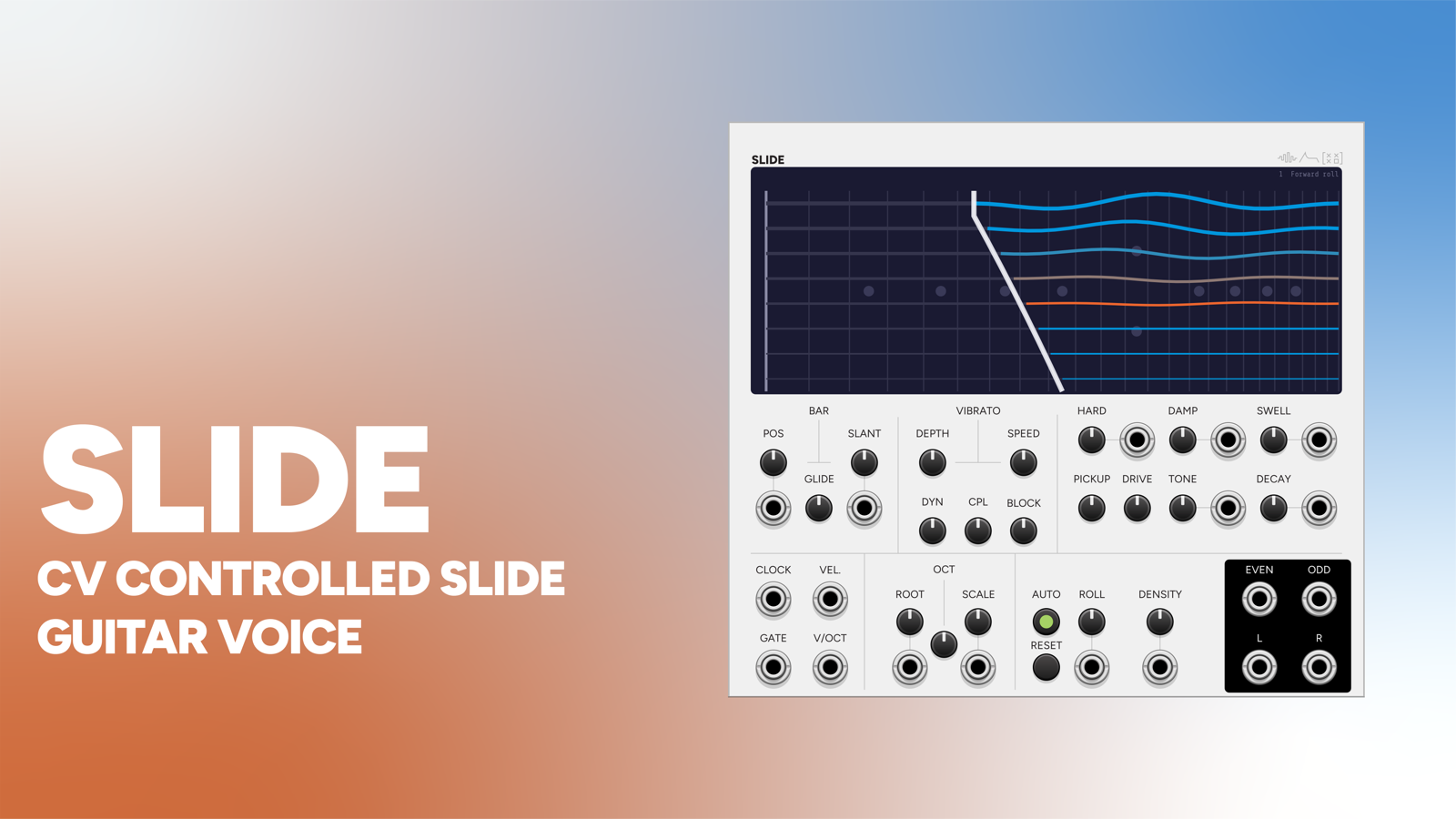
Slide is an electric lap steel. Eight waveguide strings are stopped by a steel bar instead of frets. The bar is one rigid object lying across every string, so it moves them all by the same ratio and the tuning’s intervals survive wherever you put it. That is why lap steel lives in 6th and 7th tunings: a straight bar is already a chord. Slide is 28 HP.
Why it slides
- SLANT angles the bar across the strings, which is how you get major, minor, and dominant voicings out of one tuning without retuning.
- Glide is rate-based, not time-based. A hand crosses the neck at roughly constant speed, so a wide move takes longer than a narrow one. That is most of why a real slide doesn’t sound like a synth portamento.
- SWELL is a volume pedal that fades in past the pick attack, hiding the transient for that crying steel tone.
- Vibrato rocks around the pitch rather than bending up to it, and the bar returns less treble than a fret would.
- The pickup is a magnetic pickup, a resonant lowpass with TONE and amp DRIVE, not a soundboard.
The display is a fretboard lying flat: drag the bar with the mouse, hover across the strings to pick them. Ten tunings ship, from C6 and E7 to open major, Dobro G, and fourths.
Inputs and outputs
- Controls: Pos, Slant, Glide, Vibrato depth and speed, Decay, Damp, Pick, Pickup, Tone, Drive, Block, Swell, Couple, Root, Scale, Octave, Roll, Density, Dyn, Auto, Reset.
- Inputs: Bar (1V/oct), Slant, V/OCT, Gate (poly), Velocity (poly), Clock, Reset, Vol, plus CV for the main tone controls.
- Outputs: Mix L, Mix R, Even strings, Odd strings.
Patch idea
The crying Hawaiian sound. SWELL up so the pedal hides the pick attack, GLIDE around 0.5 to 0.7 so moves take real time, a shallow slow VIBRATO, DAMP fairly high, and a C6 or E7 tuning. Then move the bar between two chord positions rather than picking new notes. For eight separate destinations, add SLIDE XP.
Pair with
-
 SLIDE XP
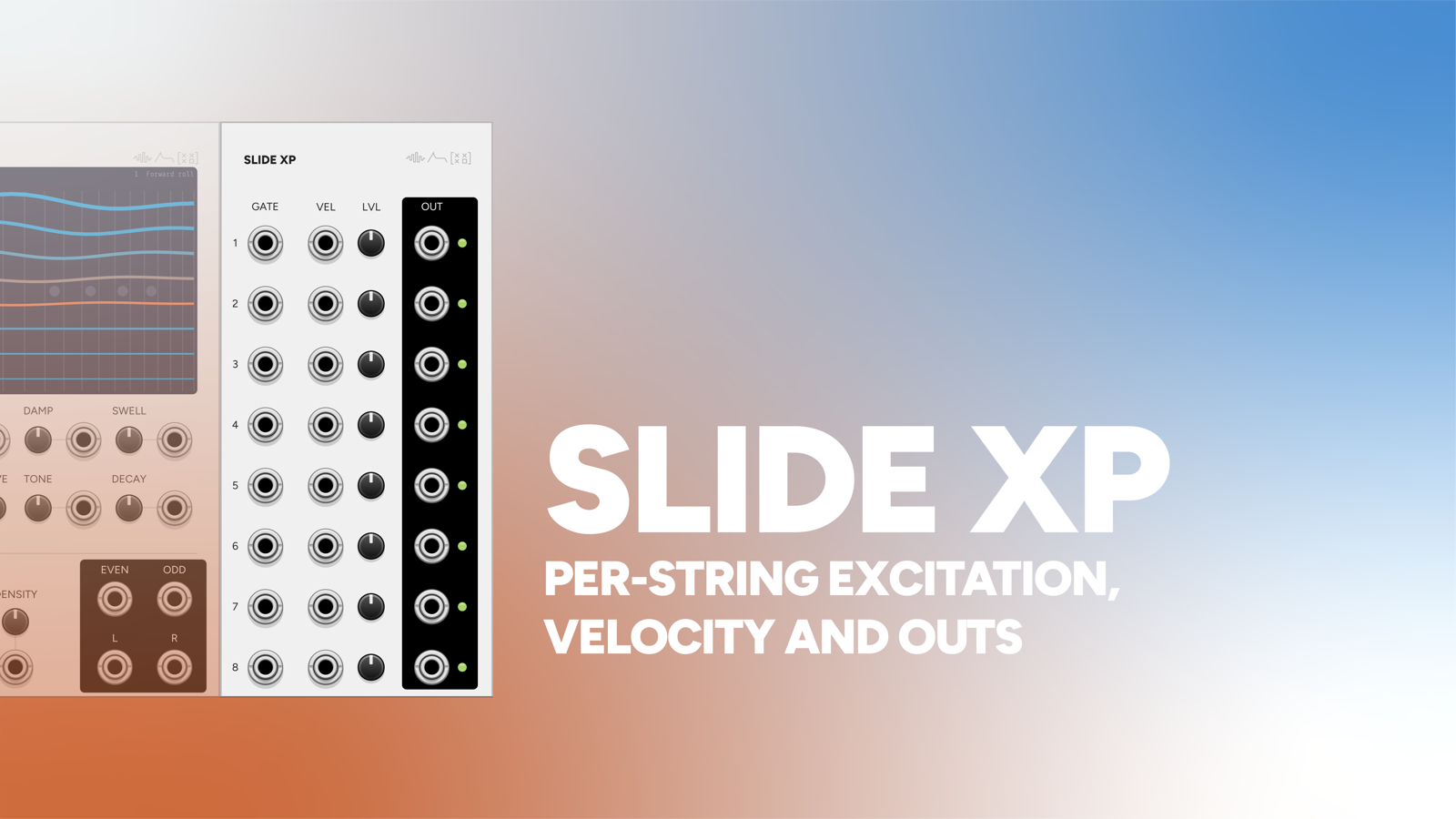
SLIDE XP is Slide's expander: it puts the eight strings on eight jacks, each with a gate in, velocity in, and level trimpot, so every string can go its own way.
-
 Loom
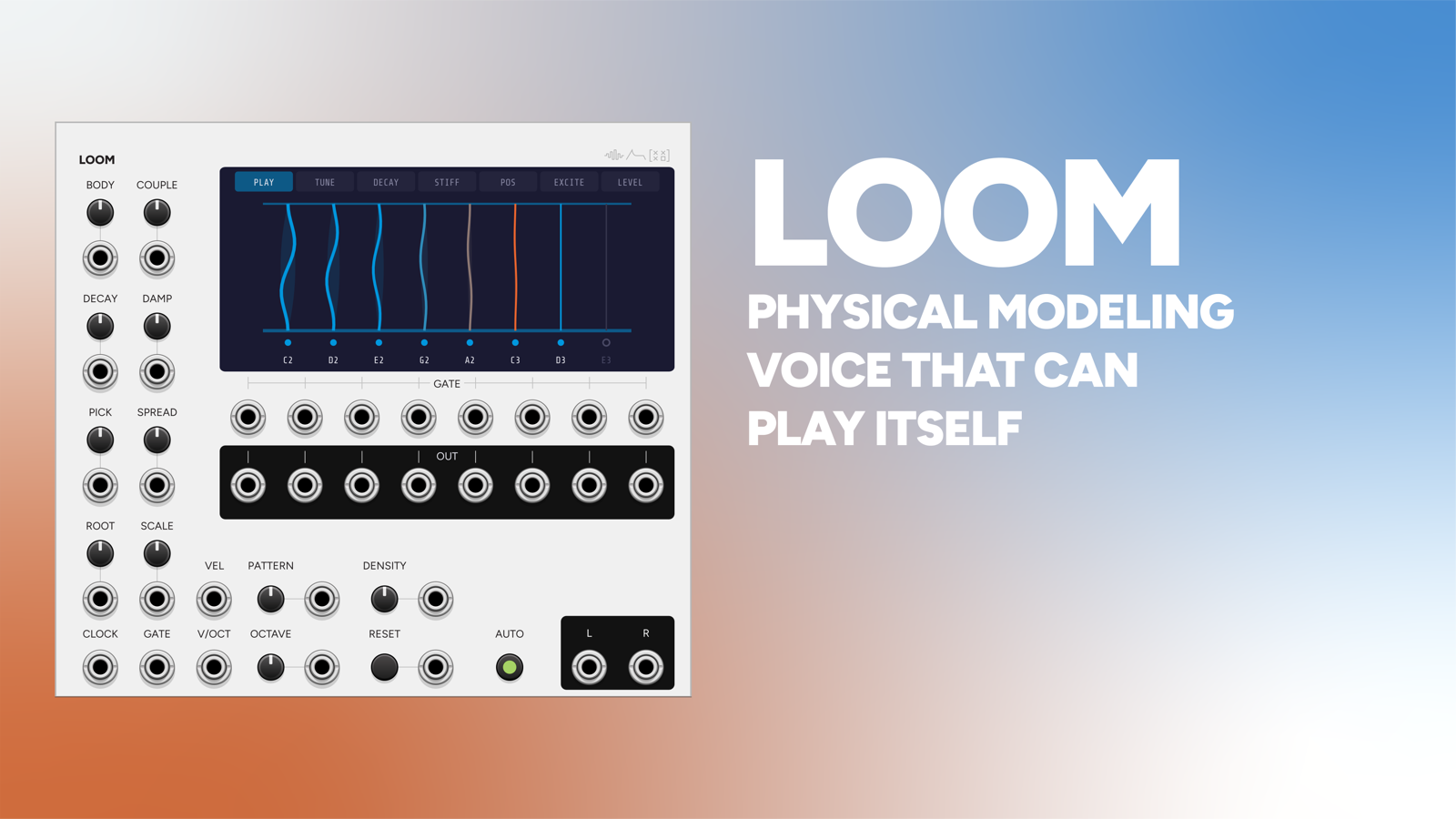
LoomLoom is the fretted sibling: the same waveguide strings, picked at fixed positions rather than stopped by a moving bar.
-
 Key
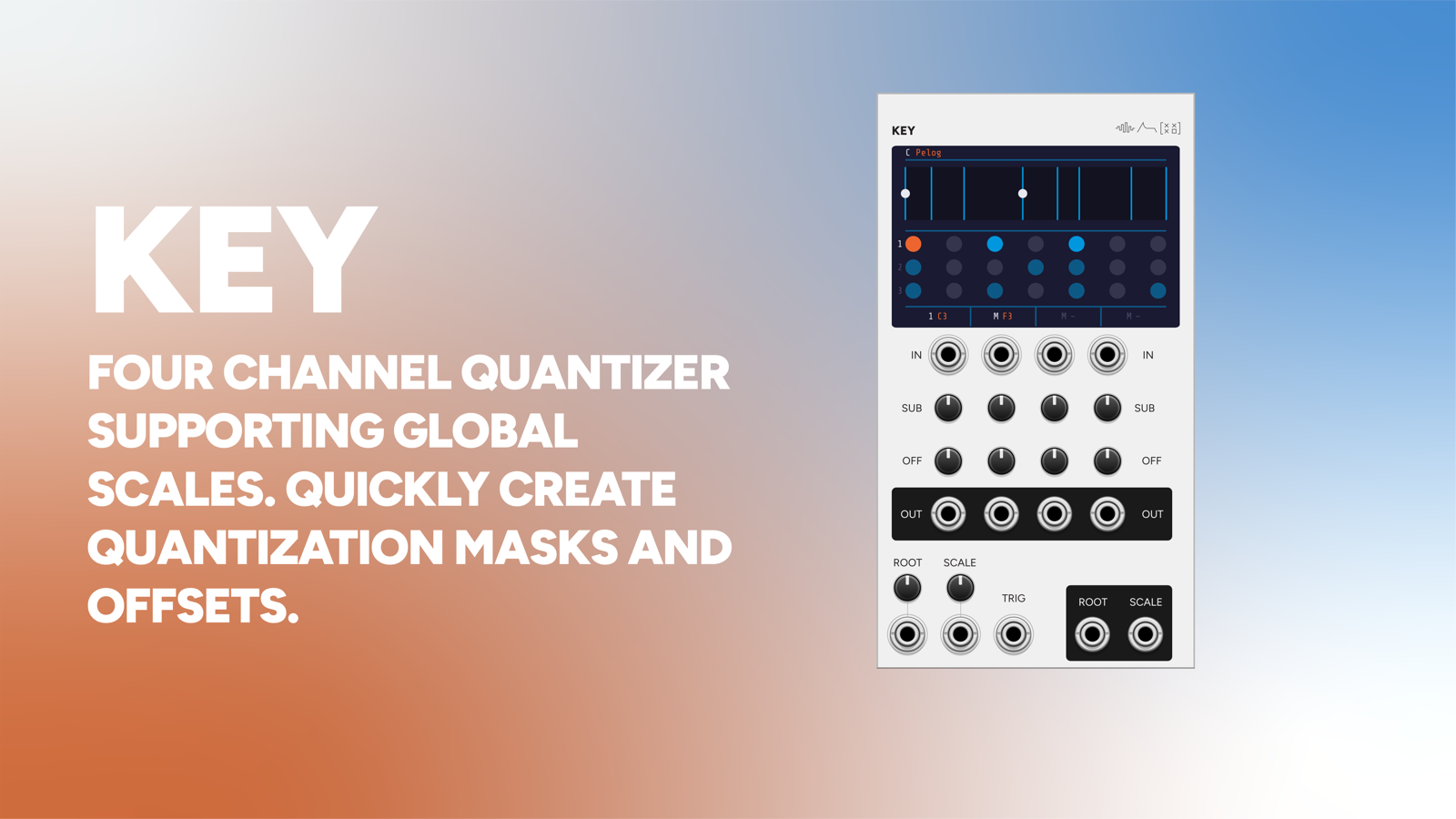
KeySlide reads the shared Root and Scale, so Key or Arrange can move its tuning's key without retuning by hand.